
Related: Best Folding Treadmill for a Small Apartment
Every treadmill that comes through my 680-square-foot apartment gets the same treatment: two weeks of real runs, a decibel reading taken during a work call, ten folds and rolls across the living room floor, and a belt inspection at 200 miles. I have done that with more than 30 machines. I still coach runners who do most of their miles outdoors, so I am not here to sell you a treadmill as a lifestyle. I am here to help you buy one that survives, and that means treating the buying decision and the treadmill repair and maintenance work as one conversation instead of two.
Most people shop as if a treadmill is a single purchase. It is not. It is a motor, a deck, a belt, and a control board, and three of those four wear on a schedule. The machine you choose decides how much floor it eats and how loud your evenings get. The parts you keep on hand decide whether the thing is still running in year four.
So here is the rundown: the NordicTrack T Series lineup and how to size it, the three cheap items that keep a treadmill alive, and the tests I run before I recommend any machine to anybody.
The Machine: NordicTrack T Series
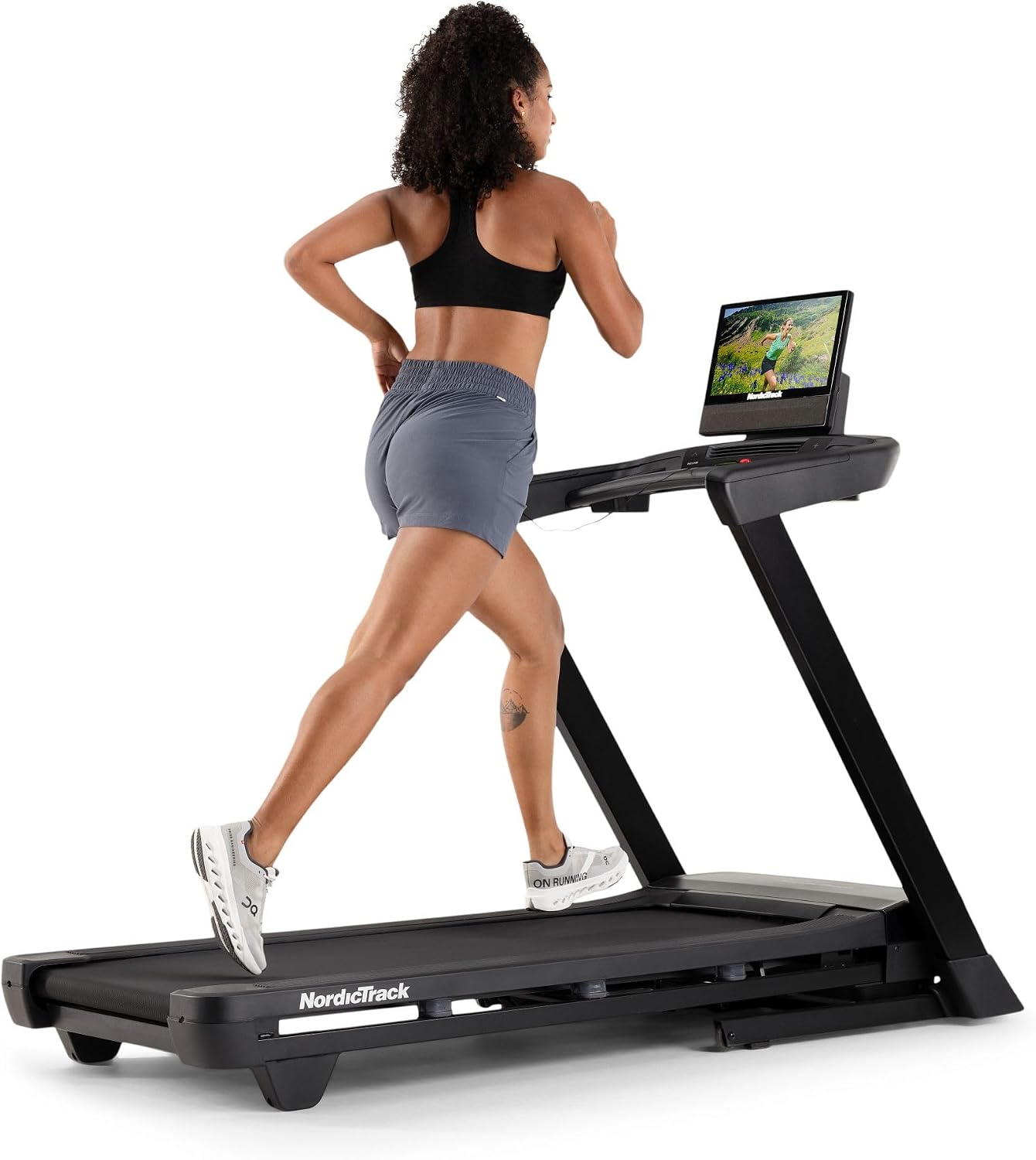
This listing covers the whole family: T5, T6.5s, T7, T10, T16. The number goes up, and so does the machine, which in practice means a longer running surface, a bigger motor, and more weight to move when you are done with it. That is a real tradeoff in an apartment, and it is the reason I would not tell every client to buy the biggest one in the range. More machine is not automatically a better purchase. More machine than you can move is a coat rack with a screen on it.
Deck length is the first thing I check on any treadmill, and it should be the first thing you check here. If your stride does not fit the belt, you will shorten your step without noticing, and your hips will file the complaint six weeks later. Measure your natural stride at an easy run and compare it to the running surface, not the frame. A machine that fits your stride at a walk is not the same as a machine that fits it at speed.
The second check is noise at walking speed. I take a decibel reading during a conference call, because that is the real test of whether a treadmill belongs in a small home. A motor that forces you to turn up the TV has failed at the only job a home machine has. Horsepower numbers on a spec sheet do not tell you that. Your ears do.
The third is the fold. Folding only counts if you can actually move the machine once it is folded. Weight and wheels matter more than the hinge. I fold and roll every machine at least ten times before I form an opinion, and plenty of machines marketed as foldable fail that test in a 680-square-foot room.
One more thing worth pricing out before you buy: the subscription training content these machines are built around. If you are not going to use it, you are paying for a screen. Buy the machine for the deck and the motor.
The Parts That Keep It Running
A treadmill dies in a predictable order: belt, then belt again, then the control board, and it dies faster if nobody ever lubricates anything. These are the three items I would have on hand before the machine arrives, and they cost less together than a single service call.
Premium Treadmill Belt Lubricant
This is 100 percent pure silicone, made in the USA, with a patented 8 inch application tube and a precision twist cap, and the tube is the part that matters. Lubricating a treadmill belt means getting silicone under a belt that is bolted down, and the usual workaround is to loosen the deck and hope for the best. A long tube with a twist cap lets you reach under the belt and lay down a controlled bead instead of a puddle. If you have ever watched silicone run down the side of a machine and onto the carpet, you know exactly why the cap matters.
Dry belts tell you they are dry. The belt runs warm, it slips when you push the pace, and eventually it squeaks in a way that no amount of tensioning fixes. Follow the schedule in your manual and shorten it if you run long or often. Silicone is cheap. Belts and decks are not.
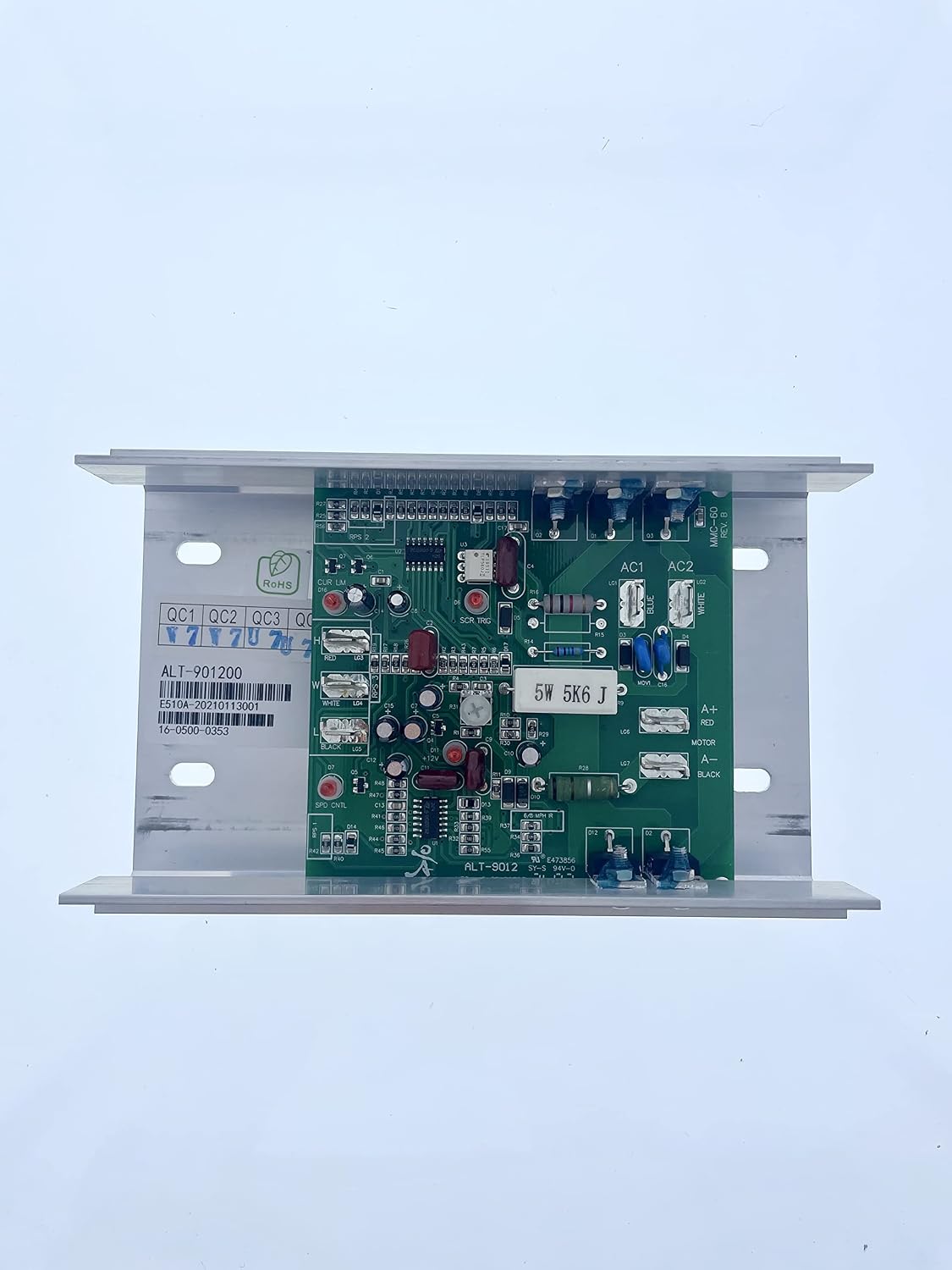
Treadmill Doctor MC-60 Upgraded Treadmill Motor Control Board
The control board is the part that turns wall power into a belt moving at the speed you asked for. When it starts to go, the symptoms are consistent: the belt jerks at low speed, the speed surges on its own, the console lights up while the belt sits still, or the machine shuts down mid run and comes back after it cools.
Before you write off the treadmill, check the cheap stuff first. A loose belt, a worn belt, or a dry deck can imitate a bad board, and I have watched people buy a board they did not need. But if the deck is clean, the belt is tensioned, and the machine still stutters, the board is usually the answer, and replacing it costs a fraction of a new treadmill. This one is an upgraded board rather than a stock replacement, so confirm compatibility with your specific machine before you order, and unplug the treadmill before you touch anything inside it.
Treadmill Repair: Repair my Treadmill
This is the cheapest item in this guide and the one I would buy first. Before you spend money on parts, spend a little on diagnosis. A repair guide that walks through the common failures will tell you whether you are looking at a belt problem, a lubrication problem, or a board problem, and that keeps you from buying a control board when a tube of silicone would have done the job. It is a starting point, not a service manual for every machine ever built, so use your own manual for model specific torque and wiring.
Treadmill upkeep reference table
| Item | Role | When you reach for it | Notes |
|---|---|---|---|
 Visit on Amazon → Visit on Amazon →NordicTrack T Series Treadmills |
The machine itself | The first purchase | Size the belt to your stride, not to the price. Visit on Amazon → |
 Visit on Amazon → Visit on Amazon →Premium Treadmill Belt Lubricant |
Belt and deck lubrication | On the schedule in your manual | Pure silicone, 8 inch tube, twist cap. Visit on Amazon → |
 Visit on Amazon → Visit on Amazon →Treadmill Doctor MC-60 Control Board |
Motor speed control | Belt jerks, surges, or will not move | Confirm compatibility before ordering. Visit on Amazon → |
 Visit on Amazon → Visit on Amazon →Treadmill Repair guide |
Diagnosis before parts | Before you buy any component | Cheapest first step in the whole chain. Visit on Amazon → |
How I test, and how to test yours
Every machine in my apartment gets two weeks of real use before I say a word about it, because a showroom floor tells you almost nothing. I check the deck at a full running stride, not a walk, because a short belt only reveals itself when you are actually moving. I take a decibel reading during a conference call, since that is the honest measure of whether a machine works in a small home. I fold and roll it ten times, because a fold you cannot move is not a fold. And on budget machines I do a belt and wobble check at 200 miles, because that is where the corners show up.
You can run a shorter version of that test yourself inside the return window. Run at your normal easy pace for twenty minutes and pay attention to whether your feet feel crowded. Take a call while someone walks on it. Fold it and move it twice. Then decide.
Should you buy the NordicTrack T Series?
If you want one machine that handles walking and real running at home, yes. The lineup runs from the T5 up to the T16, so your job is matching the size to your stride and your room. Do the deck check, listen to the motor at walking speed, and confirm you can move it folded. Skip the subscription pricing games if you will not use them, and buy the machine for the belt, the deck, and the motor.
Should you buy the MC-60 control board?
Only after you have ruled out the cheap fixes. If the belt is tensioned, the deck is lubricated, and the machine still jerks or surges, a board replacement is the difference between a repair bill and a new treadmill. Confirm it fits your machine first, and unplug everything before you start.
Should you buy the lubricant and the repair guide?
Yes, both, and before the machine arrives. The lubricant is pure silicone with an application tube that makes the job controllable, and the repair guide is the cheapest way to avoid buying a part you do not need. Treadmill repair and maintenance is not glamorous work, but it is the difference between a machine you run on for years and one you give away in eighteen months.