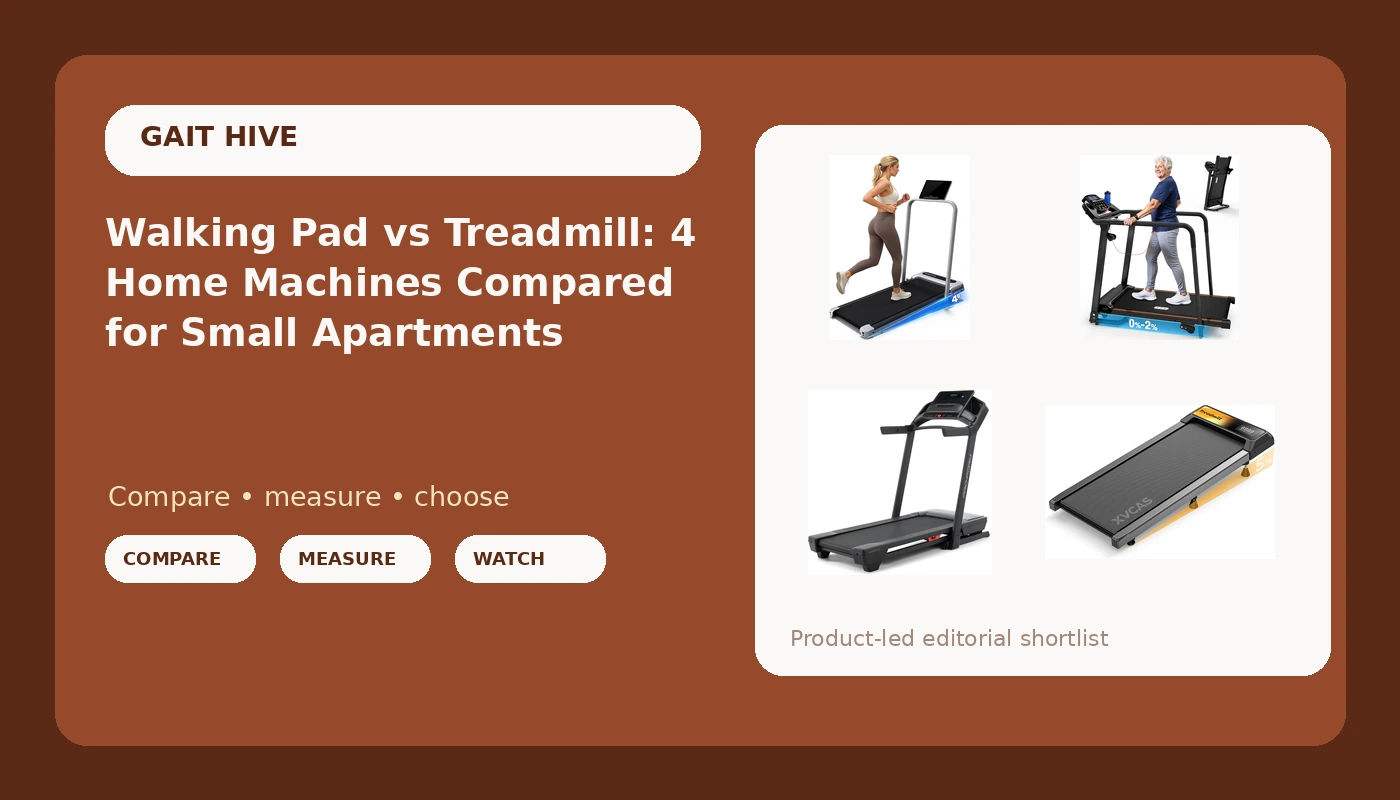
I bought my first folding treadmill because Austin stopped letting me train outdoors. Twelve years of coaching runners and 40,000 logged miles outside did not prepare me for the actual problem, which was putting a running machine into a 680-square-foot apartment without turning the living room into a storage unit. So I started buying them. I have unboxed, folded, wheeled, and run on more than 30 machines since, and this walking pad vs treadmill comparison is what all of that comes down to for four very different buyers.
Here is the short version. For most people in a small apartment, the right home treadmill is the smallest machine that still fits your stride, not the biggest one your budget allows. If you walk, a walking pad wins. If you run, you need a deck that fits your gait, and that usually means a folding machine with a real frame under it. Everything below is about figuring out which of those two people you are.
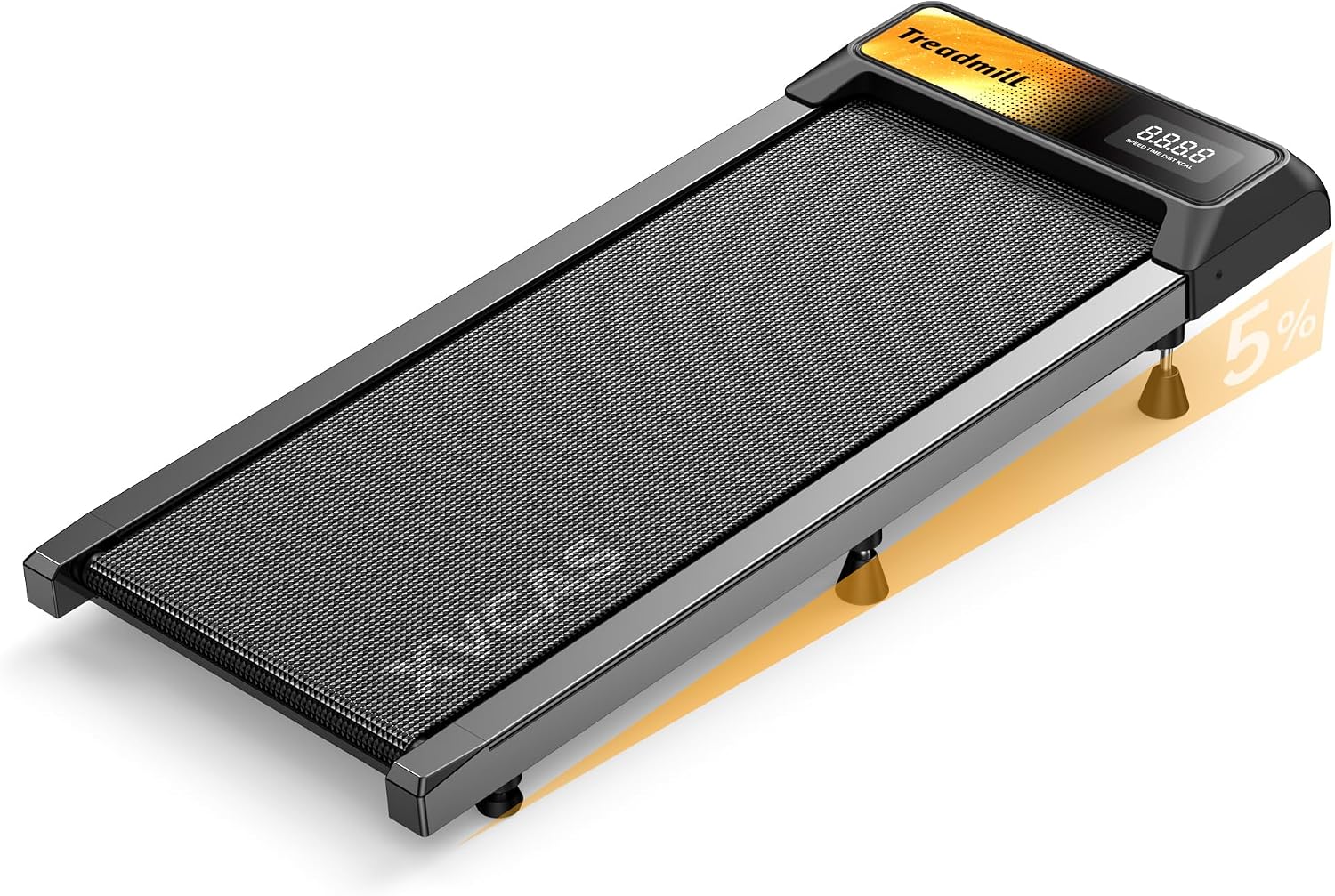
Walking Treadmill Pad with Incline and 2.5HP Motor
Cheapest way to get steps in at a desk, with a stated 0 to 5-8% incline and a 2.5HP motor
It is a walking pad. The listing says running, your knees will disagree
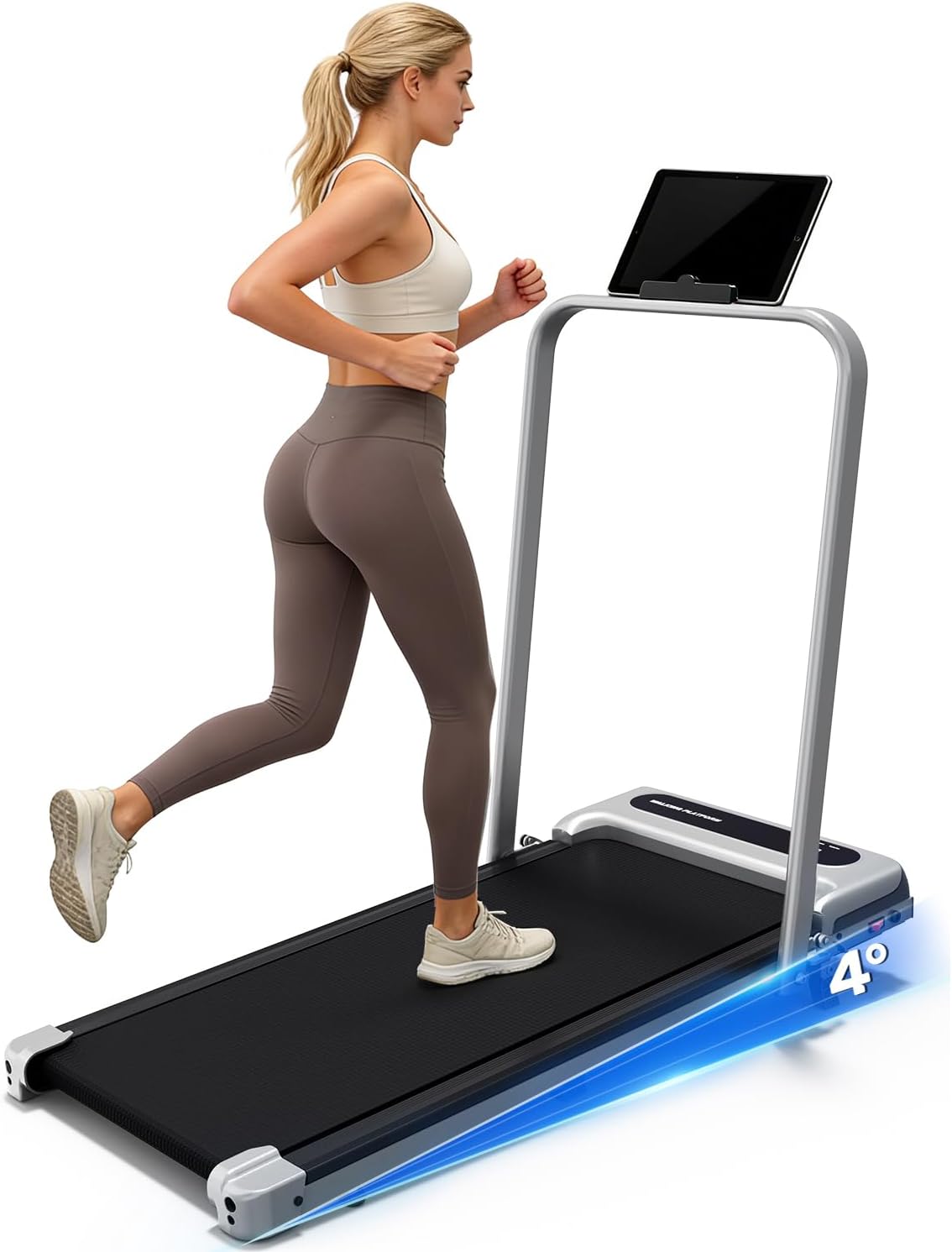
Walking Pad Treadmill for Home with Incline and Handle Bar
The handle bar is the difference between walking and holding on for dear life
Still a pad deck, still not a running surface
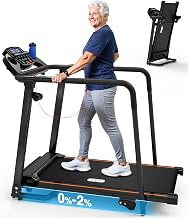
Redliro Treadmill for Seniors with Long Handrail
Long handrail gives real balance support without a full gym footprint
The handrail is the whole design brief, so runners should look elsewhere

ProForm Carbon Treadmill
A real running machine with a frame built for actual mileage
The most machine here, and the most commitment of floor space
Prices and availability were captured from Amazon Creators API and may change.
How I judge a treadmill for a small apartment
Deck length is the first thing I check, and it is the spec most buyers skip entirely. If your stride does not fit the belt, you start taking smaller than normal steps without noticing, and that quietly changes your gait in ways a physical therapist eventually has to fix. Walking pads are fine for walking. They are not fine for running at a full stride, and no amount of marketing copy changes the length of the belt.
Quiet matters more than horsepower at home. A motor that forces you to turn up the TV is a failed purchase, no matter how fast it goes. My test is simple: can I take a conference call at walking speed without the person on the other end asking what that noise is? That single question eliminates more machines than any spec sheet.
Folding only counts if you can actually move the thing once it is folded. Wheels and weight are the real spec here. A fold that leaves a 90-pound slab you cannot roll into a closet is not a feature, it is a promise you are going to break by week three.
The incline system is the tell. If the incline feels like plastic blocks wobbling under the deck, the machine is cutting corners somewhere you cannot see yet. And the magnetic safety lanyard is non-negotiable. I clip it on before I check anything else.
The budget pad: the under-desk machine
The Walking Treadmill Pad with the 2.5HP motor and the stated 0 to 5-8% incline is the entry point, and it is an honest one. What you are buying is a slim, low-profile belt you slide under a desk and walk on while your meeting drags into its fortieth minute. The incline range is the interesting part, because most pads at this level offer a flat deck and nothing else. Being able to tilt the surface gives your calves and hips something to do besides the same flat, repetitive motion all day.
What it is not is a running machine, despite what the listing title suggests. A pad is a pad. The deck is short, the frame is minimal, and the moment you try to open up into a real stride you will feel exactly how little belt is under you. That is not a knock on the machine. It is a knock on buying it for the wrong job. If you want to accumulate steps while you answer email, this is the least expensive way on the list to do it. Visit on Amazon →
One warning that applies to every pad in this category, including this one: study the product photos twice before you buy. What is pictured and what is in the box are not always the same thing, and the accessories are usually where the difference shows up.
The pad with a handle bar
The Walking Pad Treadmill for Home with Incline and Handle Bar fixes the single biggest problem with the flat-pad format, which is that there is nothing to hold onto. On a bare pad you either walk carefully or you drift toward the edge. A handle bar changes the posture entirely. You can walk with a more upright, supported gait, and if your balance is not what it was ten years ago, you get a place to steady yourself without needing a full treadmill frame.
It also makes incline walking more usable. Once the deck tilts, your body wants something to counterbalance against, and a handle bar gives you that. The trade-off is the same as above: this is still a pad deck. The handle bar does not lengthen the belt or add structure under it. It is a better walking pad, not a small treadmill. If you have been telling yourself you will "just walk a little faster" on it and eventually run, be honest with yourself now and read the next two sections. Visit on Amazon →
The long handrail machine
The Redliro Treadmill for Seniors with Long Handrail is the one I would point a parent or a returning walker toward. The long handrail is not a cosmetic add-on. It runs the length of the walking area, which means you have continuous support on both sides for the entire session, not just a short grab bar at the front. For anyone rebuilding confidence after a fall, surgery, or a long stretch of inactivity, that continuous rail is the difference between a machine you use daily and one you avoid.
Because the design brief is stability first, the rest of the machine follows that logic. You are not buying this for interval workouts or a fast finish. You are buying it because you want to walk indoors, safely, for thirty or forty minutes, and you want to feel steady the whole time. The magnetic safety lanyard matters even more here, and it is the first thing I would check on any machine in this category. Visit on Amazon →
If you are a runner looking at this one, keep scrolling. The handrail is the whole point of the machine, and a runner does not want it.
The full-size option
The ProForm Carbon is the only machine on this list that I would hand to someone who actually runs. It is a real treadmill with a real frame, built for people who put in mileage rather than steps. Everything above it on this list is a compromise on deck, frame, or both, and the Carbon is where those compromises stop.
The cost is floor space, and that cost is real in an apartment. This is the machine that turns a corner of your living room into a corner of your living room that is no longer yours. Before you buy anything in this tier, measure the footprint, measure the folded footprint, and then measure the path from where it lives to where it goes when guests come over. If that path involves a doorway, a turn, or a staircase, you need to know now, not on delivery day. Visit on Amazon →
My honest position on full-size machines has not changed in years: in a genuinely small living room, a big treadmill you stop using is the most expensive coat rack you will ever own. Buy it only if running indoors is a weekly habit you already have, not a habit you are hoping to develop.
What the four machines tell you about the category
Line these four up and the pattern is obvious. The price ladder tracks deck size and frame structure, and nothing else. The two pads are thin, light, and honest about being walking machines. The long handrail model adds support without adding a running deck. The ProForm adds the deck and the frame, and charges accordingly.
So the decision is not really about brand or motor size. It is about stride. Ask yourself what your actual stride looks like at speed, not what it looks like when you are strolling around the kitchen. If the answer is "I walk," the pads are the better buy and you will save both money and floor space. If the answer is "I run," you need the deck, and every dollar you spend below that line is a dollar you will spend twice.
The second question is where the machine sleeps. Folding and moving are separate skills. A machine that folds but does not roll is a machine that stays out. I have moved enough of these across a 680-square-foot apartment to know that the model you can wheel out of the way in fifteen seconds is the model you will actually use on a Tuesday night when you do not feel like it.
Should you buy the cheapest one first?
Not necessarily, but there is a real argument for it. If you are new to indoor walking and you are not sure you will stick with it, the least expensive pad on this list is a cheap way to find out. If you use it four times a week for a month, you have your answer and you can upgrade with confidence. If it becomes a place to stack laundry, you learned that for very little money.
The mistake is buying the cheap one when you already know you run. That is the purchase I see most often, and it always ends the same way: the person hates the machine, decides treadmills are not for them, and quits. They never hated treadmills. They hated a belt that was too short for their stride.
What I'm testing next
I am six weeks into a folding-treadmill run in my apartment, logging deck feel at a full stride, motor noise during actual conference calls, incline wobble, and how long each machine takes to fold and wheel out of the way. There is also a 200-mile belt-wear check running on the budget pick, because a belt that feels fine at mile ten can feel very different at mile 200. That is the number I care about, and it is the number no product page will give you.
Until then, pick the machine that matches the way you actually move, not the way you hope to. That is the whole test.