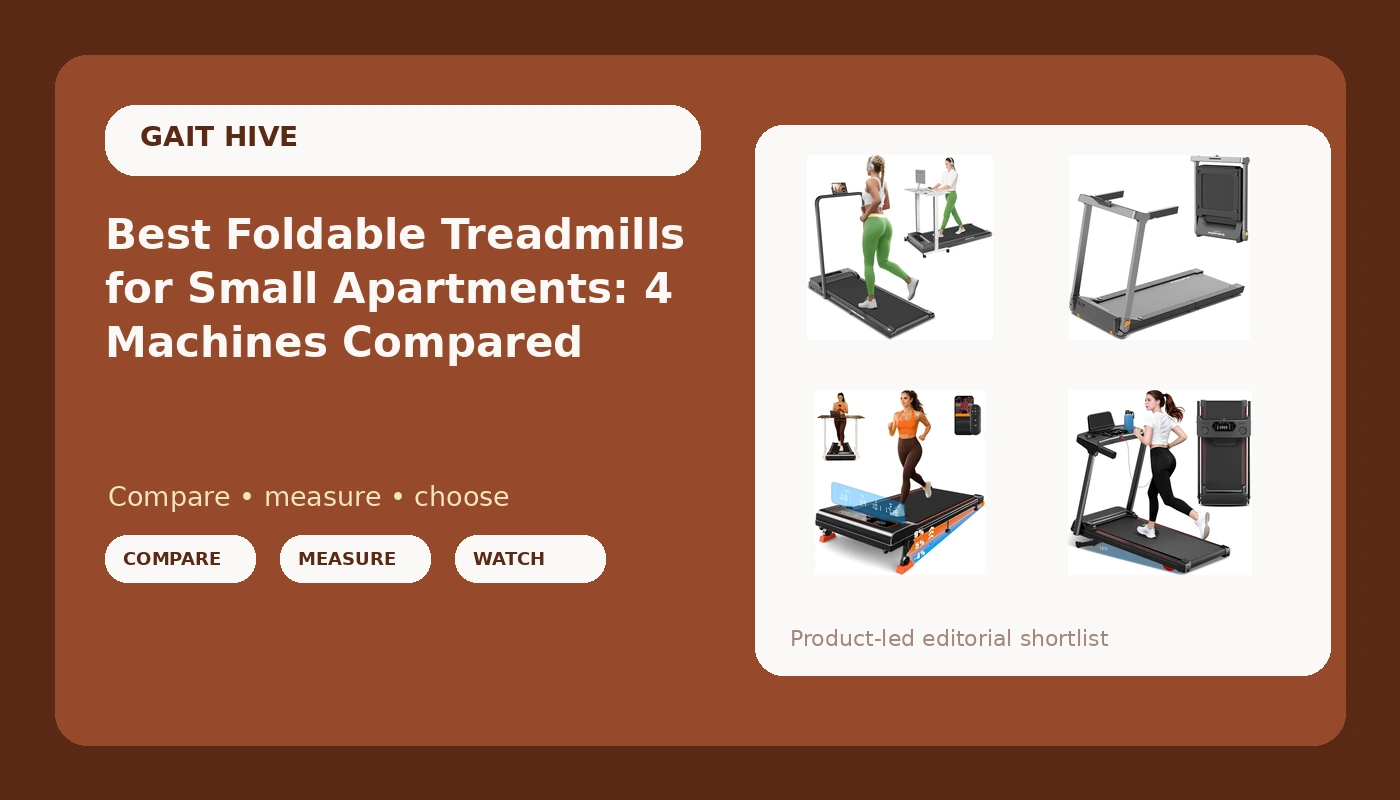
I coach runners in Austin, Texas, where the weather spends half the year trying to talk you out of going outside. My living room is 680 square feet, and more than 30 machines have been folded, wheeled, and tripped over inside it. So when someone asks me about foldable treadmills for small apartments, I do not start with horsepower. I start with whether the machine will still be in the room in six months, or whether it turns into a very expensive place to stack laundry. This comparison covers four machines worth considering for a small space, and the gap between them comes down to one question: do you plan to walk, or do you plan to run?
Related: Walking Pad vs Treadmill: Which One Fits a Small Apartment
The best pick in this group for most small apartments is the treadmill with the 0 to 16% auto incline and the handle bar, because it is the only machine here that pairs a running-capable speed range with powered incline and a 350-pound capacity in a folding frame. The other three are not bad machines. Two are honest walking pads, and one is a folding pad that is quick enough to jog on. Which one belongs in your apartment depends on whether you are buying a desk accessory or a training tool.
Prices move around constantly, so rather than print a number that will be wrong by the weekend, every price column below points you at the listing.
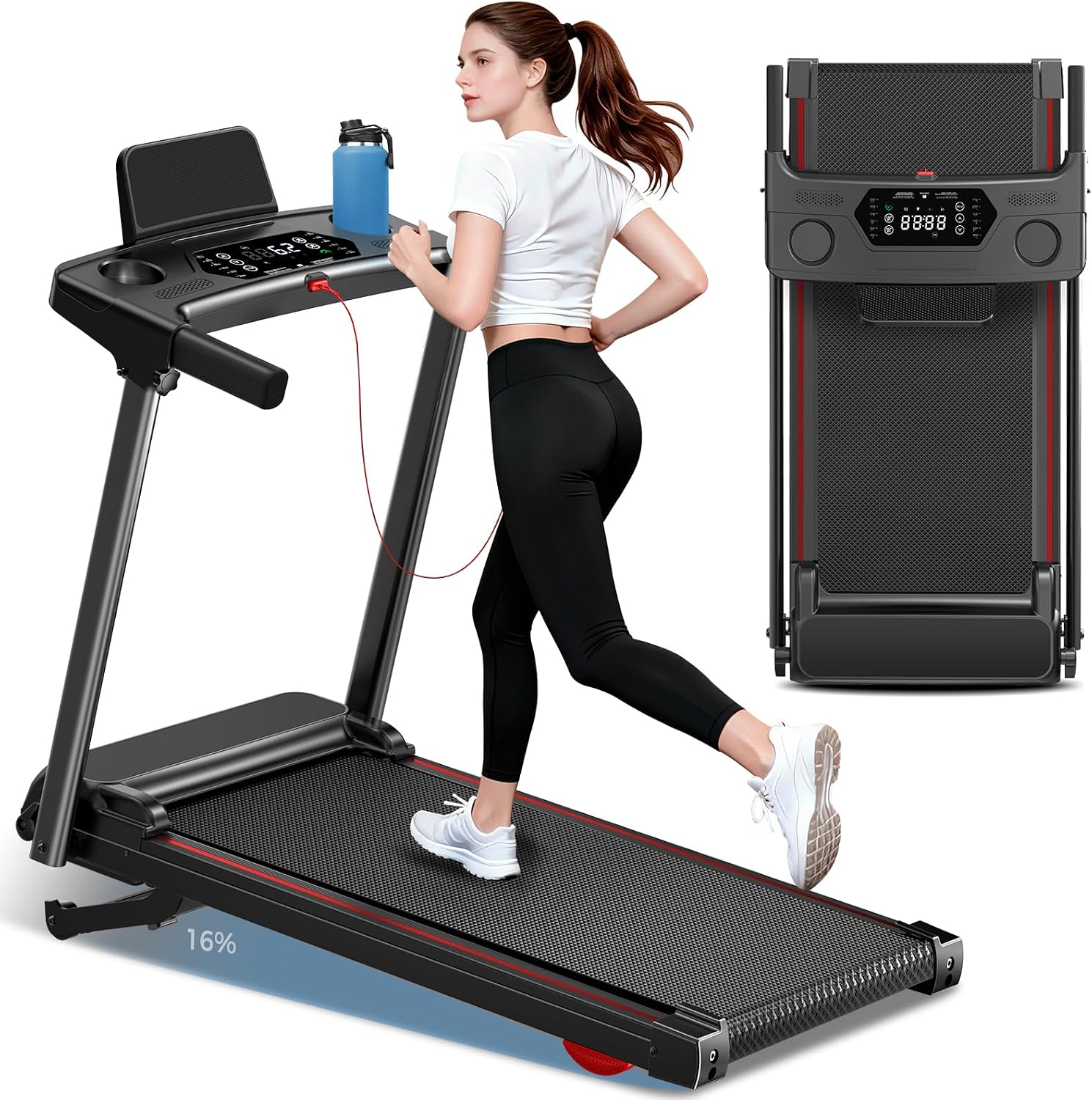
Treadmill with 0-16% Auto Incline, 0.6-7.5MPH Walking Pad Treadmills for Home, 3.0 HP Low Noise Foldable Treadmill with Handle Bar and LED Display, Walking Running Machine, 350LBS Capacity
Powered 0 to 16% incline, 7.5 MPH top speed, 350 lb capacity, handle bar, LED display
The biggest and heaviest of the four, and the one you will notice when you fold it and move it
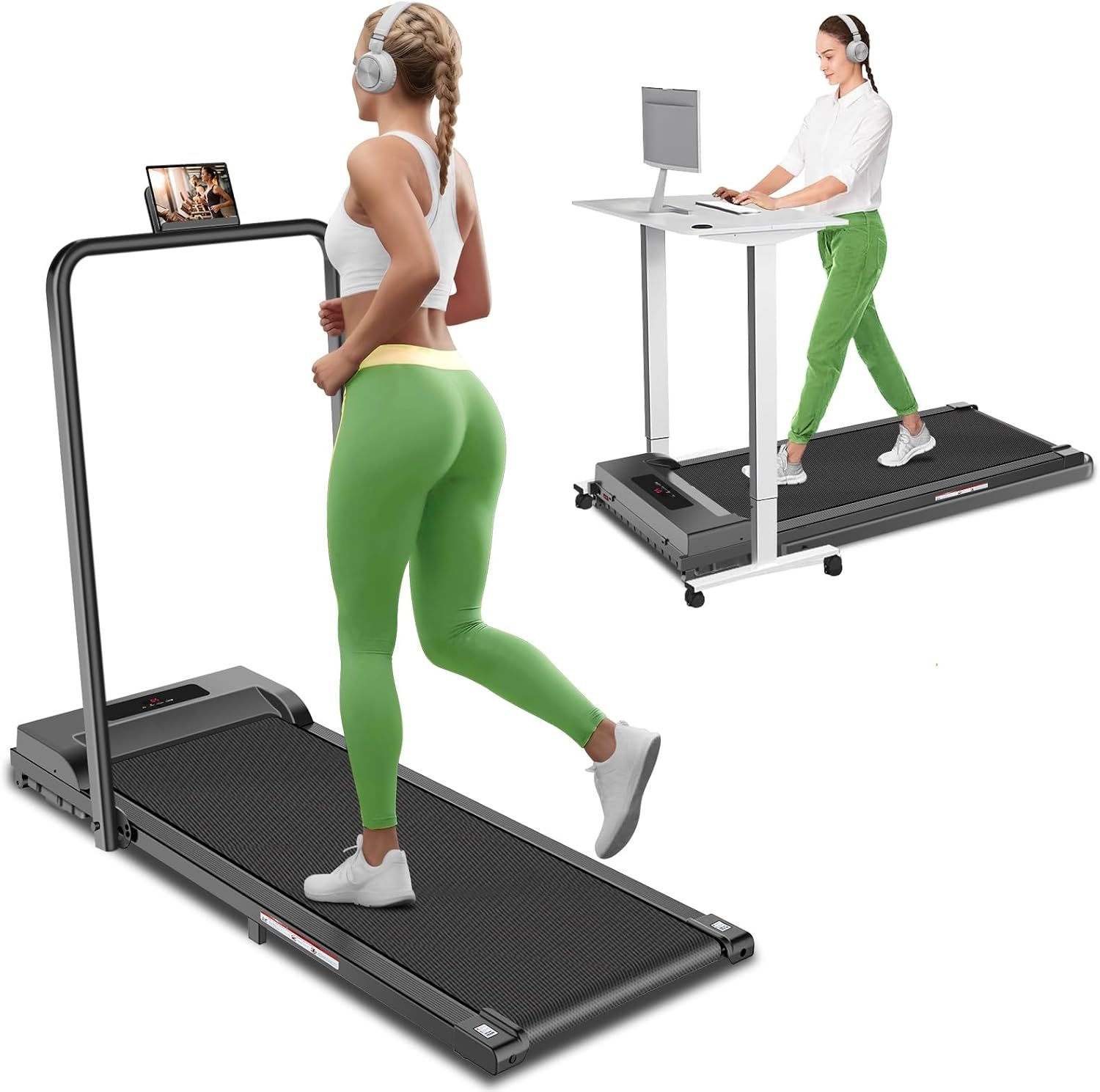
Aiteid Treadmill with Handles, Small Treadmills for Home, Portable Electric Treadmills for Home 300 lbs Capacity,Walking Pad Treadmill,Lightweight Foldable Walking Pad(Black Red)
Lightest and simplest of the group, 300 lb capacity, handles up front, easy to stand against a wall
No incline, and at heart it is still a walking pad with a handle
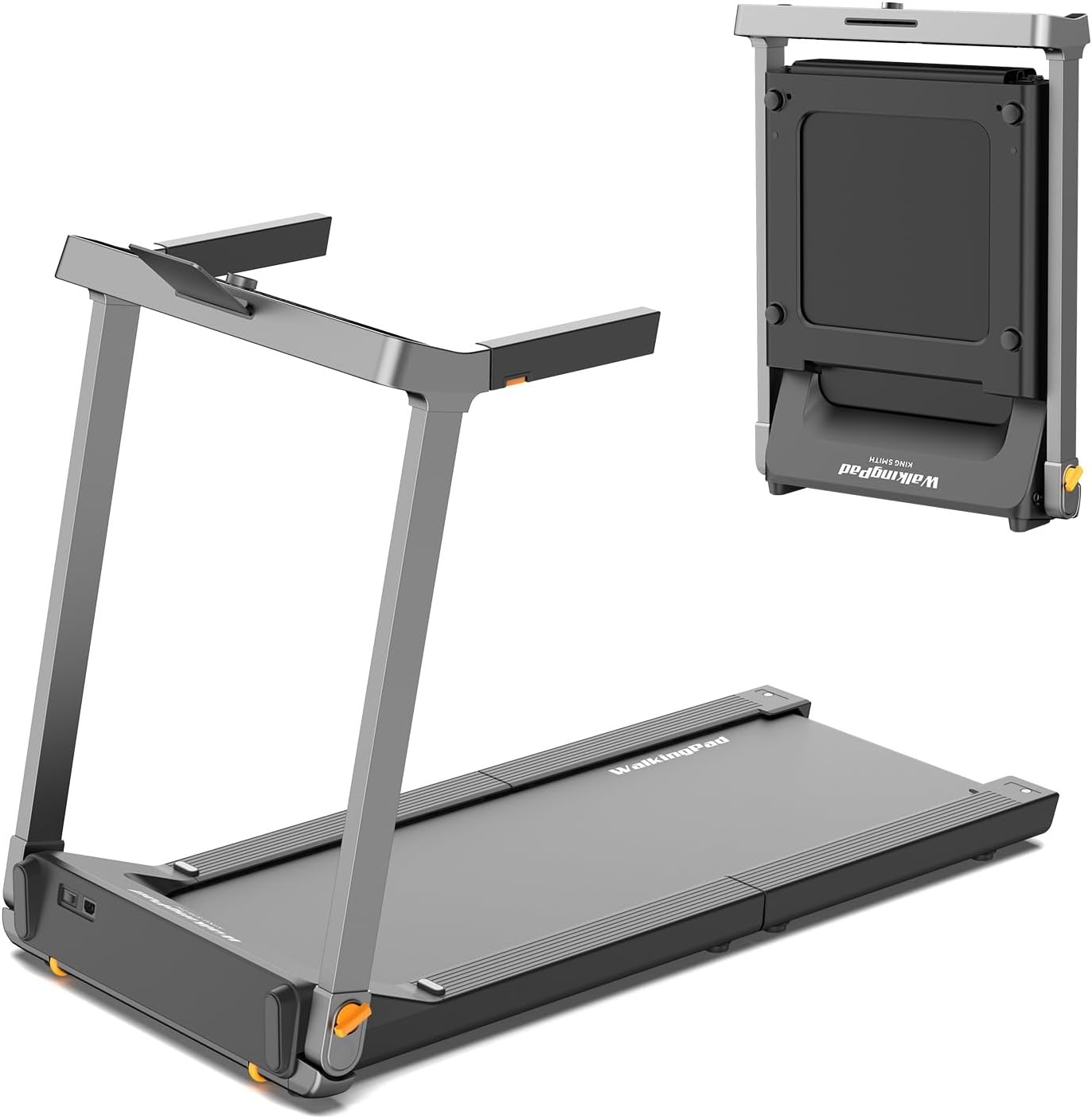
WALKINGPAD Foldable Walking Pad Treadmill with Handle Bar, 7.5MPH
7.5 MPH top speed, folding frame, handle bar as a named feature
No incline, and speed does not change the fact that a pad deck is a pad deck
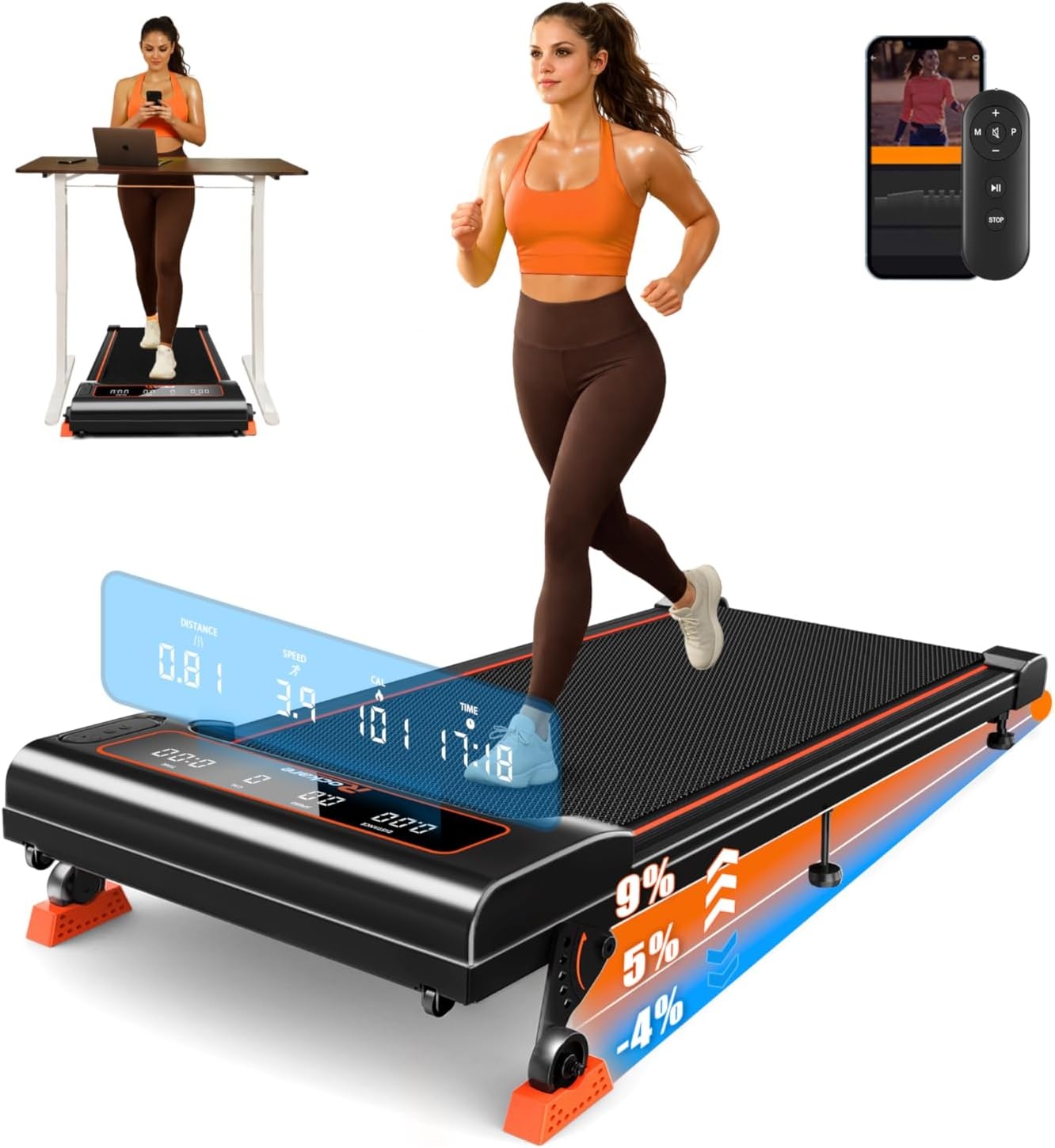
Walking Pad with Incline 9% & Decline -4% 5 Level, Under Desk Treadmill
Five levels of incline plus decline, low profile, built for life under a desk
Walking only, no handle bar, and the incline mechanism is the part I would want to inspect in person
Prices and availability were captured from Amazon Creators API and may change.
How I judge a treadmill for a small apartment
Four things decide whether a folding machine survives in a small space.
Deck length first. If your stride does not fit the belt, nothing else on the machine matters. You will start taking smaller than normal steps without noticing, and that is how hips and hamstrings get grumpy. Belt length is the spec I want before anything else, and it is usually buried behind speed and weight capacity in the listing copy. Measure your stride, then find the belt length, then decide.
Noise second. A motor you can hear through a wall is a failed purchase no matter what it claims. The honest test is a phone call at walking speed. If you have to turn up the TV or mute yourself on a conference call, the machine is too loud for apartment life.
Folding third, and only if you can move it. A fold is meaningless if the folded machine weighs more than you want to drag. Wheels and folded weight are the real specs. I fold and move any machine I keep at least ten times before I trust the mechanism.
Incline last, because it is where budget machines cut corners. The incline system is the tell. A five-level pad that tilts on plastic risers under the deck works, but it wobbles slightly, and it does not inspire a ton of confidence. Powered incline is a different animal.
One more thing, non-negotiable: the magnetic safety lanyard. Every machine on this list should have one, and it should be clipped on before the belt moves.
The machine I would buy for a real running habit
The treadmill with the 0 to 16% auto incline is the only machine in this comparison that reads like a treadmill rather than a pad. Three numbers do the work: a 3.0 HP motor, a 0.6 to 7.5 MPH range, and a 350-pound capacity. That speed range matters because it covers the whole span from a slow desk walk to an actual jog, and the powered incline goes all the way to 16%, which is steep enough to make a walk feel like training.
The handle bar and LED display put it in the folding treadmill category rather than the under-desk category. That is the right call for anyone who wants to run indoors during an Austin August or a cold snap, because a handle bar gives you something to grab when you push pace or climb, and a display lets you watch time and speed without a phone propped on the deck.
What it loses on: size and weight. This is the largest machine here, and when it is folded you will still know it is there. In a 680-square-foot apartment, that means it lives against one specific wall, and you plan the room around it. If you want a machine you can slide under a couch, this is not that machine. If you want one machine that walks, jogs, and climbs, this is the one I would spend on.
The lightest option: Aiteid treadmill with handles
The Aiteid is the machine I would hand to someone who is honest with themselves about walking and nothing more. It is a lightweight, foldable walking pad with handles, a 300-pound capacity, and a straightforward black and red finish. There is no incline, no powered deck adjustment, and no pretense about being a running machine. It is small, it is portable, and the handles give you balance and something to hold during a longer walk.
That simplicity is the appeal. When a machine has fewer moving parts, there is less to wobble, less to break, and less to figure out at 6 a.m. It is also the easiest of the four to stand up against a wall or roll into a corner, which is the entire point of buying a small treadmill.
The catch is the same catch that applies to every walking pad: a pad is a pad. If you want to run, you need a deck that fits your stride, and most pads do not have one. Buy this for steps, for walking meetings, for getting movement into a day that would otherwise be all sitting. Do not buy it expecting to train for a 10K on it.
One practical note that applies here and to any listing: study the photos twice and check the box contents. I have seen listings show a handle bar that the box does not include, and that is a bad surprise on delivery day.
The walking pad that can keep up
The WALKINGPAD folding walking pad with handle bar is the interesting middle child. It folds, it has a handle bar as a named feature, and its top speed is 7.5 MPH, which is genuinely quick for something called a walking pad. That speed is the whole argument for this machine: it is a pad you can jog on.
Whether that argument holds depends on the deck. Speed is easy to advertise and belt length is not, so before you commit, find out how much running surface you are actually getting. A fast belt on a short deck just means you reach the end of it sooner. If the deck length works for your stride, this is a legitimate small-space jogging machine with a handle bar for balance and a fold for storage.
What it loses on: no incline, and no escape from the pad category. You are not getting hill work here, and you are not getting the stability of a full folding treadmill frame. It is also priced above the two simplest pads in this group, which is fair given the speed and the handle, but worth knowing before you compare listings side by side.
The desk machine with real incline
The walking pad with 9% incline and negative 4% decline is the most interesting machine here for anyone who works from home. Five levels of adjustment, both up and down, on a low-profile under-desk treadmill is a genuinely useful combination. Incline turns a flat walk into something that asks more of your calves and glutes, and decline is rare at this size and price point. If your goal is walking while you answer email, the ability to change the angle is what keeps a forty-minute walk from feeling like forty identical minutes.
It is also the lowest-profile machine in the group, which is the point of an under-desk treadmill. It slides under a standing desk and out of the way.
What it loses on: it is a walking machine with no handle bar, so it is not built for pace or for balance assistance. And the incline system is the part I would want to see in person. On budget pads, incline is often handled by risers under the deck rather than a powered mechanism, and that is the difference between a system that feels solid and one that wobbles slightly underfoot. Ask about the mechanism before you buy, and if the answer is vague, treat that as your answer.
The trade-offs in plain terms
If you want one machine that covers walking and running, buy the treadmill with the auto incline and the handle bar, and accept that it takes up real floor space even folded.
If you want the cheapest path to more daily steps and you already know you will not run indoors, the Aiteid and the incline walking pad are the two honest budget picks. Choose the Aiteid if you want handles and the simplest possible machine. Choose the incline pad if you want to walk at a desk and you want the angle to change.
If you want to jog but you cannot give up the footprint, the WALKINGPAD is the compromise, and the only question that matters is belt length.
What none of these four is: a substitute for a gym treadmill. Full-size commercial machines belong in gyms. In a small living room, they are a two thousand dollar coat rack.
Questions I get about small treadmills
Do I need an incline? For walking, incline is the single best way to make a flat walk count. For running, powered incline is worth paying for. For a pure desk setup, incline is nice to have, not essential.
How quiet is quiet enough? Quiet enough that you can take a call at walking speed without apologizing. Anything you can hear through a wall while the TV is on is too loud for an apartment.
Will a walking pad survive daily use? Yes, if you keep the belt clean and lubricated and you stay within the weight capacity. The failure mode on budget machines is usually neglect, not mileage.
Can I run on a walking pad? Only if the belt is long enough for your stride at speed, and only on one rated for it. Otherwise you will be shortening your stride without realizing it, which is exactly the habit a coach spends months fixing.
The bottom line
Buy the machine that matches what you will actually do in February, not what you imagine doing in June. For most small apartments and most people who want the option to run, that is the treadmill with the powered incline, the handle bar, and the 350-pound capacity. For pure walking, the Aiteid and the incline pad are honest, simple tools at honest prices, and honest is exactly what a budget machine should be.