Related: Walking Pad Incline Workouts You Can Do While the Coffee Brews
Most people who go looking for a walking pad with incline are not trying to build a home gym. They are solving one stubborn problem: it is 104 degrees in Austin, or it is sleeting, or the baby is finally asleep, and they have about four square feet of floor to give to a machine. I coach runners for a living, and I answered the treadmill question for years without ever owning one. Eventually I bought a cheap foldable machine for my own small living room and started testing the way I coach: one rep at a time, logged, no shortcuts.
I have unboxed, folded, wheeled, and walked on more than 30 treadmills and pads since then, all of them in a 680-square-foot apartment. The four below are the incline walking pads I would put in front of a friend who wants to walk indoors with some grade under their feet. Two of them have motors, one is built around a desk, and one has no motor at all.
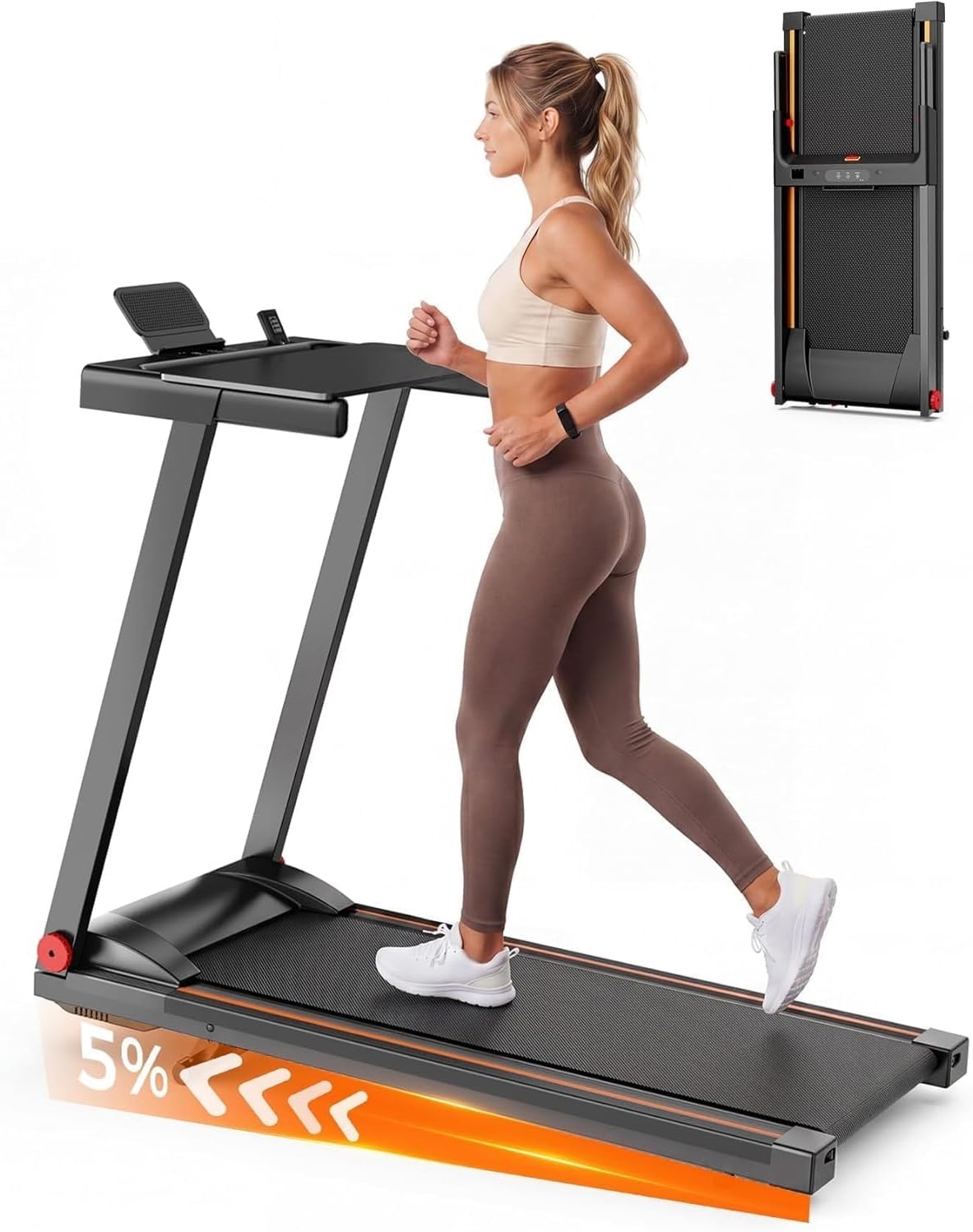
Best Overall: Walking Pad Treadmill with Incline, 3.0HP Quiet Motor, Folding Portable Design, 300LB Capacity, Handle Bar, Remote Control & LED Display
This is the one I point to first, because it is the only pad in this group that pairs a real motor with a handle bar and a fold one person can manage alone. The 3.0HP motor is the headline, but horsepower is not what sells me on a pad for a home. Quiet is. A motor you can hear through the wall is a failed purchase no matter what the spec sheet says, and the whole point of a walking pad is that you can walk while someone in the next room is on a conference call.
The handle bar matters more than people expect. I have lost count of the listings that show a bar in the photos and ship a box without one, so it is one of the first things I verify. A bar gives you something to grab when you bump the speed up, or when your legs get tired twenty minutes in. It turns a strip of belt on the floor into something you can lean on.
The remote and the LED display mean you are not bending down to a console every time you want to change pace. That sounds like a small thing until you have tried to adjust speed mid-walk on a pad with the controls at your feet. It is rated to 300 pounds, which covers most households, and it folds into a portable package that can live under a desk or against a wall.
Where it gives ground: it costs more than the other three, and if you only ever walk flat at a desk, you may not need the motor or the bar. For everyone else, this is the machine that does the most jobs well.
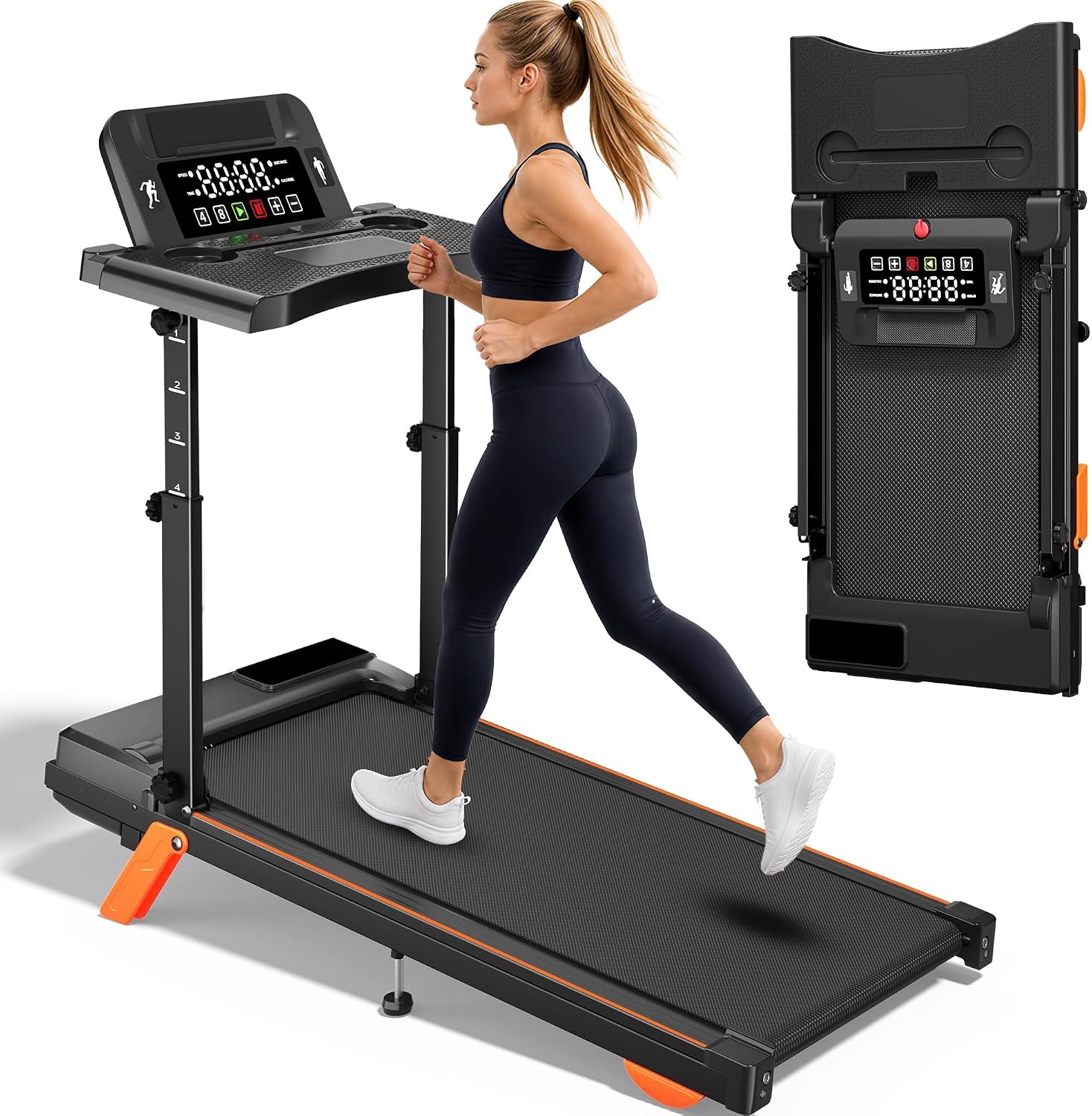
Best Value: Foldable Walking Pad Treadmill with Handle Bar and 12% Incline
The 12% incline is the reason this pad makes the list. Twelve percent is steep enough that a walk starts to feel like training, and steep enough that you will notice it in your calves and your breathing inside the first ten minutes. For a lot of people that is the entire point. Walking a flat belt at an easy pace for an hour is fine, but it does very little for your heart or your hips.
It folds, and it has a handle bar, which puts it in a small group of budget pads that do not force you to choose between storage and stability. The bar is the difference between a pad you use every day and a pad you trip off of. Fold it, lean it against the wall, and it disappears.
This is the pad I bring up when someone wants to spend less and still have grade under their feet. What you give up is motor headroom compared with the pick above. A machine like this is built for walking, not running, and if you try to run on it you will feel the deck run out from under you.
That is not a knock. A walking pad is a walking pad. The mistake is buying one and expecting a treadmill.
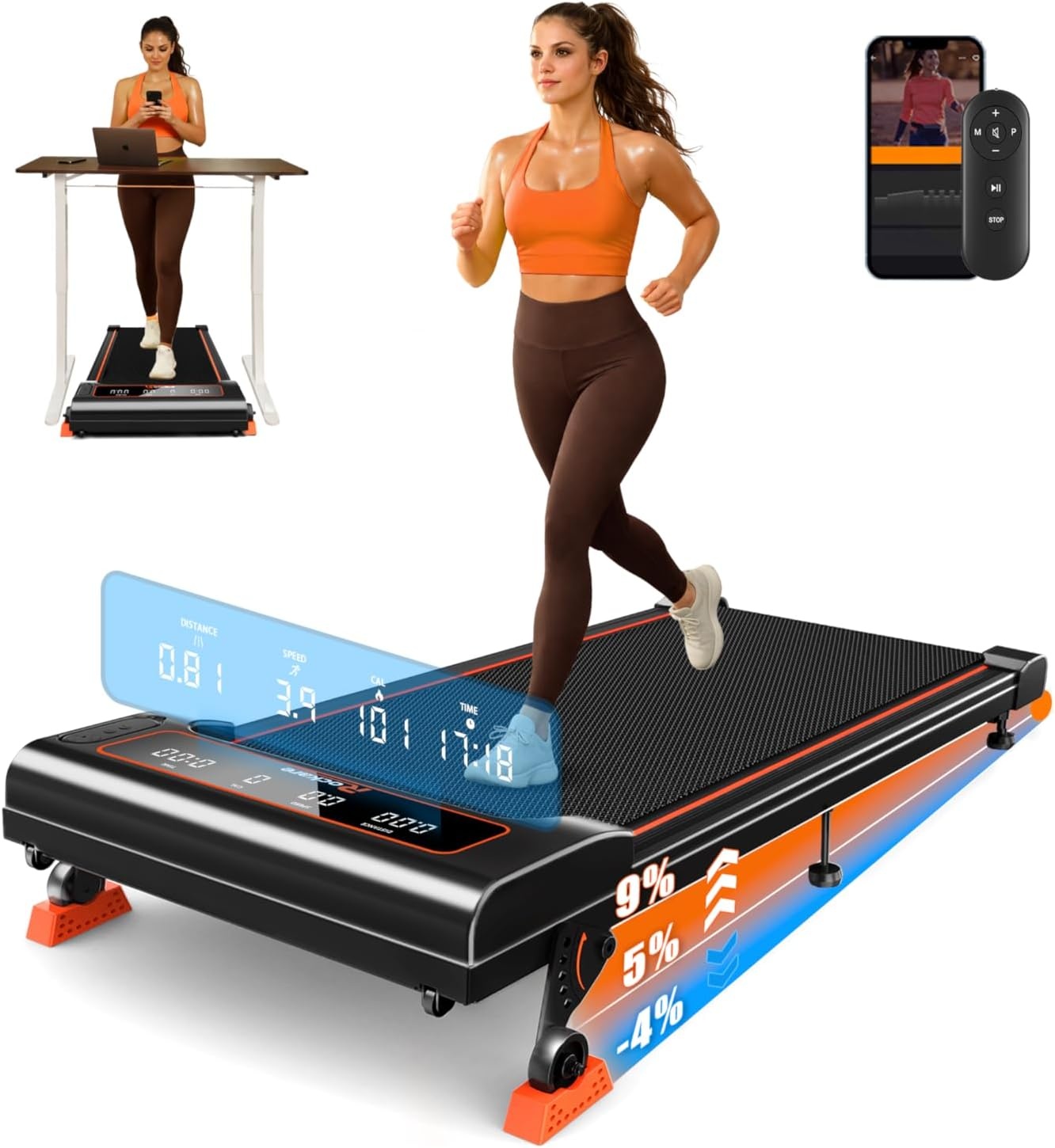
Best for Desk Days: Walking Pad with Incline 9% & Decline -4%, 5 Level, Under Desk Treadmill
This is the only pad here with a decline, and that is the detail that separates it from every other budget pad I have looked at. The deck tilts down to -4% and up to 9% across five levels. Decline is not a gimmick. It changes which muscles do the work, and it lets you come back down from a long climb without stopping the walk entirely.
The five levels also give you a way to progress instead of guessing. Start flat, add a level every week or two, and let the machine carry the structure for you. That is more useful than a screen full of programs you will never open.
It is an under-desk pad by design, and there is no handle bar in the name, so it suits the person who wants to walk through meetings and email rather than hold on and march. If you want to grip something while you walk, this is not your machine. If you want a low, quiet pad that fits under a standing desk and lets you add grade without a second thought, it is the cleanest answer in the group.
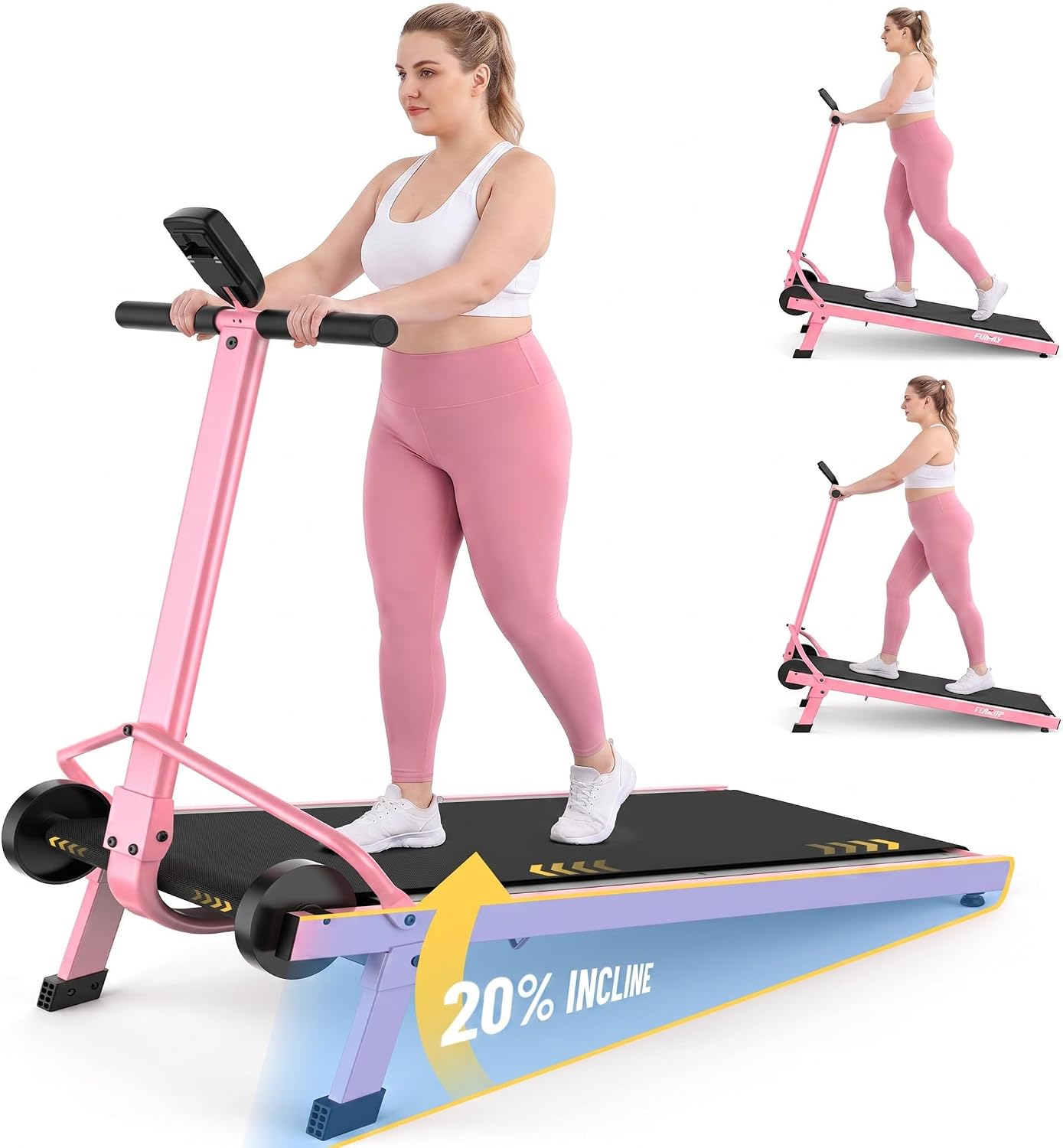
Best Motorless Pick: ANCHEER 20% Incline Manual Treadmill, Non Electric Walking Pad with Handle Bar, Up to 500LBS, Digital Monitor
The ANCHEER is the odd one out, and it is the machine I get asked about the most, because it has no motor at all. You drive the belt with your own feet. That means no motor noise to manage, no cord to route across the living room, and no electronics to fail. If you have ever had a pad die quietly at month fourteen, that is a real argument.
It is also the only machine here rated to 500 pounds, and the only one built to go outside as well as in. The 20% incline is the steepest in the group by a wide margin, which makes it a serious walking workout, and the digital monitor gives you basic feedback without a screen you have to squint at.
The trade-offs are honest. Without a motor you set the pace with your stride, so it feels different from a belt that moves under you, and a motorless belt takes a session or two to trust. There is no remote and no speed setting to tap, because there is nothing to set. The upside is that the machine is simpler than everything else on this page, and simple is a feature when you are the one maintaining it.
How I test a walking pad before I recommend it
Every machine I put my name behind has to clear the same bar, and the bar is never the spec sheet. This is the routine.
- Fold it and move it ten times. If I cannot fold it and wheel it out of the way myself, in a small living room, the fold does not count. Wheels and weight are the real specs, not the folded dimensions in the listing.
- Walk it at a full stride, not a shuffle. Deck length is the first thing I check on any machine. If the belt is short, you will start taking smaller than normal steps without realizing it, and that is how a walk turns into a wince.
- Take a call on it. I walk at a conversational pace with a headset on and see whether I have to raise my voice or reach for the TV remote. Quiet is the whole game at home.
- Load the incline and feel it. The incline mechanism is the tell. Some budget pads use risers that wobble slightly under the deck. If the incline wobbles, the machine is cutting corners somewhere else too.
- Check the safety lanyard. The magnetic clip that kills the belt if you fall is non-negotiable. It is the one safety feature I check on every motorized machine.
- Put miles on the belt. A budget pick has to survive 200 miles before I will call it a budget pick.
Analysis: motors, incline, and the fold
The biggest fork in this group is motor versus no motor. Three of these pads move the belt for you. The ANCHEER does not. A motor buys you consistency, a remote, and the ability to hold a steady pace while your attention is somewhere else. No motor buys you silence, no cord, and one less thing to break.
Then there is the incline. Twelve percent on the foldable pad is a real climb. Nine percent with a -4% decline on the desk pad is the most flexible setup, because you can go up and come back down. Twenty percent on the manual machine is the steepest option here and the one that will humble you fastest if you have not been walking hills.
Capacity is the spec people skip. The ANCHEER is rated to 500 pounds, the 3.0HP pad to 300. If you are a bigger walker, or you share the machine with someone who is, that number matters more than any display feature.
The handle bar is the last thing I look at, because it is the thing listings lie about most often. Two of these pads have one. The desk pad does not, by design. If you want to hold on, that narrows the field immediately.
The walking pad comparison table
| Machine | Incline | Fold and move | Handle bar | Rated capacity | Best for |
|---|---|---|---|---|---|
 Visit on Amazon → Visit on Amazon →Walking Pad Treadmill, 3.0HP quiet motor |
Incline, level not published | Folding portable design | Yes | 300 lb | Most apartments |
 Visit on Amazon → Visit on Amazon →Foldable Walking Pad with handle bar |
12% | Foldable | Yes | Not listed | Best value |
 Visit on Amazon → Visit on Amazon →Under desk walking pad, 5 level |
9% incline and -4% decline | Under desk, fold not listed | No | Not listed | Desk days |
 Visit on Amazon → Visit on Amazon →ANCHEER manual treadmill |
20% | Compact, motorless | Yes | 500 lb | No-motor pick |
Two things are worth saying about this table. First, the blanks are real. If a listing does not publish a capacity or an incline percentage, I am not going to fill it in with a guess, because the guess is what gets you a machine you did not order. Second, the cheapest row here is the one rated to the most weight, which tells you how little motor and display have to do with how sturdy a walking pad actually is.
Which pad fits your space
If you live in an apartment and want one machine that handles a desk walk, a hill walk, and a stored-against-the-wall evening, take the 3.0HP pad with the handle bar and the remote. It is the most complete answer here.
If you want the steepest grade for the least money, the 12% foldable pad is the one. If you walk while you work and want to go up and back down without stopping, the five-level desk pad is the only machine here that can. And if you want zero motor noise, zero cords, and the highest weight rating on the page, the ANCHEER manual machine is a genuinely different kind of tool, not a cheaper version of the same one.
Should you buy the walking pad treadmill with the 3.0HP quiet motor?
Yes, for most apartments. It is the only pad here that combines a real motor, a handle bar, and a fold one person can manage alone. The motor is built to run quiet, the deck is rated to 300 pounds, and the remote and LED display keep you from bending down to the controls mid-walk. If you only ever walk flat at a desk and never want to hold on, you can spend less and be just as happy.
Should you buy the ANCHEER manual treadmill?
Yes, if you want no motor, no cord, and no electronics to fail. It is rated to 500 pounds, it carries the steepest incline in this group at 20%, and it is built for outdoor use as well as indoor. The trade-off is honest: you drive the belt with your own feet, so the pace is entirely yours, and the belt takes a session or two to trust. If that sounds like a deal breaker, buy one of the motorized pads above instead.