Most people shopping for a compact treadmill for small apartments start with the motor and the price. I start with the belt. If your stride does not fit the deck, nothing else on the machine matters, and no amount of horsepower or app content fixes it.
I have coached runners for 12 years and logged over 40,000 miles myself, almost all of it outdoors. I bought my first folding treadmill out of pure frustration. Austin summers got worse, my knees got louder, and my clients kept asking the same question: what treadmill should I buy for my apartment? I did not have an answer I trusted, because I had never run on one of them. So I bought a cheap foldable machine for my own small living room, and I started logging it the way I coach: one rep at a time, no shortcuts.
Since then I have unboxed, folded, wheeled, and run on more than 30 machines in a 680-square-foot apartment. This is the setup guide I wish I had, covering what to measure before you order, where to put the thing so you will actually use it, how to fold and move it without wrecking your back, and the two compact machines I would put in a small apartment right now.
Why you should trust me
I have been coaching runners since 2014, and since 2023 I have lived with every treadmill and walking pad I recommend before I say a word about it. That means at least two weeks of real use in a real living room, not a showroom floor. I fold and move every machine at least ten times before I form an opinion on the folding mechanism. I take a decibel reading at walking speed during an actual conference call. No budget pick gets recommended until the belt has 200 miles on it and I have checked it for wear and wobble.
I am also the guy who will tell you not to buy the machine you asked me about. A treadmill is a tool for the days you cannot get outside. It is not a substitute for running, and most people buy far more machine than they need.
How I picked and how I tested
Both machines below went through the same routine. I unboxed them alone, in my apartment hallway, and timed it. I folded and unfolded each one ten times and wheeled it to its parking spot, because folding only counts if you can actually move the thing once it is folded. I walked on each at desk speed with a laptop open and a call running, listening for what carries through a wall. I checked the incline mechanism by hand and then underfoot, looking for wobble. And I logged deck feel at a full running stride, not just a walk, because a deck that feels fine at two miles per hour can feel like a trap at six.
The two things I trust most: whether my foot lands on belt or on frame at my normal stride, and whether I can hear the motor over a normal speaking voice. If the answer to the first is "frame" or the second is "yes," the machine is wrong for a small apartment no matter how good the listing looks.
What to measure before you order anything
Do this with a tape measure and a notepad before you open a single product page. It takes 15 minutes and it prevents the most common apartment treadmill mistake, which is buying a machine that fits your body but not your space, or your space but not your body.
Your stride, on the floor. Stand in socks and take three normal walking steps, then three of your running stride if you plan to run. Mark heel to heel. A running deck needs enough belt that your foot lands where it took off from. If it does not, you will start taking smaller than normal steps without noticing, and that is how a treadmill quietly wrecks your form. Be honest about this one: if you want to run, most compact machines are not the answer.
The folded footprint and folded height. Measure the closet, the gap behind the couch, or the corner where it will park. Then measure the narrowest doorway it has to pass through. A machine that folds flat but does not fit the door is a machine that lives in your living room forever.
The outlet. Find the nearest one and decide whether the cord reaches without crossing a walkway. An extension cord stretched across the floor is a trip hazard, and the magnetic safety lanyard will not save you from a cord you forgot about.
The floor and the neighbors. A mat under the machine does two jobs: it protects your floor and it deadens some of the vibration that travels into the unit below you. If you have a choice, put the machine on the lowest floor you have.
Who else uses it. A handle bar matters more for a beginner or someone returning to walking than for a runner who only wants steps during calls. Decide who the machine is for before you decide what the machine is.
The two machines I would put in a small apartment
Both of these are budget-tier machines, and I mean that as a compliment. They are honest about what they are: walking machines with a little extra. One has a handle bar and folds for under-desk use. The other adds incline. Neither is a running treadmill, and if you buy one expecting to train for a half marathon, you will be disappointed and it will be the machine's fault in your head, not the listing's.
Walking pad pick: Walking Pad Treadmill for Home with Handle Bar Foldable Under Desk Terluxra
 Visit on Amazon →
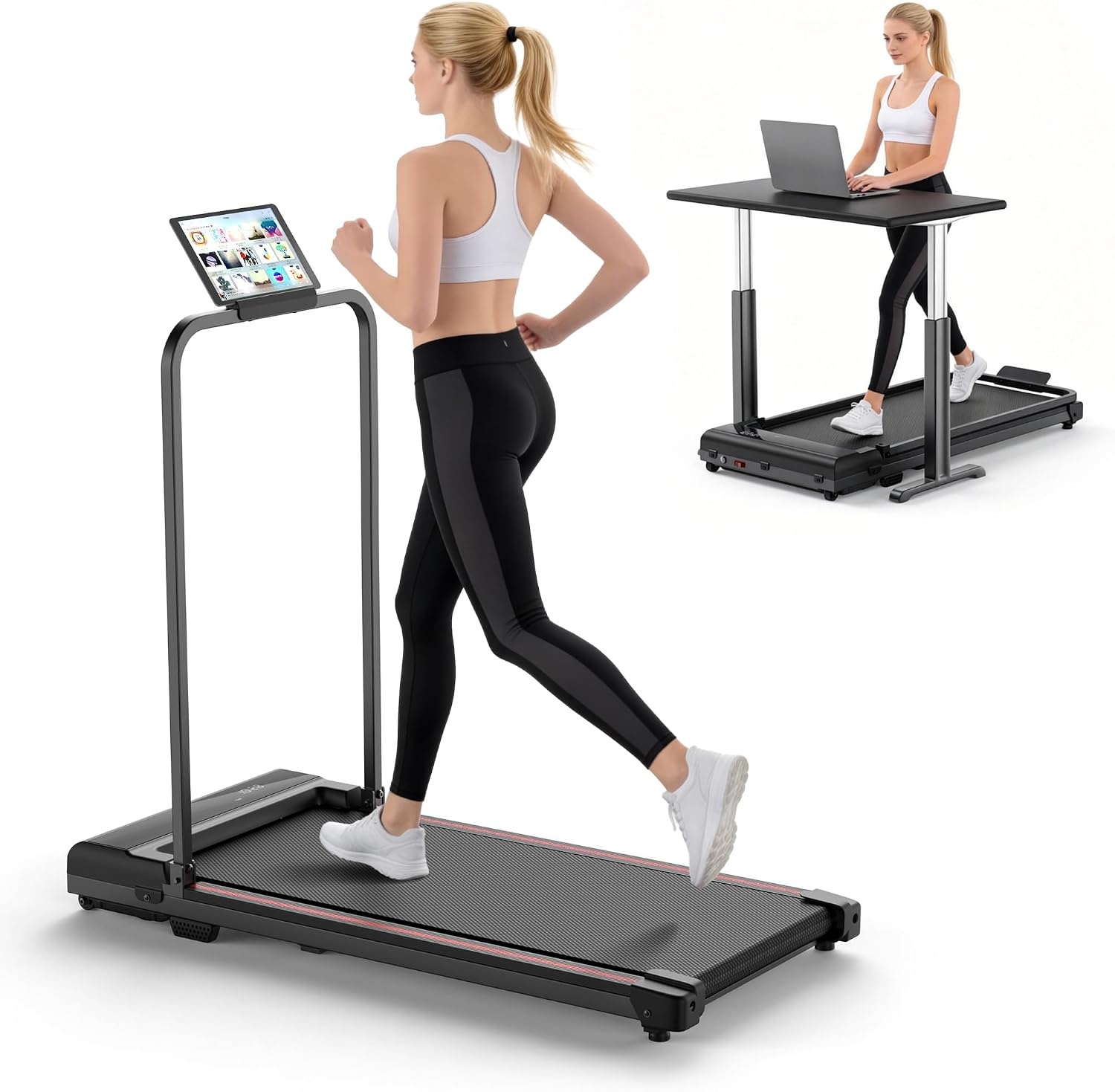
The handle bar is the reason I would choose this one over a bare pad. A walking pad with no bar is fine if you have good balance and a short attention span for meetings, but the bar gives you something to steady yourself with when you step on, and something to hold when you look down at your laptop. Check current Amazon price.
The fold is the other half of the pitch. It folds down for under-desk storage, which is the whole point in a small apartment: the machine earns its floor space during the workday and then gets out of the way. Read the listing photos twice and confirm what is in the box before you order, because product pages and box contents do not always match, and a handle bar is not something you want to discover is missing after delivery.
Flaws but not dealbreakers: This is a walking deck. Treat it as one. It is built for desk speed and steady steps, not for a full running stride, and no amount of wishful thinking changes the belt length. If you want to run, keep reading, and then keep looking.
Anyone who works from home and wants steps during calls, or who wants a low-impact walk on the days it is too hot or too cold to go outside, will get real use out of this.
Incline pick: Mini Treadmill for Home-Compact with Incline
 Visit on Amazon →
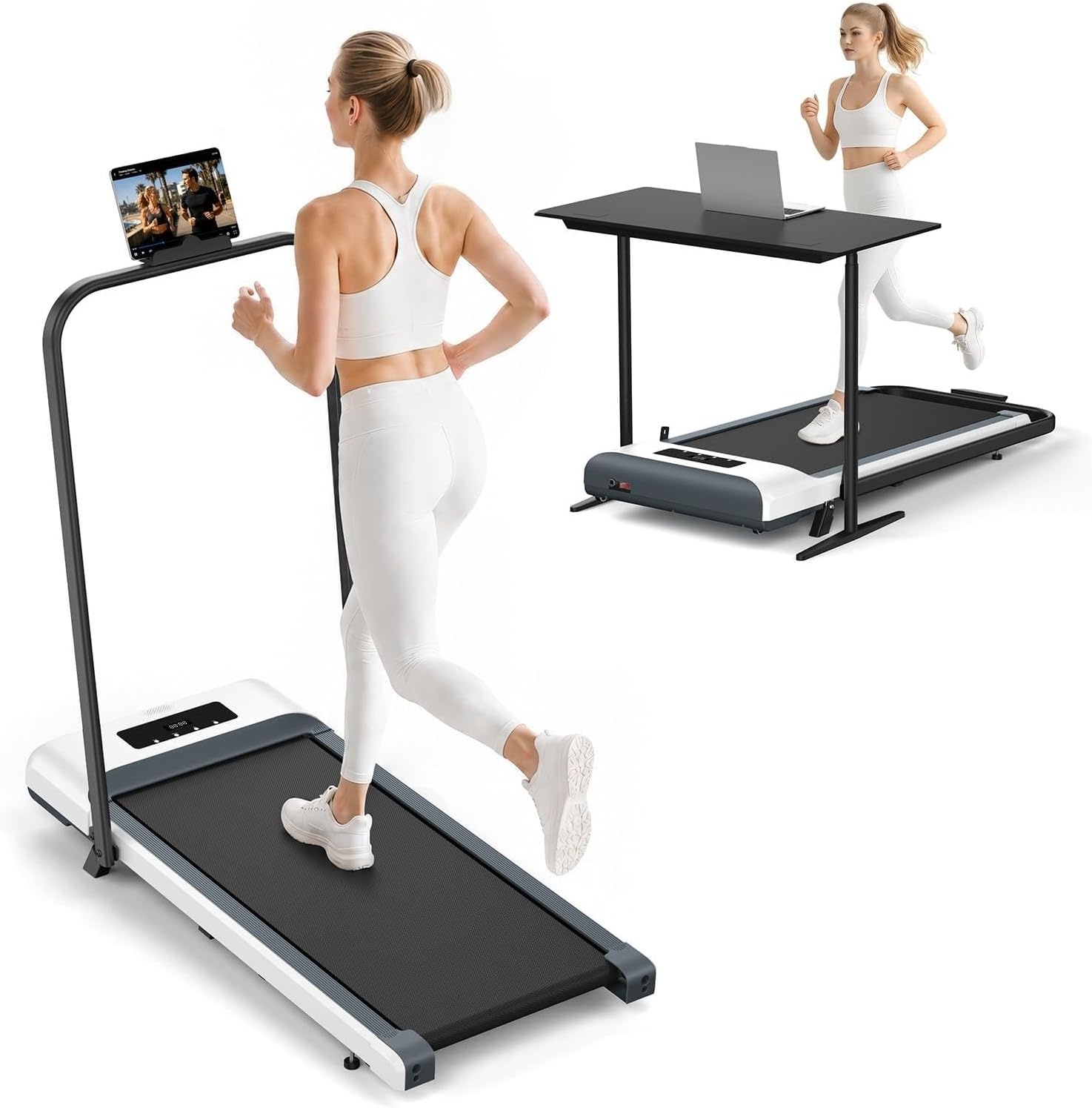
Incline is how you make a compact machine harder without making it faster. Walking uphill at a comfortable pace asks more of your glutes and calves than flat walking, and it does it at a speed that will not wake the neighbor below you. That is why this is the second machine I would put in a small apartment. Check current Amazon price.
The thing to inspect on any budget incline machine is the incline itself. If the system feels like plastic blocks under the deck that shift slightly when you put weight on them, the machine is cutting corners somewhere else too. Stand on it, start a slow walk, and pay attention to whether the deck rocks or the risers move. A solid incline feels planted. A wobbly one tells you what the rest of the build is like.
Flaws but not dealbreakers: Compact and mini mean exactly that. This is a walking and incline machine, not a running deck, and the belt will feel short the moment you try to open up your stride. Use it for incline walks and intervals at walking pace and it does its job.
Anyone who wants a harder walk than flat ground allows, in a footprint that fits beside a couch, should start here.
The setup, step by step
Now the part you came for. None of this requires tools beyond what ships in the box, and all of it takes one afternoon.
Step one: Pick the spot and clear the landing zone. Give yourself at least a full step of clear floor behind the machine and enough room in front that you are not staring at a wall from six inches away. Mark where the machine parks when folded, and make sure that spot is not in the walking path between the kitchen and the bathroom.
Step two: Lay the mat and level the machine. A mat under the feet protects hardwood and carpet alike. Then check the feet. If the floor is uneven, adjust until the frame does not rock when you press down on one corner. A machine that rocks on day one will rock more after a month.
Step three: Unfold and lock everything. Open the frame and confirm it locks. If there is a handle bar, raise it and lock it in place. If there is a console, attach it. Read the manual once, cover to cover, even if the translation reads like it was done by someone who has never seen a treadmill. It is still the only document that tells you what this specific unit needs.
Step four: Attach the safety lanyard before your first step. Clip the magnetic end to the machine and the other end to your waistband. This is the one safety feature I check on every machine I touch, and it is non-negotiable. If you fall, the belt stops. Set that habit on day one, not after a scare.
Step five: Check for wobble underfoot. Start a slow walk and put your weight down normally. Listen and feel. If the frame rocks, if the incline blocks shift, if the deck flexes more than you expect, stop and check the feet and the floor before you go further. If it still wobbles, that is information about the machine.
Step six: Test the noise at walking speed. Turn on a call or a podcast at normal volume and walk. If you have to turn the volume up, the motor is louder than the listing claims, and a motor that makes you raise the TV is a failed purchase no matter how fast it goes. Take a decibel reading if you have an app for it, so you have a number instead of a feeling.
Step seven: Fold it and move it ten times. This is the step everyone skips. Fold the machine, wheel it to its parking spot, unfold it, and do it again. Ten times. If the fold is awkward, if the wheels catch, if it is too heavy to move without help, you want to know that on day one rather than on the day you decide the living room looks cluttered.
Step eight: Set your maintenance reminder. Lubricate the belt on the schedule in the manual, check belt tension monthly, and retighten the hardware every few months. Write it on the calendar now.
Where each machine fits in your week
The walking pad with the handle bar is a workday machine. It lives under the desk, and it earns its keep during calls and long stretches of focused work. The goal is not a workout. The goal is that by the time you close the laptop, you have walked several thousand steps you would otherwise have spent sitting.
The incline machine is a 20 to 30 minute machine. Warm up flat for five minutes, raise the incline, and walk hard enough that talking takes effort but not so hard that you have to stop. That is a real training stimulus for a walker, and it is joint-friendly on the days your knees are complaining.
Neither one replaces a run outside. If you are a runner, these are the machines for the days the weather wins. If you are a walker or a returner, one of these is the whole answer.
Maintenance and the 200-mile check
Belt lubrication is the difference between a machine that lasts and a machine that starts slipping. Follow the manual's interval, and if the belt feels dry or you hear a squeak, lubricate sooner. Keep the belt clean, vacuum under the machine when you fold it, and do not stack anything on top of a folded machine.
At around 200 miles, do a real check. Walk at a steady pace and look for the belt drifting to one side, listen for new noises, feel for extra wobble in the frame, and put a hand on the hardware to confirm nothing has worked loose. That check is how I decide whether a budget machine earned its recommendation or just survived the honeymoon.
What I left out, and why
Full-size gym treadmills belong in gyms. In a small living room they are an expensive coat rack, and I have watched too many people buy one, use it for three weeks, and then build their lives around the fact that it is in the way.
I also left out machines that sell you a screen and a subscription before they sell you a deck. The app is not the product. The belt is. And I left out anything I have not folded, moved, and walked on myself, because the product page is not the product, and I have been burned by that enough times to stop guessing.
What this all costs
Both machines here sit in the budget tier, which is the tier I would actually recommend to most apartment buyers. Check current Amazon price on each listing, because these move around and I do not print numbers that go stale.
The only extras you need are a mat and a bottle of belt lubricant. That is it. No subscription, no accessories, no install. Over a couple of years, the cost per day of walking indoors instead of sitting is small enough that it stops being a real argument.
The bottom line
Measure your stride, measure your doorway, pick the spot where the machine will live, and buy the machine that fits both your body and your floor plan. If you want steps during calls, the walking pad with the handle bar is the right tool. If you want a harder walk without a bigger footprint, the compact incline machine is the right tool.
Set it up once, put the lanyard on, fold it ten times before you trust the fold, and then use the thing. A treadmill you actually walk on beats a better treadmill you do not.