Most people buy a treadmill in the wrong order. They pick the machine, then figure out where it goes, then discover the belt is too short for their stride or the folded frame won't fit through the bedroom door. A small apartment treadmill setup runs in the other direction: measure the room, decide whether you're walking or running, then choose the machine.
I coach runners in Austin, and from June through September I tell nearly everyone the same thing, which is to get their miles indoors. I've logged more than 40,000 miles, almost all of it outside, and my own apartment is 680 square feet. In that space I've unboxed, folded, wheeled, and run on over 30 machines. I know what a wobbly plastic incline block feels like underfoot, and I know how long a frame takes to fold and move out of the way when you actually have somewhere to be.
This guide covers two machines and one setup workflow. Neither is a gym treadmill, and that is the point.
Why you should trust me
Twelve years of coaching means I've watched a lot of people quit on equipment. The one that stung was a runner I coach who bought a cheap treadmill, hated it inside a month, and stopped running altogether. I've never recommended a machine I haven't put my own feet on since.
I've also spent six weeks this fall with three foldable treadmills and two walking pads in my living room, logging deck feel at a full stride, motor noise during conference calls, incline wobble, and how long each one takes to fold and wheel out of the way. Before that, a 200-mile belt-wear check on a budget pick. I keep the notes, I post the honest rundowns in r/treadmills and r/running, and I tell people when the machine they're excited about is the wrong tool for their apartment.
How I picked and how I tested
Every machine gets the same five questions, and they're the same questions you should be asking before you spend anything:
- Will my full stride fit the deck, or will I be taking smaller than normal steps?
- Is the motor quiet enough for a conference call at walking speed?
- Can I fold it and move it myself, in the space I actually have?
- Does the incline actually work, or does it wobble like plastic blocks?
- Would I still recommend it after 200 miles?
The two machines below are the ones I'd point a first-time apartment buyer toward right now. One is built for walking and desk work. One folds, inclines, and gives you room to actually run. Both are honest about what they are, which matters more at this price than any feature list.
The two machines worth starting with
Read these specs the way I read them: capacity, speed range, incline, and fold. Everything else is decoration.
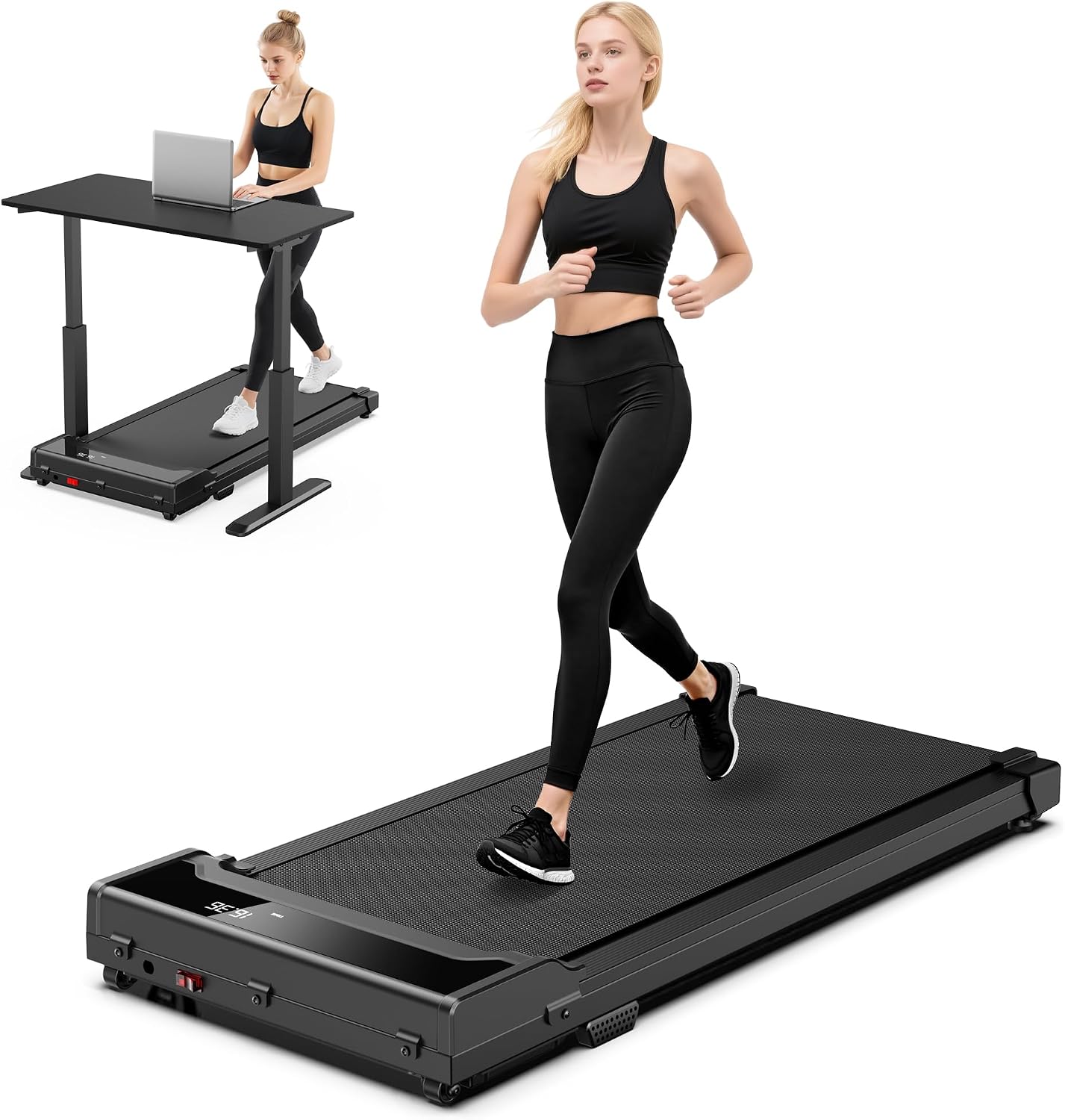
Budget pick: Walking Pad Treadmill for Home - Under Desk Walking and Running Portable Electric Machine Adjustable Slim Compact with 0.6-4.0MPH Modes Max up 265 Lbs with Remote Control for Home Office
 Visit on Amazon →
The speed range tells you everything: 0.6 to 4.0 MPH, a 265-pound capacity, a slim profile built to slide under a desk, and a remote control so you're not crouching to reach a console that may not exist. Check current Amazon price and you're in walking-pad territory, which is where most apartment buyers should start.
The remote is the feature I care about most here. If you're using this at a standing desk, you want to change speed without breaking your train of thought, and a remote does that. The 265-pound rating is a real ceiling, not a suggestion, so if you and a partner both want to use it, do the math honestly.
Flaws but not dealbreakers: There's no incline, and the belt is short by design. This is a walking machine. If you want to run, keep reading, because a walking pad is a walking pad and no amount of good intentions turns it into a running deck.
Anyone who wants steps during meetings, calls, or a show at night will get their money's worth.
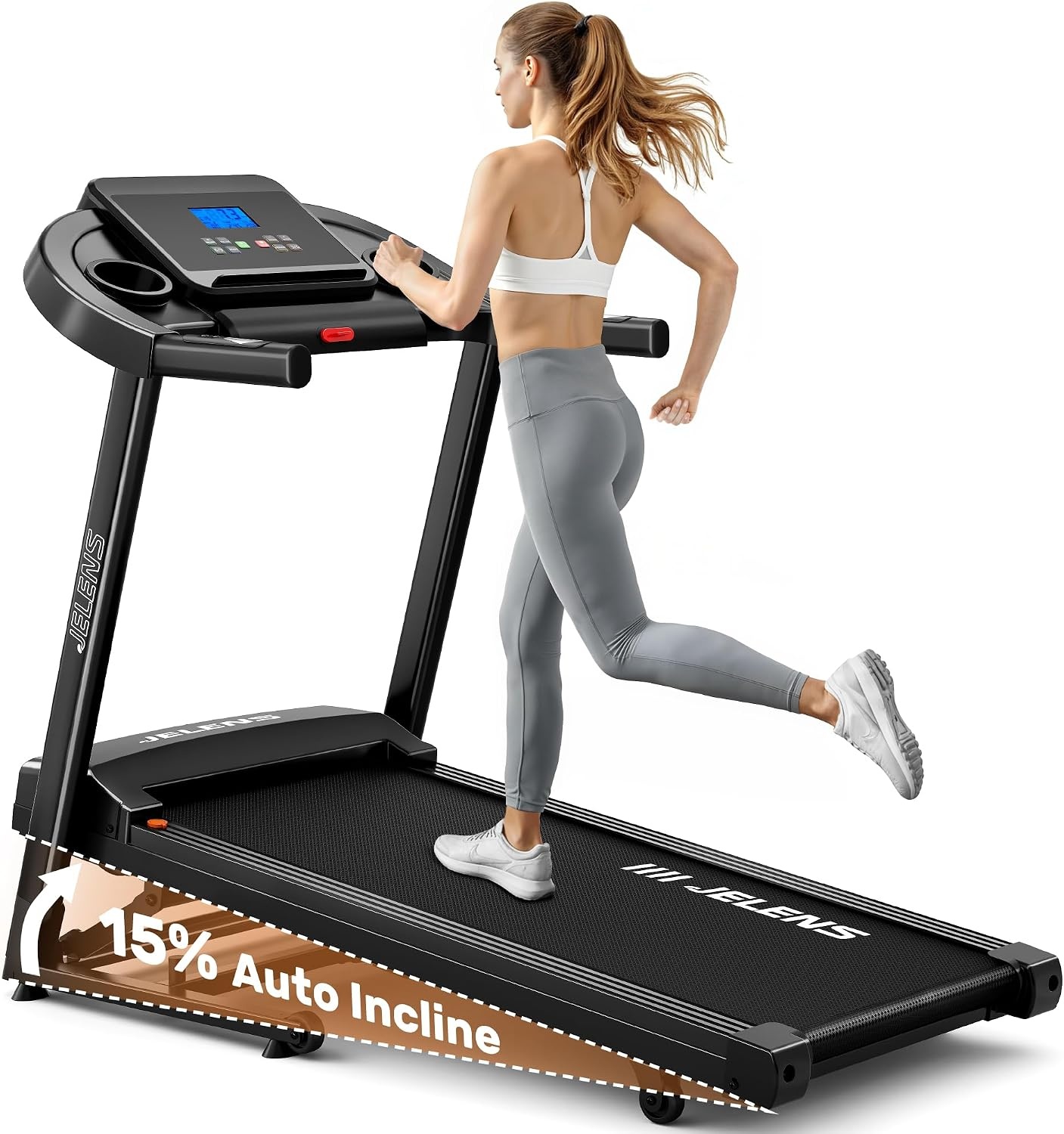
Upgrade pick: JELENS Treadmill for Home with 0-15% Auto Incline, Foldable Walking Pad Treadmill with 330LBS Weight Capacity and Pulse Sensors, 3.0HP Quiet Walking Pad with App and LCD Display (Black)
 Visit on Amazon →
This is the one that covers both jobs. A 0-15% auto incline, a 330-pound capacity, a 3.0HP motor, pulse sensors, an app and LCD display, and a folding frame. Check current Amazon price before you decide, then compare it against what a full-size treadmill would do to your living room.
The auto incline is the reason I'd push a runner here rather than to the pad above. Incline is how you build the fitness that flat walking won't give you, and it's how you make a 30-minute session count on a day you can't get outside. Auto means you're not stopping mid-session to move a riser by hand.
The 330-pound capacity also buys you slack. A machine rated well above your weight tends to feel steadier underfoot, and steadier is the whole game in an apartment where the floor may not be concrete.
Flaws but not dealbreakers: The name says walking pad, and the footprint is still compact. Test the fold and the roll before you commit to a spot, because a foldable machine you can't move is just a machine.
Anyone who wants to run, walk, and incline in the same small room should look here first.
The actual setup workflow
Now the part you came for. This works whether you bought the walking pad or the folding treadmill, and it takes an afternoon.
Step one: Measure the room, not the machine. Put painter's tape on the floor in the footprint you think you need, then stand in it and swing your arms. You need clearance behind the belt to step off safely and enough room in front that you're not staring at a wall from six inches away. Then measure the folded footprint, the doorway you'll wheel it through, and the closet or corner it will live in when it's not in use.
Step two: Decide walking or running before anything arrives. This is the decision that ruins purchases. If you plan to run, you need a deck your stride fits, and you'll know within two minutes of a test jog whether you're shortening your steps to stay on the belt. If you're walking while you work, a slim pad is the better tool and costs you less space.
Step three: Check the floor and your downstairs neighbor. A mat under the machine is cheap insurance, and it matters more on wood and on upper floors than it does on a slab. Vibration travels through a building in ways sound doesn't. If you're on the second floor of an older building, put the machine on the outside wall if you can and keep it off the middle of a springy floor.
Step four: Unbox and assemble with the manual open. The instructions are usually translated badly, so read them twice and lay the hardware out in order. Get a second person for the lift if the frame is heavy, and don't throw away the bag of bolts until the machine is running. More than one buyer has discovered a missing handle bar only after the box went out with the recycling.
Step five: Clip the safety lanyard on before your first step, and every step after. This is the one safety feature I check on every machine, and the one people disable because it's mildly annoying. A magnetic safety lanyard that kills the belt when you fall is not optional, especially in a small room with furniture nearby.
Step six: Break in the belt slowly. Start at a walking pace for the first few sessions. Watch the belt track down the center of the deck instead of drifting to one side, listen for a rubbing sound, and feel for any slip underfoot. Belt tension and tracking are the two things that go wrong first, and both are adjustable with the tools that came in the box.
Step seven: Lubricate on the schedule in the manual. Silicone lubricant only, never anything petroleum-based, and the interval depends on how much you use the machine. If you're walking an hour a day, you'll be under there more often than someone who uses it twice a week.
Step eight: Run the noise test before you trust it. Get on at your normal walking speed and take a call, or play something at a volume you'd actually use. A motor that makes you turn up the TV is a failed purchase no matter what the listing claims. Then walk it at your normal pace with a decibel app on your phone and write the number down, so you have a baseline when the belt ages.
Step nine: Learn the fold and move routine on day one. Fold it, wheel it, put it away, and bring it back out ten times in a row. If that sequence is annoying on day one, it will be the reason you stop using the machine by week three. Folding only counts if you can actually move the thing when it's folded, and wheels and weight are the real specs there.
Step ten: Build the habit around a trigger. For the walking pad, the trigger is a meeting or a show, and the machine stays under the desk. For the folding treadmill, the trigger is a fixed time, because if it lives folded in a closet you have to decide to use it, and deciding is the hard part. Ten minutes at incline on a day you can't run outside beats zero minutes every time.
The competition and why it lost
The full-size gym treadmill is the machine everyone pictures and almost nobody in an apartment should buy. It's a lot of metal and a lot of motor for a room where you also eat dinner, and in a small living room it becomes an expensive place to stack laundry. If you have a garage or a dedicated room, that changes, but that's a different article.
Manual, non-motorized pads lost for a simpler reason: no motor means no incline and no consistent pace, and the whole value of walking while you work is that you don't have to think about it.
Under-desk bikes and ellipticals lost on stride. They're fine for circulation, but they don't train gait the way walking and running do, and if you're a runner trying to hold fitness through a hot summer, gait is what you're protecting.
The other category that lost is the do-everything machine with a giant console, a subscription app, and no wheels worth using. Apps that paywall the only content worth using are a pet peeve of mine, and a console you can't fold away is a console that owns your living room.
What this all costs
Both machines here are in the same broad tier, and the honest way to compare them is cost per use, not sticker price. Check current Amazon price on each, then divide by the number of days you'll realistically use it in a year. If that number is 200, you're talking about cents. If it's 20, no price is low enough, and the problem isn't the machine.
The other cost people forget is the accessories: a mat, and lubricant when the manual calls for it. Neither is expensive and both extend the life of the belt.
The math is the easy part. What separates a machine you use from a machine you resell is whether your stride fits the deck, whether the motor is quiet enough that you don't resent it, and whether you can fold it and move it without help. Get those three right in a small apartment and you'll keep walking and running through every season Austin throws at you.