Most people shopping for a folding treadmill for small apartments open with the wrong question. They ask which motor is strongest or which console has the best app, and they never ask the one that decides whether the machine survives past week three: will it still be easy to live with once it is parked in the corner of a 700 square foot living room and the novelty is gone.
I have coached runners for 12 years and logged more than 40,000 miles, almost all of it outdoors. Austin summers pushed me inside, my clients kept asking what to buy for an apartment, and I did not have an answer I trusted, so I started buying machines and living with them in my own 680 square foot apartment. The pattern repeats every single time. The treadmill that actually gets used is the one that fits your stride, stays quiet enough for a conference call, and folds and rolls out of the way in under a minute.
This is the process I walk a friend through before they spend anything: measure the space, check your stride against the deck, set the machine up so it does not wreck your floor or your back, and then keep the belt alive. Two machines are worth starting with for most apartments, and I will get to both.
Why you should trust me
I have coached runners for over a decade, from first timers chasing a 5K to people training for Boston qualifiers, and I have unboxed, folded, wheeled, and run on more than 30 treadmills and walking pads in a 680 square foot apartment. I know the deck length where my stride starts to feel like smaller than normal steps, which motors you can hear through a wall, and which incline systems wobble like plastic blocks under the deck.
I do not recommend a machine I have not lived with, and I do not call anything quiet without comparing it to a normal speaking voice. My bias is simple: a treadmill is a tool for the days you cannot get outside. Most people buy far more machine than they need, and the money they overspend is money that should have gone into shoes.
How I picked and how I tested
Every machine gets the same five question checklist, in this order.
Deck first. I check belt length and width against a full running stride, not a walk. If my stride does not fit the deck, nothing else on the machine matters, because I will spend every run taking smaller than normal steps and feeling it in my hips.
Noise second. At walking speed, can I hold a conversation, or take a call, without raising my voice? Horsepower is a marketing number. A motor that makes you turn up the TV is a failed purchase no matter how fast it goes.
Fold and move third. I fold the machine and move it myself, ten times in a row. Folding only counts if you can actually move the thing when it is folded, so wheels and total weight are the real specs, not the folded depth printed on the spec sheet.
Incline feel fourth. If the incline system feels like plastic blocks shifting under the deck when I step, the machine is cutting corners somewhere else too.
The safety lanyard last, and always. The magnetic clip that kills the belt if you fall is the one feature I check on every machine before anything else. No lanyard, no recommendation.
Measure first, then buy
Step one: Measure the floor, not the footprint. You need the folded footprint plus the clear space the deck needs when it is down. Most folding treadmills need room in front of and behind the deck while running. Measure the wall you plan to park it against and mark the floor with tape.
Step two: Measure the path it has to travel. The box comes in through a door, and the machine has to move through hallways and around corners to reach its spot. Walk the route with a tape measure and check every doorway and turn before you order.
Step three: Check the ceiling and the floor. Standing on the deck, your head plus a raised incline should clear whatever is overhead. A low ceiling and a steep incline are a bad pair. On the floor, a rubber mat protects hardwood and keeps the machine from creeping.
Step four: Measure your stride before you measure anything else. Stand up, take three normal running strides, and mark where your feet land. If the deck is shorter than that motion, you will shorten your steps without noticing, and your hips and calves will pay for it. This is the number one reason people quit on a cheap machine.
Step five: Measure your patience for folding. Count the steps in the manual, or try a floor model if you can. If setup and takedown takes more than a minute, you will stop doing it by week two.
The two machines I would start with
Both of these are honest budget machines rather than showroom trophies, and both are aimed at the same buyer: someone in a small space who wants to walk or run indoors without turning the living room into a gym. Here is how they differ.
Budget pick: CURSOR FITNESS 16% Incline Treadmills for Home with 3 LED Displays
 Visit on Amazon →
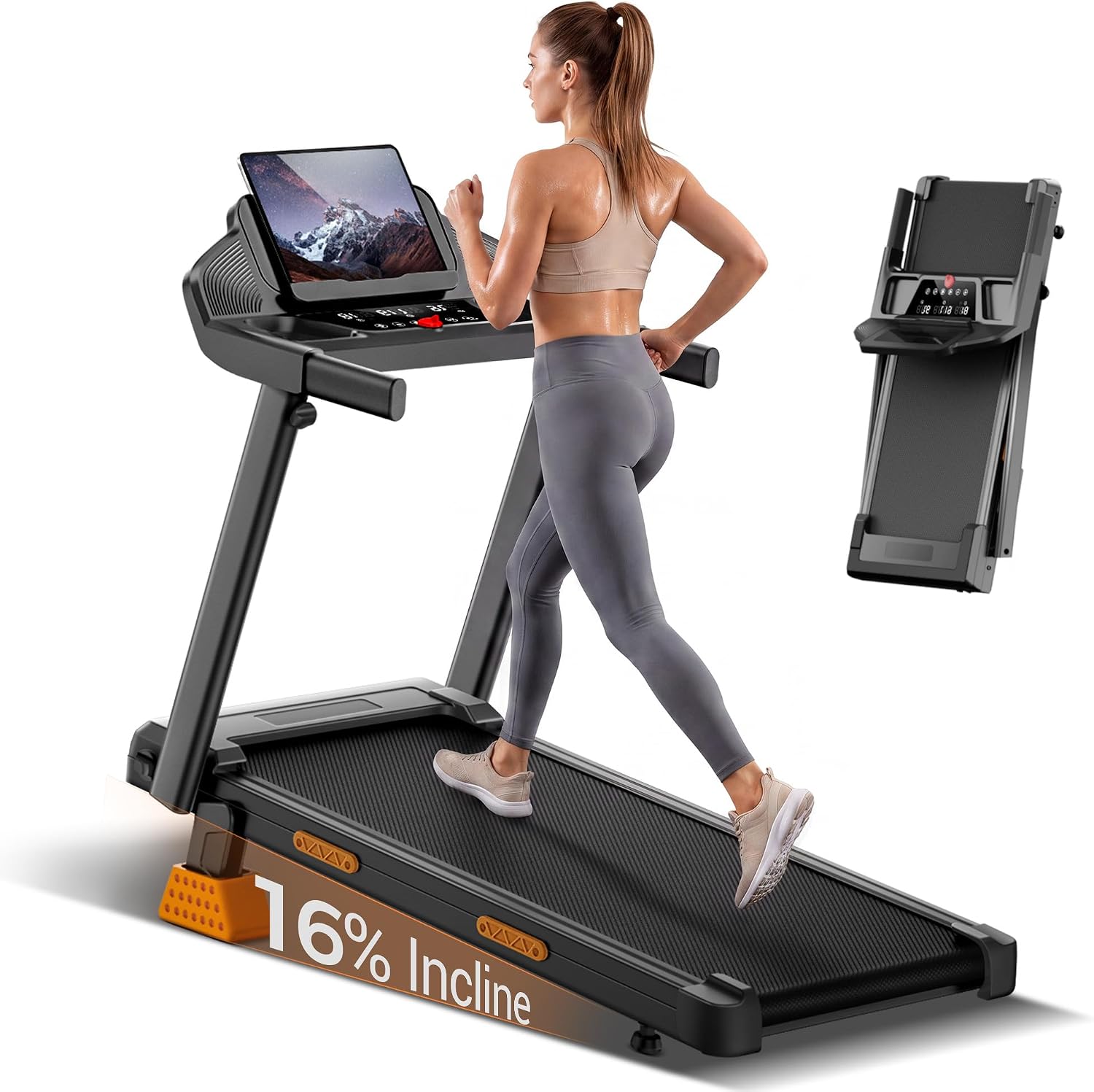
The headline here is the incline. A 16% grade is steep, steeper than most budget machines offer, and steep incline walking is the most efficient way I know to get a real workout at walking speed. That matters in an apartment, because incline walking gives you the effort of a run without the noise and pounding a fast belt produces. Three LED displays keep the console simple, which I count as a plus. Fewer screens, fewer things to break, and nothing to paywall later.
Flaws but not dealbreakers: A 16% incline is more than a beginner needs on day one. Start flat, add a percent at a time, and let your calves adjust. A basic LED console also means no built in programs and no app coaching, so bring your own plan.
Anyone who wants to walk hard in a small space, and who would rather climb than run, should start here.
Our pick for apartments: ANCHEER Folding Treadmill, 3.5HP & 3-Level Incline, Space-Saving Design
 Visit on Amazon →
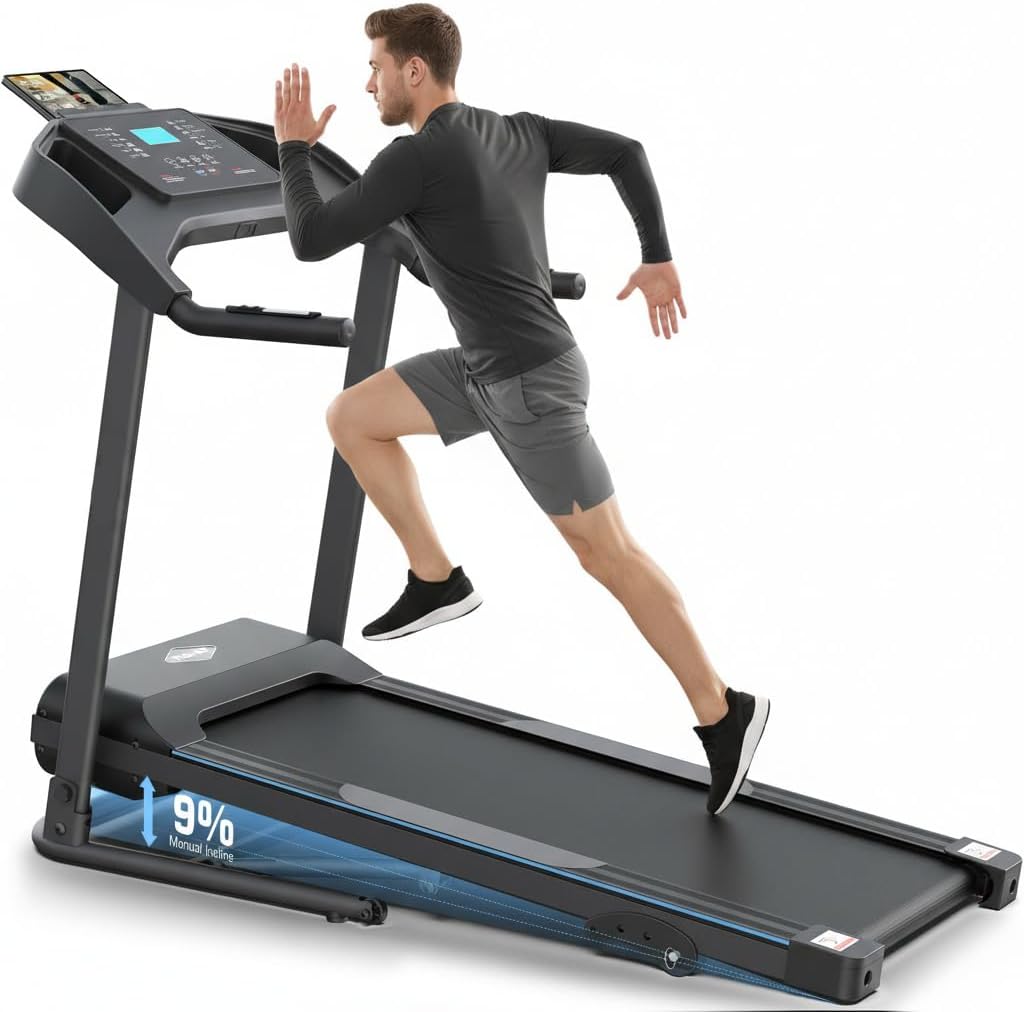
This is the one I point most apartment dwellers toward, because the whole design is aimed at the problem this article is about. It folds, it is built to save space, and the 3.5HP motor is more than a walking machine needs, which means you have headroom to actually run. The three level incline gives you a middle ground between flat walking and the kind of climbing the CURSOR offers.
Flaws but not dealbreakers: A folding frame is a compromise. Anything that hinges will have a little more movement in it than a welded frame, so if you are a heavy, fast runner logging serious mileage, a full size non folding machine is the honest answer, even if it eats half your living room. For walking, jogging, and intervals, the trade is worth it.
Anyone in a studio or a one bedroom who wants one machine that walks, jogs, and then disappears against the wall should look here first.
The actual setup workflow
Step one: Pick the spot with three things in mind. A wall outlet within reach of the cord, clear space behind the deck for the running surface, and no door swing or walkway you will have to cross mid run. If the machine faces a window you open in summer, move it, because a belt running next to blowing dust and pollen is a belt you will be cleaning weekly.
Step two: Lay a mat before you unbox. A rubber mat under the machine protects hardwood, deadens some of the vibration for the people below you, and stops the frame from creeping. Unbox on the mat so you are not dragging cardboard and foam across the room.
Step three: Assemble with the bolts loose. Start every bolt by hand, get the uprights and console aligned, then tighten everything in a star pattern. If you crank one bolt down first, the frame will fight you for the rest of the build.
Step four: Clip the safety lanyard on and test it. Start the belt at the slowest speed and pull the lanyard. The belt should stop. If it does not, do not use the machine until it does. This is the one check I will not skip, on any machine, at any price.
Step five: Level the frame and check the wobble. Most machines have adjustable feet. Rock the machine corner to corner and adjust until it sits flat. A machine that wobbles at walking speed will wobble worse at a run, and a wobbling deck is how you end up shortening your stride to compensate.
Step six: Break in the belt. Walk at a slow speed for a few minutes and watch the belt track down the center of the deck. If it drifts to one side, follow the manual's tracking adjustment, usually a bolt at the rear roller, and make small turns only. Then walk a full session before you run on it.
Step seven: Practice the fold, ten times. Fold it, wheel it to the wall, unfold it, and repeat until it takes you under a minute. If folding is a two person job in your apartment, the machine is going to stay unfolded, and the whole point of buying a folding model is gone.
Step eight: Set your first week. Flat walking only, ten to twenty minutes, so your shins and calves get used to a belt instead of pavement. Add incline in the second week, then speed in the third. The machine is not the training plan. You are.
Keeping a budget belt alive
Most budget treadmills do not die of bad parts. They die of neglect. Lubricate the belt on the schedule in your manual, and if your machine ships with a tube of lubricant, use it before you decide you need something fancier. Keep the belt clean and dry, wipe the deck edges where dust collects, and check belt tension every month or so by lifting the belt at the center of the deck. If it slips when you step on it, tighten per the manual in quarter turns.
Unplug the machine when you are not using it. Vacuum under it occasionally, because a belt that runs over a gritty deck wears out fast. And keep the safety lanyard clipped where you can reach it, not looped over the console where it becomes decoration.
The competition and why it lost
Full size gym treadmills are great machines and the wrong tool for a small apartment. They do not fold, they weigh what a small refrigerator weighs, and in a 680 square foot living room they become a very expensive place to hang laundry. If you have a dedicated room and a decade of running ahead of you, buy one. If you do not, skip it.
Walking pads are the other option, and they are genuinely good at one thing: walking while you work. A walking pad is a walking pad. If you want to actually run, you need a deck that fits your stride, and most pads do not have one. That is why both machines above are treadmills and not pads.
The big connected treadmills everyone asks about are fine hardware, but for most home buyers the honest answer is a good folding treadmill at a fraction of the price, with a plan you wrote yourself instead of a subscription you rent.
What this all costs
The CURSOR is the cheaper of the two and the ANCHEER is the step up. Beyond the machine itself, budget for a rubber mat, a bottle of belt lubricant, and a spare set of shoes if you plan to run indoors regularly. None of those are optional extras in my book. They are the difference between a machine that lasts three years and one that squeaks by month four.
The real math is not the purchase price. It is cost per use. A machine that is easy to fold, easy to move, and quiet enough to use while the TV is on will get used four or five times a week. A louder, heavier machine that fits your space badly gets used twice and then becomes furniture. Buy for the Tuesday in February when it is 105 degrees outside and you still need the miles, not for the showroom.
That is the job. Measure the space, fit the stride, set it up right, and keep the belt alive.