Related: Walking Pad Desk Setup: How to Actually Work and Walk
I bought my first folding treadmill for small apartments the way a lot of people do, which is badly. It was a marketplace special with a belt short enough that my stride quietly turned into a shuffle, and a motor loud enough that my upstairs neighbor texted me about it. I've since unboxed, folded, wheeled, and run on more than 30 machines in the same 680-square-foot Austin apartment, and I've stopped trusting showroom floors entirely. A store can't tell you how a machine sounds through a wall at 6 a.m., and it can't tell you whether the fold mechanism still works after the tenth time you've done it.
Here's the short version of what I've learned. Deck length is the first spec I check, because if your stride doesn't fit the belt, nothing else on the machine matters. Quiet matters more than horsepower in an apartment, because a motor that makes you turn up the TV is a failed purchase no matter how fast it goes. And folding only counts if you can actually move the thing once it's folded, which is why wheels and weight are real specs and not marketing bullets.
Four machines cover almost every small-space buyer: two walking pads at the budget end, one walking pad with a handlebar in the middle, and one genuine folding treadmill for people who intend to run.
Best Overall: JAGJOG Walking Pad Treadmill with Height-Adjustable Handlebar, Foldable
This is my pick for most apartments, and it's the one I'd hand to someone coming out of beginner-hood. The handlebar adjusts to height, which sounds like a small thing until you've walked an hour on a pad with nothing to hold and your shoulders start creeping up toward your ears. The fold is vertical, and there are built-in rollers, so moving it out of the living room and into a closet is a one-person job instead of a two-person argument.
The motor is quiet enough for a conference call. That's not a spec sheet claim, it's the test I run on every machine: laptop open, mic live, walking at a normal pace, waiting to see if anyone on the call asks what that noise is. This one passes. It also arrives with a tube of belt lubricant in the box, which is a small courtesy that tells you the company expects you to maintain the belt instead of replacing the machine.
Where it gives ground: it's a walking pad with a handlebar, not a treadmill. If you want to run, the deck won't hold a full stride, and you'll feel yourself shortening your steps without deciding to. For walking, incline-free jogging, and desk-adjacent miles, it's the middle ground that most people are actually shopping for.
Best for Runners: ATEEDGE Treadmills for Home, 15% Auto Incline, Foldable, 350LB Capacity
If you're a runner, this is the one in the group that isn't pretending. A 15 percent auto incline means the deck tilts under motor power instead of sitting on plastic risers you wedge in by hand, and the difference is obvious the moment you use it. Incline blocks wobble. They're the tell. If the incline system feels like blocks under the deck that shift slightly when you shift, the whole machine is cutting corners somewhere, and an auto incline sidesteps that problem entirely.
The stated 350-pound capacity is the other number I care about. Capacity specs are a rough proxy for frame and motor, and a machine rated that high is usually built to survive a heavier, faster user than a $200 pad. It folds, so it isn't a permanent piece of furniture, though I'd be honest with yourself about how often you'll actually fold a full-size treadmill versus a pad.
This is also the machine I'd point a returner toward, someone coming back from an injury who wants to control pace and incline precisely while they rebuild. Motorized incline lets you progress in small, deliberate steps instead of jumping between flat and a hand-set wedge.
Best Value Walking Pad: Portable Under Desk Treadmill with Incline, Remote Control and LED Display
Of the two budget pads here, this is the one I'd buy, and the reason is one word: incline. Most pads at this end of the market are flat and stay flat, which means your only variable is speed. Having even a modest tilt changes which muscles are doing the work and makes an hour of walking feel like training instead of a treadmill-shaped step counter. It's also the feature you don't know you'll miss until you've used it.
The remote control and LED display matter more than they sound. On a pad with no console, you're bending down to the deck to change speed, which is exactly the motion you don't want to make while the belt is moving. A remote keeps your hands where they belong.
What you give up at this price is stride room and motor headroom. This is a compact machine built for walking and light jogging in a small footprint, and the listing says so. It is not a running treadmill, and treating it like one is how people end up disappointed. Buy it as the thing that gets you off the couch during a workday, and it overdelivers.
Best for the Tightest Spaces: Portable Mini Compact Walking Pad for Small Spaces
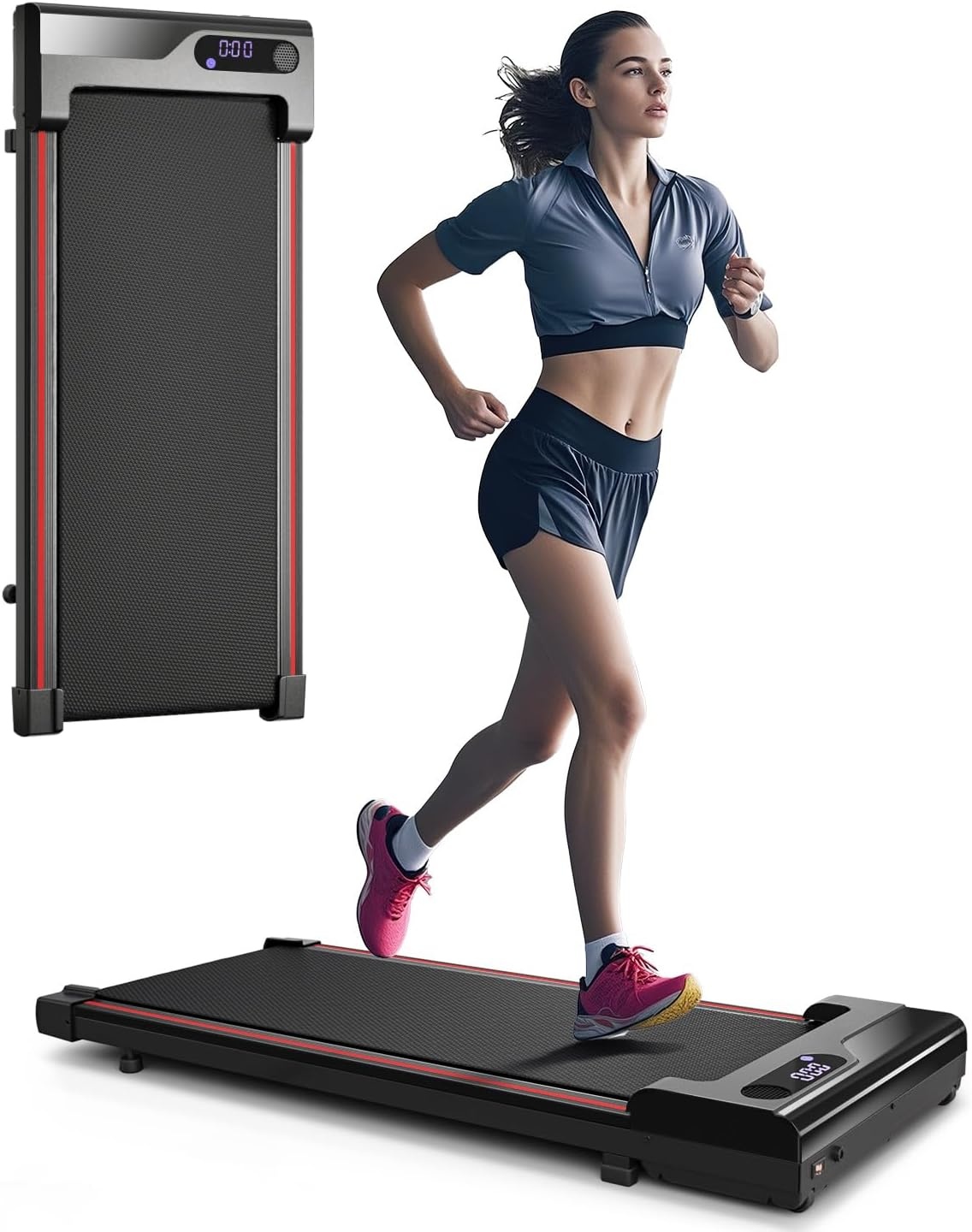
This is the smallest, lightest option in the group, and the name tells you the whole pitch: portable, mini, compact, quiet, lightweight. If your apartment is genuinely tight, if the pad has to live under a desk or slide behind a couch, this is the one that disappears when you're not using it.
The trade-off is the same trade-off every pad in this category makes. There's no handlebar, no incline, and no console, just a remote and a belt. That's not a flaw at this price, it's the honest version of the product. My rule for budget machines is simple: budget machines aren't bad, they're honest. The question is whether the honesty matches the price, and here it does. You're buying portability, not performance.
One thing to check before you commit: the photos. Read the listing carefully and compare what's pictured against what's described, because in this price band the two don't always match. If a handle bar appears in the hero image, confirm it's in the box. I've been burned by that exact thing, and so has every reviewer who has ever posted a photo of a missing part.
How I tested
Every machine gets the same treatment. I unbox it, assemble it without help, and fold and unfold it at least ten times to see whether the mechanism still feels tight or starts to slop. I move it myself, because a folding claim you can't execute alone is worthless. I wheel it across carpet and over a doorway threshold, which is where cheap rollers give themselves away.
Then I walk and run on it. Deck feel gets tested at a full stride, never a stroll, because the whole point is finding out whether the belt is long enough that I stop thinking about the belt. I log motor noise during an actual conference call, mic live, so I know whether it's a machine I can use while working or one I have to schedule my life around. Incline gets cycled through its full range repeatedly, and I pay attention to whether it holds position or drifts and wobbles.
Finally, the budget machines get a long belt-wear check. Two hundred miles in, I want to see whether the belt is still tracking straight, whether the deck surface has glazed, and whether the machine has developed a rattle it didn't have on day one. No machine gets a recommendation without at least two weeks of real use in a real living room. Not a showroom, not a hotel gym.
What the specs actually mean
Deck length beats everything. Your stride is the distance from one footfall to the next, and if the belt is shorter than that, you will take smaller than normal steps. You won't decide to. Your body will just do it, and after a few weeks your hips and calves will have opinions about it. This is the single most common mistake I see people make, and it's invisible until it hurts.
Noise is the second filter. At home, quiet matters more than horsepower. A 3.0 HP motor you can hear through a wall is worse than a 2.0 HP motor you can't, because the loud one trains you to stop using it. The walking pads here are the quiet end of the spectrum by design, since a walking pace asks much less of a motor than a running pace does.
Folding is the third. A fold is only as good as the wheels attached to it and the weight you have to lift. If moving the folded machine takes two people, you've bought a piece of furniture, and full-size gym treadmills belong in gyms. In a small living room, they're a very expensive coat rack.
And the safety lanyard is non-negotiable. The magnetic clip that kills the belt if you fall is the one feature I check on every machine before anything else. Every product in this group has one. If something you're considering doesn't, walk away.
The small-space treadmill reference table
| Machine | Built for | Incline | Folding | Check price |
|---|---|---|---|---|
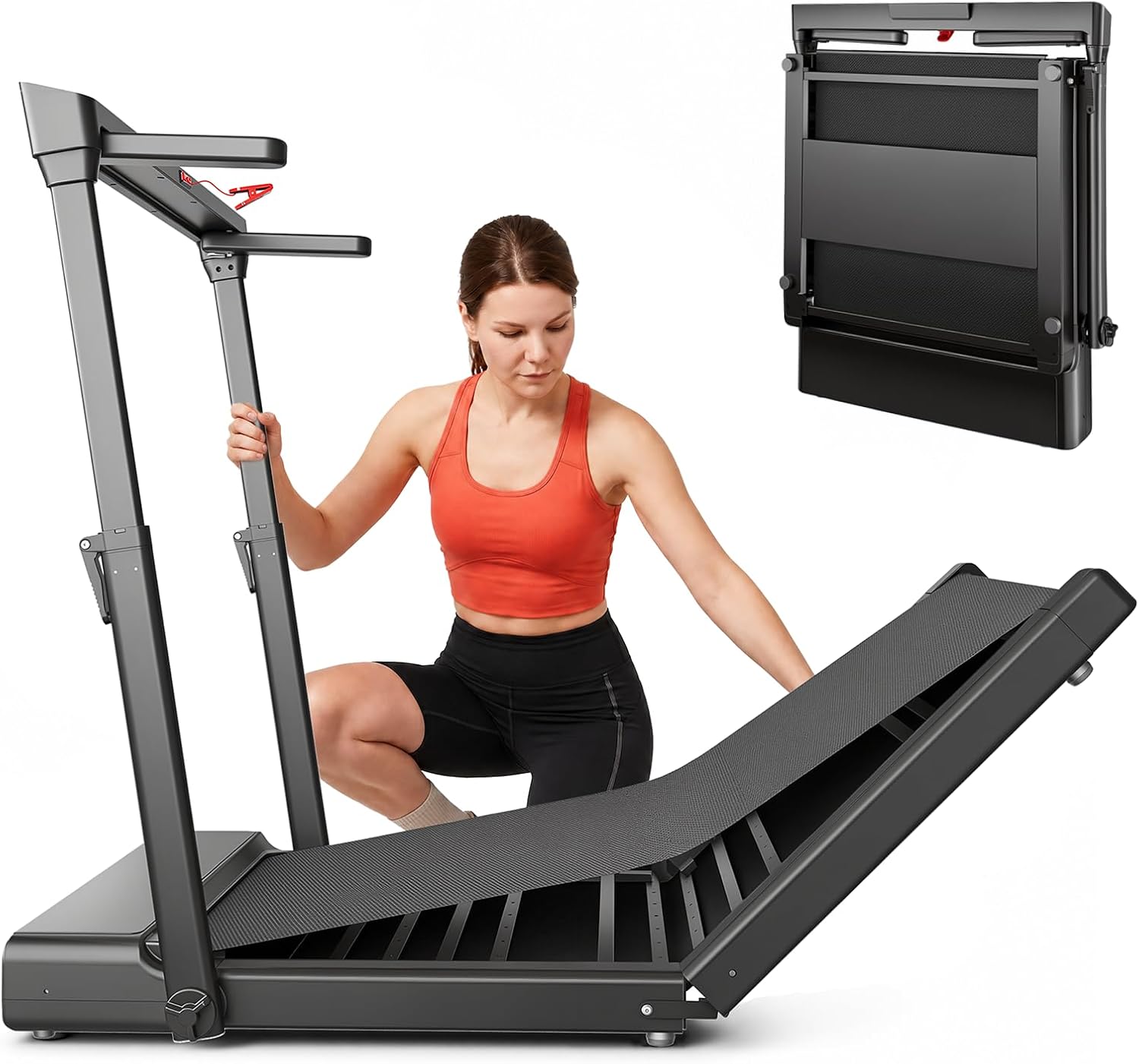 Visit on Amazon → JAGJOG Walking Pad with Height-Adjustable Handlebar |
Walking and light jogging with something to hold | Flat deck | Vertical fold, built-in rollers | Visit on Amazon → |
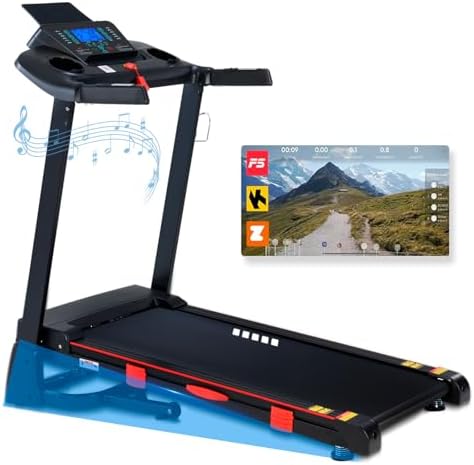 Visit on Amazon → ATEEDGE Foldable Treadmill |
Running, with a 350 pound stated capacity | 15 percent auto incline | Folds, heavier to move | Visit on Amazon → |
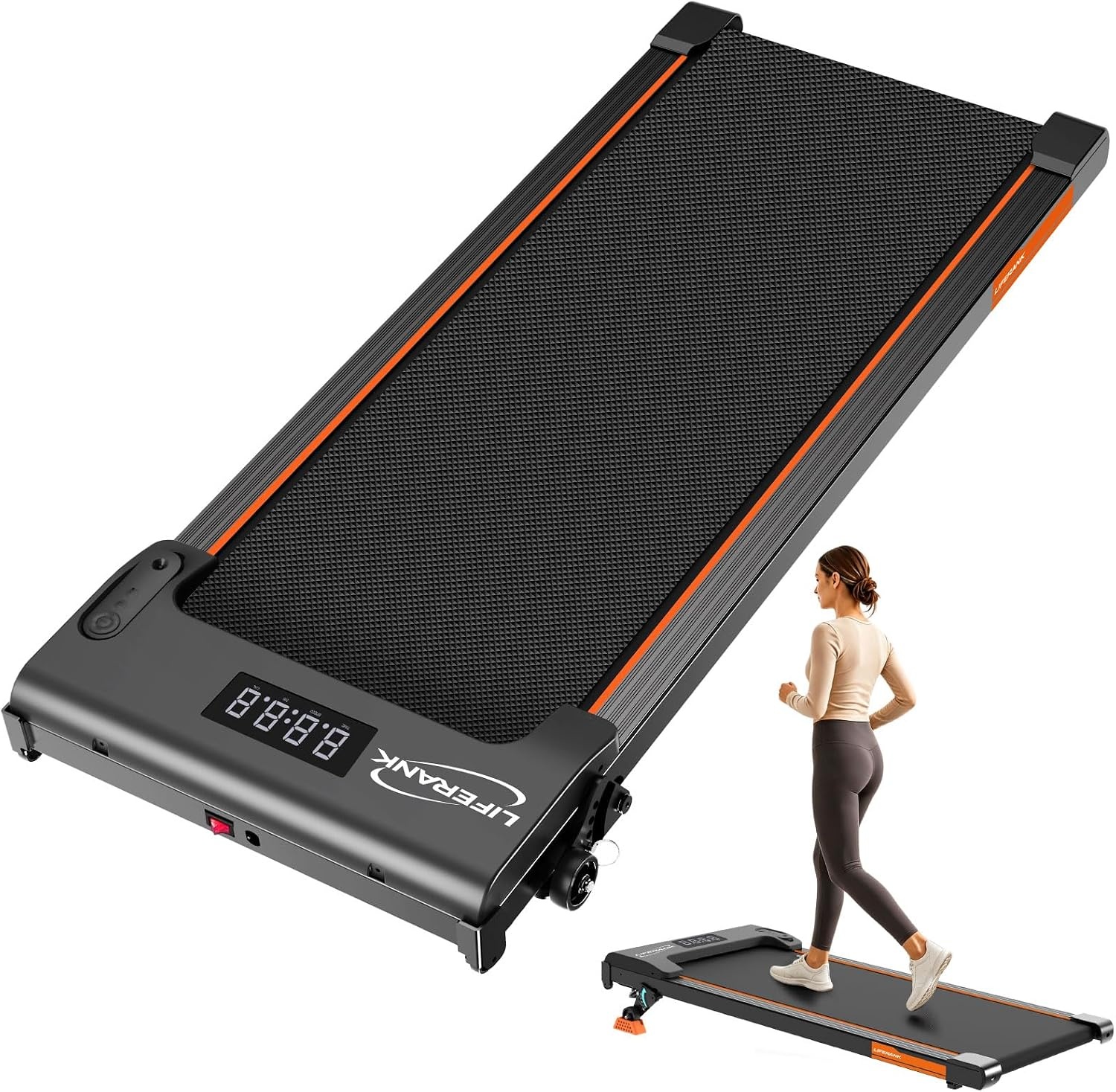 Visit on Amazon → Under Desk Walking Pad with Incline |
Desk walking with a bit of grade | Incline, plus remote and LED display | Compact, slides away | Visit on Amazon → |
 Visit on Amazon → Mini Compact Walking Pad |
The tightest floor plans | Flat deck | Lightest, easiest to stash | Visit on Amazon → |
Read the table this way: if you want to run, you're in the ATEEDGE row and everything else is noise. If you want to walk while you work and you have a spare two feet of floor, the JAGJOG row is the one that will still feel good in month six. If space is the binding constraint and the machine has to vanish at the end of the day, you're choosing between the two budget pads, and the incline is what separates them.
Should you buy the JAGJOG Walking Pad Treadmill?
Yes, and it's the machine I recommend most often. Vertical fold, built-in rollers, a handlebar that adjusts to your height, a motor quiet enough for a conference call, and a tube of lubricant in the box. It's the perfect middle ground for someone coming out of beginner-hood, which is exactly where most home buyers actually are.
Should you buy the ATEEDGE folding treadmill?
Yes, if running is the plan. The 15 percent auto incline is the feature that separates it from everything else here, and the stated 350 pound capacity suggests a frame that won't flinch. If you're only walking, save the money and the floor space.
Should you buy the under desk walking pad with incline?
Yes, if you want the best value in this group. The incline is the reason, and the remote and LED display are the practical reasons. Just go in knowing it's a walking machine.
Should you buy the mini compact walking pad?
Yes, if floor space is your hardest limit. It's light, it's portable, and it disappears. Study the listing photos twice before you order, because at this price what's pictured and what's in the box don't always match.
A treadmill is a tool for the days you can't get outside. It isn't a substitute for running, and it doesn't need to be. Buy the deck that fits your stride, the motor you can't hear through a wall, and the fold you can actually execute alone.