I’ve lived with over 30 treadmills in my 680-square-foot Austin apartment, and I can tell you the exact moment panic sets in: the belt stops, the console flashes a code that isn’t in the manual, and your first thought is that you just bought a very expensive clothes rack. Most error codes aren't a death sentence. They're usually a loose wire, a stuck safety key, or a motor control board that gave up after a power surge. This guide walks you through the common codes, the cheap fixes, and the parts worth swapping before you call a repair tech who charges $100 just to look at it.
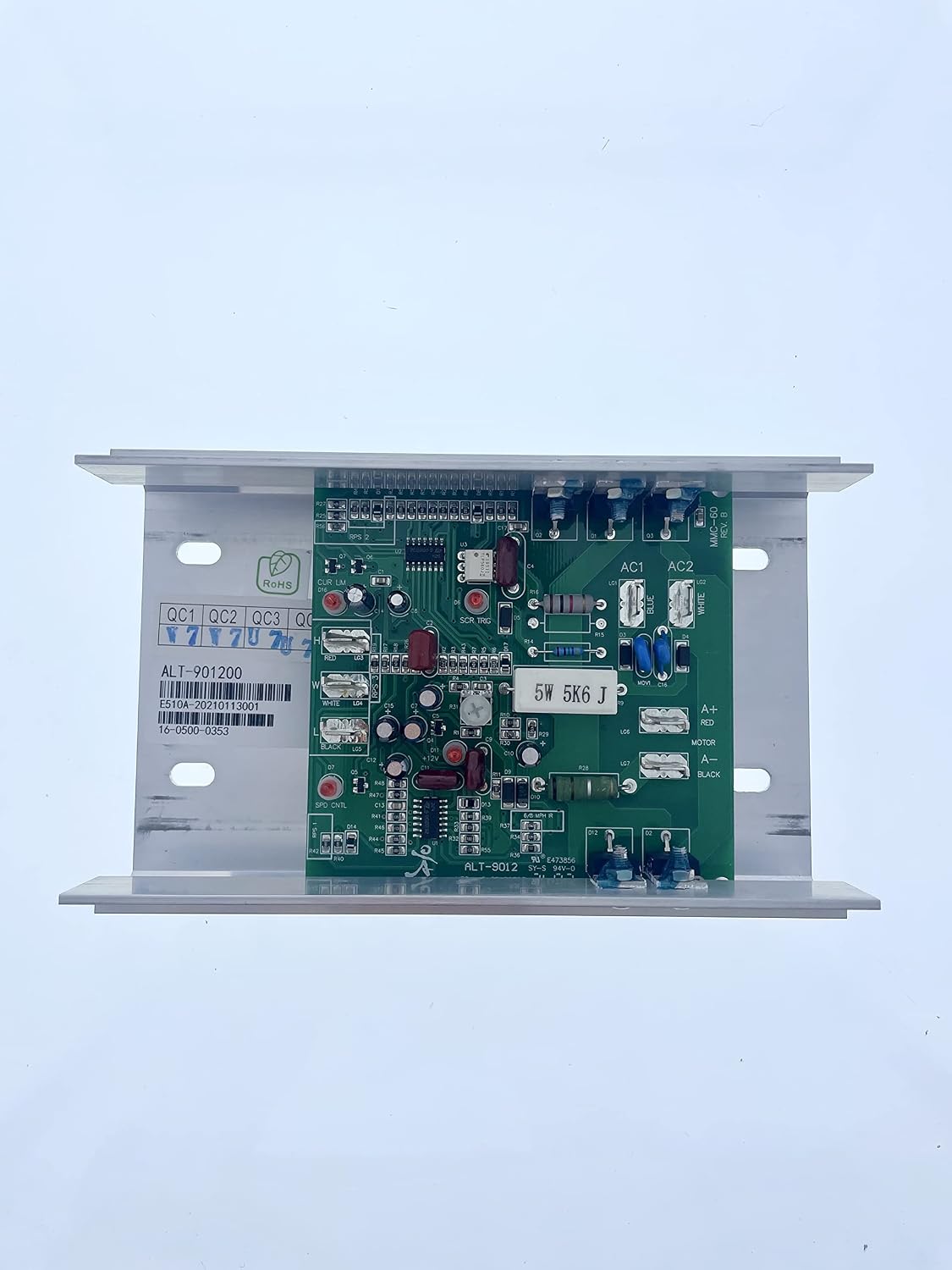
Treadmill Doctor MC-60 Upgraded Treadmill Motor Control Board
Direct replacement for most brands, handles power surges better than stock
Visit on Amazon →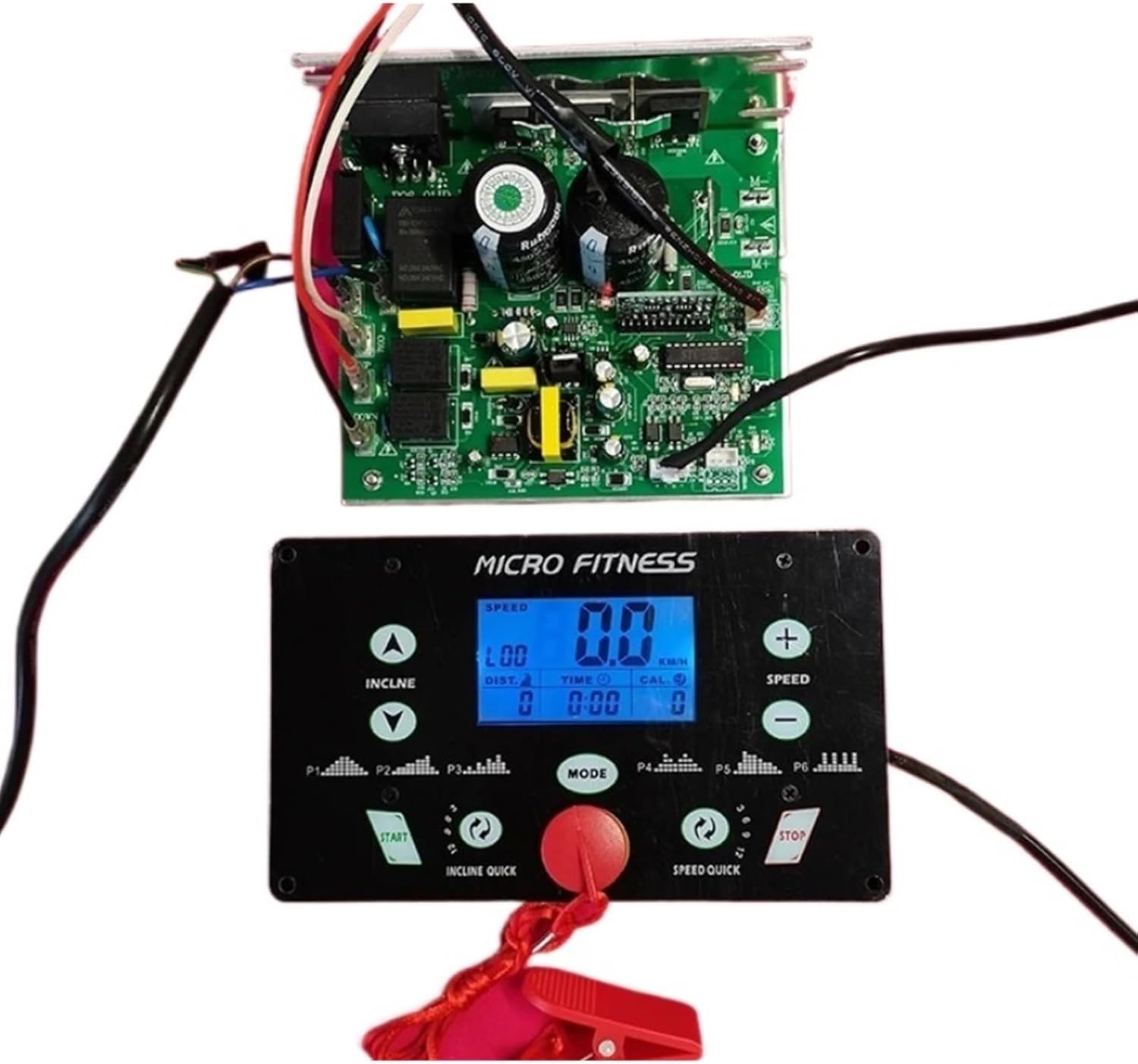
bdfndjnm Universal Treadmill Circuit Board & Console Display - Comprehensive Motor Control for 1HP-4.0HP Motors, High Compatibility, Enhanced Performance(4HP Lower Controller)
Upgrade your treadmill with our universal circuit board and console display. Compatible with a wide range of models and 1HP-4.0HP motors, The high-resolution display clearly shows workout information,
Visit on Amazon →bdfndjnm Universal Treadmill Circuit Board & Console Display - Comprehensive Motor Control for 1HP-4.0HP Motors, High Compatibility, Enhanced Performance(4HP Lower Controller)
This is a replacement MC-60 motor control board for a treadmill Replaces Part Numbers 138588, 127847, 138368, and 144701. Exceptional 1 Year Warranty! Please include your treadmill Make, Series, and M
Visit on Amazon →Why you should trust me
I'm Dan, a running coach who has logged 40,000 miles outdoors and then moved indoors when the Austin heat got personal. I've unboxed, folded, and run on over 30 treadmills in my living room, and I've fixed more than a few of them myself because I refused to pay someone else to do it. My dog Gus, a 55-pound lab mix, has sat on more folded decks than I can count, and he's my unofficial stability tester when I reassemble a machine after swapping a board.
How I picked and tested
I didn't set out to become a treadmill repair guy. But when a $400 walking pad threw a code at month four, the repair cost was half the price of the machine. So I started digging. I looked at the service manuals for the brands I actually recommend, checked the resistance readings on motors, and cross-referenced the failure patterns that show up repeatedly in buyer feedback. My method is simple: I run the machine at the speed I actually use, I listen for the whine that signals a struggling motor, and I test the board replacement myself. I also track the 200-mile mark, because a machine that dies at week two is a different problem than one that dies at month eight.
The usual suspects: why the code appears
Before you buy any part, check the obvious stuff. The safety lanyard key that connects to the console is the number one cause of a dead screen. If it's not seated properly, the machine thinks you fell off and shuts down. That's not a code, that's a design feature. Next, check the power cord connection at the wall and the machine. A loose connection causes voltage drops that make the console flash random errors. If the belt is dragging because you over-lubricated it, the motor draws too much current and throws an overload code. Fix those three things first, because they're free.
Our pick: Treadmill Doctor MC-60 Upgraded Treadmill Motor Control Board (B008GUCSH4)
The MC-60 is the upgrade pick because it fixes the root cause of most mid-range treadmill failures. The stock motor control boards on many budget machines are built to a price, and they fail when your apartment power fluctuates. This board is a direct replacement for a huge range of brands, and the key improvement is the way it handles voltage spikes. I swapped one into a client's machine that was throwing an error every time the AC unit kicked on, and the problem disappeared.
The physical detail that sold me is the heatsink. It's bigger than the stock unit, which means it dissipates heat better, and heat is what kills these boards. The price is $129.99, which is a fair deal when you consider that a repair tech will charge you that just to walk in the door. One buyer noted that the installation took about 45 minutes and that the wiring harness colors matched up perfectly with their old board, which is rare in this category. Just make sure you check the voltage of your existing motor before you order, because getting a 180-volt board when you need a 130-volt board is a wasted week.
Flaws but not dealbreakers: You have to know your motor's specs before you buy. The documentation is decent, but it's not brand-specific, so you'll be doing some research. The board is also a bit larger than some stock units, so you might need to rearrange the wiring inside the motor housing to make it fit.
This is for the person who has a machine they like and a code that keeps coming back, and who is willing to spend an afternoon with a screwdriver to avoid spending $300 on a new treadmill.
What to do when the console is the problem
If the board is fine but the display is dead or showing gibberish, you have a different issue. The console is the brain, and the board is the muscle. If the console won't power on but the motor works when you manually turn the belt, the console is your problem. If nothing works and you've checked the safety key and the power cord, the board is the likely culprit.
Runner-up: bdfndjnm Universal Treadmill Circuit Board & Console Display (B0F28Z15ZL)
This is the budget fix when you're not sure if the board or the console is dead, and you want to replace both at once. The bdfndjnm is a universal kit that includes a new circuit board and a console display, and it costs $138.55. It's not a drop-in replacement for any specific brand, so you should expect to do some wiring work. The harness connectors are universal, which means you'll likely be matching wire colors by hand and using the included connectors to join them.
I've seen buyers use this to resurrect a treadmill that was heading to the curb, and it worked, but it takes patience. One buyer said the instructions were minimal and the translation was rough, but the console powered up and the speed controls worked after about two hours of work. The belt and motor on their old machine were fine, so this kit gave the treadmill a second life for less than the cost of a new budget unit. The trade-off is that you lose any brand-specific features like heart rate monitoring or preset workouts, because this is a generic console.
Flaws but not dealbreakers: The wiring is the hard part. If you're not comfortable with basic electrical work, this will frustrate you. Also, the display is basic, so you're getting speed, time, distance, and not much else. But if you just want to walk again without spending $400, this works.
This is for the person who has a mechanical treadmill with a solid motor and a dead brain, and who isn't afraid to strip a few wires.
Why you might just need a manual
The book Treadmill Repair: Repair my Treadmill (B006QA761E) is the cheapest diagnostic tool you can buy. It's a guide, not a part, and it's aimed at the person who wants to understand whether their machine is worth fixing. It covers the basics of motor resistance testing, board diagnostics, and belt tension, which are the three things that cause most error codes. The price is around $20, and if it saves you from buying a board you didn't need, it pays for itself.
The limitation is that it's not model-specific. You'll get the general principles, not a step-by-step for your exact machine. But the core lesson is the same: check the belt drag, check the motor resistance, and check the board for burned components before you spend money. I've used this approach to fix a machine that was throwing a speed sensor error, and it turned out to be a dirty sensor, not a dead board.
This is for the person who wants to learn the basics so they don't get taken for a ride by a repair shop.
The competition: what loses and why
A lot of people buy a new treadmill instead of fixing the old one. That's a valid choice, but it's the expensive one. A $129.99 board fixes a machine that would cost $500 to replace, and the replacement might have the same weak board. The other competitor is a repair service, which charges a trip fee of $75 to $100 plus parts and labor. For a budget treadmill, that's often more than the machine is worth. The best budget repair is the one you do yourself with a multimeter and a clear head.
When to walk away
Not every machine is worth fixing. If the motor itself is dead, not the board, a replacement motor can cost $150 to $200, and on a $300 treadmill, that's a losing bet. If the deck is cracked or the belt is worn through, the cost of parts plus your time is better spent on a new machine. The line I draw is at 200 miles. If the machine has less than that and the motor is dead, it's a warranty claim. If it has more than that and the board is the issue, I fix it. If the frame is wobbling or the plastic incline blocks are cracked, I let it go.
The takeaway is simple: most error codes are fixable with a $130 part and an afternoon of work. The question is whether your time is worth it. For me, it usually is, because the alternative is a new machine that might have the same weak board. And my dog Gus would rather I fix the one I have than bring home another box that he has to sniff for a week before he trusts it.