Most people who set up a folding treadmill for small apartment living do it in the wrong order. They buy the machine first, wheel it in, and only then find out the belt is too short for a real stride, the motor carries through the wall, or the folded unit blocks the closet door they use every single day.
I have made all three of those mistakes in a 680-square-foot Austin apartment. Here is the order I run now, and it is the same order I walk my coaching clients through before they spend a dollar.
Why you should trust me
I have coached runners for twelve years and logged over 40,000 miles, almost all of it outdoors. Austin summers got worse, my knees got louder, and clients kept asking the same question: what treadmill should I buy for an apartment? I did not have an answer I trusted, because I had never run on one.
So I bought a cheap foldable machine for my own small living room and started testing the way I coach, one rep at a time, logged, no shortcuts. I have since unboxed, folded, wheeled, and run on more than 30 machines in that same apartment. I know which whisper-quiet motors you can hear through a wall. I know the point where a belt gets short enough that your stride turns into smaller than normal steps. And I know a folding claim means nothing until you have folded the thing and moved it ten times.
How I picked and how I tested
The two machines below are not the only treadmills that exist. They are the two I would put in a small apartment right now, one for walking and one for running, and here is the filter they passed.
Every machine gets at least two weeks of real use in a real living room, never a showroom. I run a conference call at walking speed with the machine on and listen for motor noise. I fold it and wheel it out of the way ten times in a row. I check the incline at a full stride to see whether the deck wobbles. On a budget pick, I do a belt-wear and wobble check after 200 miles before it goes in a guide.
Deck length comes first. If your stride does not fit the belt, nothing else on the machine matters. Quiet comes second, because a motor that makes you turn up the TV is a failed purchase no matter how fast it goes. Folding comes third, and it only counts if you can actually move the thing when it is folded. Wheels and weight are the real spec, not the folded depth on the product page.
Before you buy: three measurements
Do these before you open a single product page.
One: your stride. Walk a normal step and mark heel to heel. Then think about what that looks like at a jog. A walking pad is a walking pad. If you want to actually run, you need a deck that fits your stride, and most pads do not have one. A too-short deck does not just feel cramped, it quietly shortens your step until your form belongs to someone else.
Two: your ceiling and your head. Add your height to the deck height at full incline. If you are tall and the machine sits under a ceiling fan or a low beam, you will find out the hard way.
Three: the path, not the footprint. Measure the door you will wheel it through, the hallway, and the spot where it lives. Then measure the folded machine against all three. A machine that folds slim but weighs more than you want to drag is not a folding machine in practice. It is a machine that lives where it landed.
Also check where the outlet is. An extension cord across a walking path is how people trip, and a magnetic safety lanyard only helps if you actually clip it on. That clip is the one safety feature I check on every machine.
The two machines I would start with
Different jobs, different decks. Pick by what you actually do, not by which one photographs better.
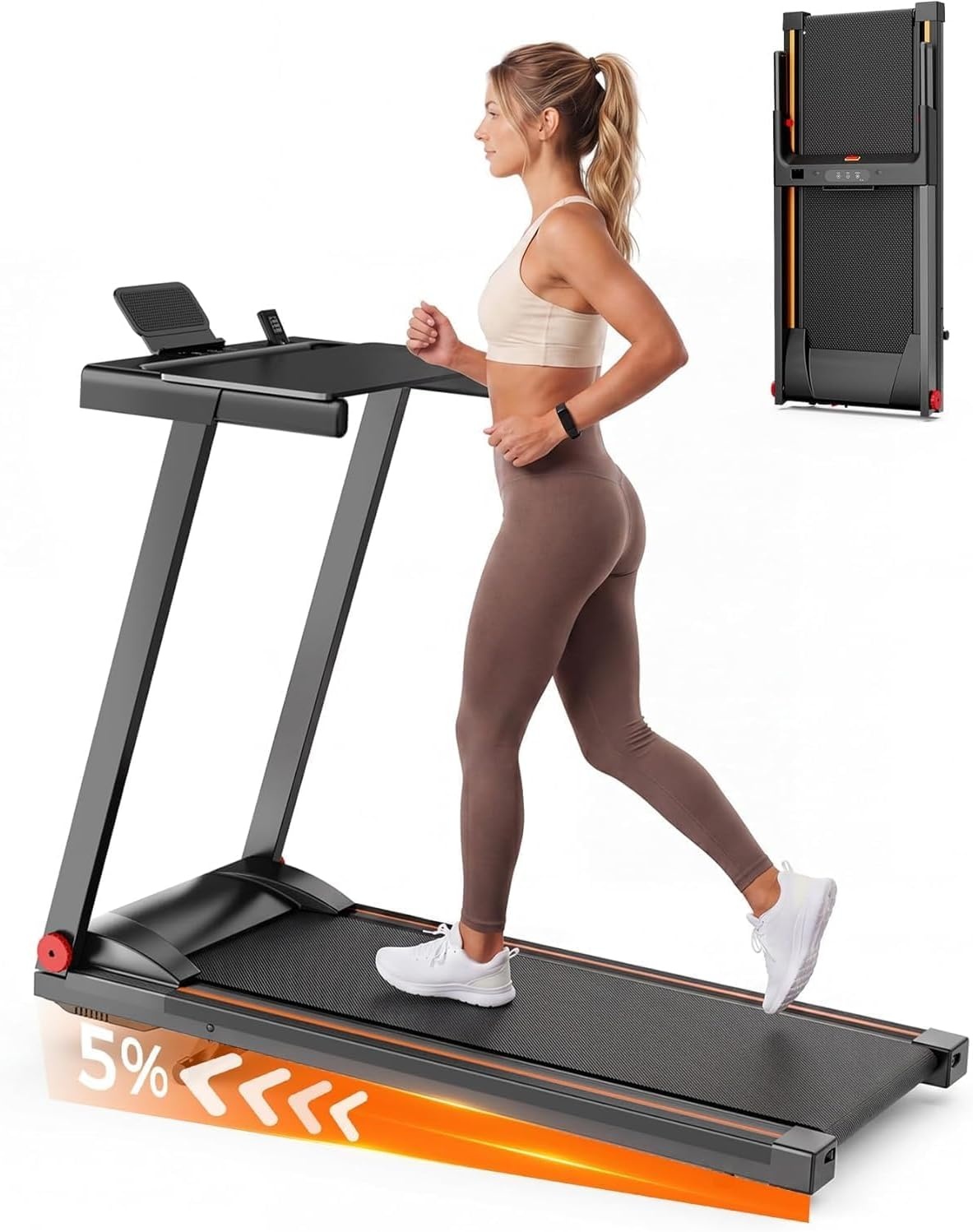
Budget pick: Walking Pad Treadmill with Incline, 3.0HP Quiet Motor, Folding Portable Design, 300LB Capacity, Handle Bar, Remote Control & LED Display for Home and Under Desk
 Visit on Amazon →
This is the one I hand to people who want steps during the workday, not intervals. It is low profile, it folds, and it has a handle bar, which matters more than people expect: a pad without one turns a long walk into a balance exercise, and the handle is usually the difference between a machine you use for an hour and one you abandon at twenty minutes.
The 300-pound capacity and the 3.0HP motor put it in honest budget territory. It has incline and a remote, which means you can change pace without breaking stride to stab at a console. It also has an LED display, which is the piece I ignore most, because the remote is faster.
Flaws but not dealbreakers: It is a walking pad, so treat the incline as a walking feature. And study the photos twice. What is pictured and described on a budget pad page is not always what is in the box, which is the most common complaint in this category.
Anyone in a small apartment who wants their steps during conference calls, or who wants to walk while they watch TV, will get their money's worth here.
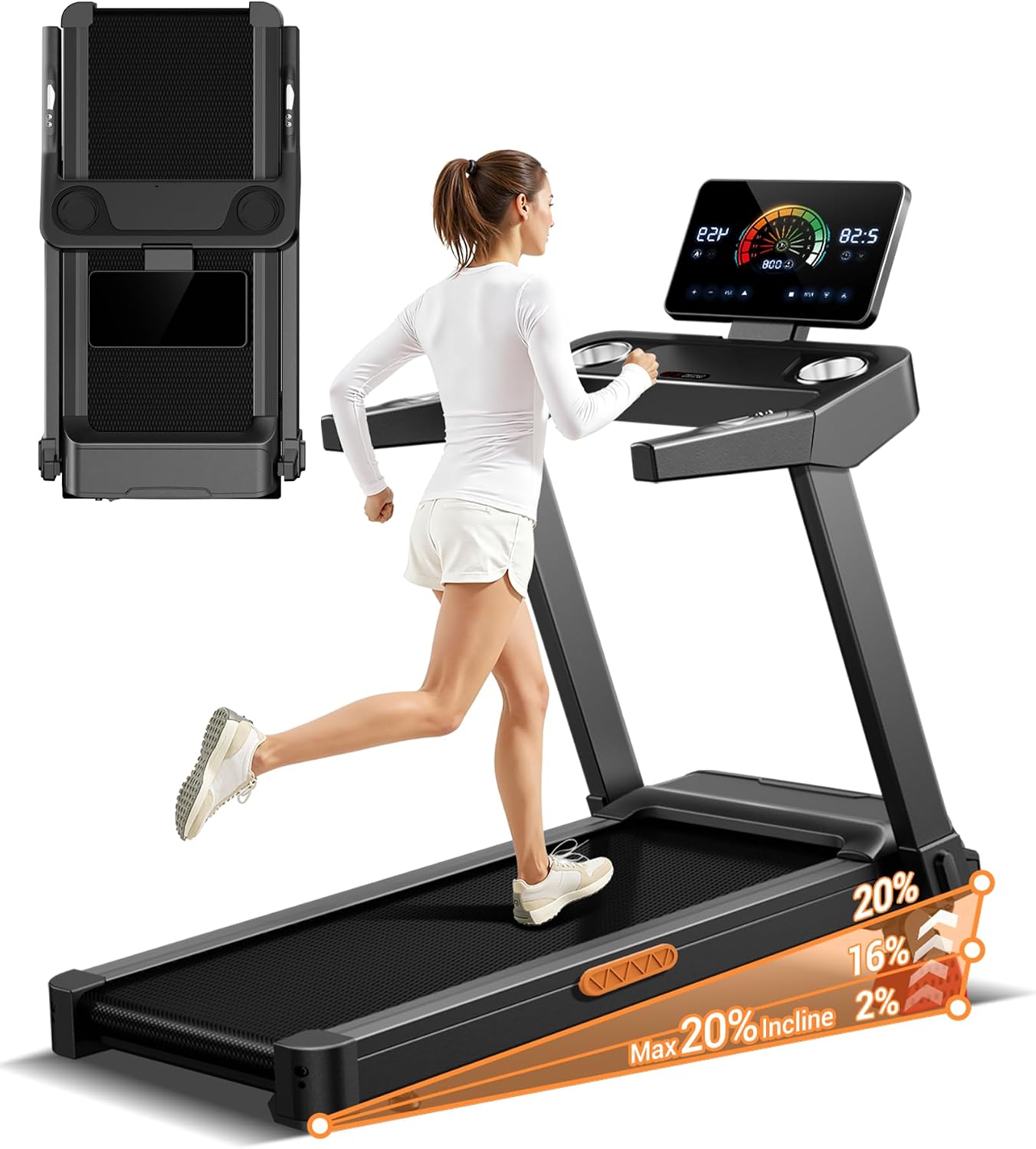
Our pick: LONTEK Treadmill with 20% Incline, 3.5HP Quiet Running Machine
 Visit on Amazon →
This is the machine for the person who wants to run, not just walk, and it is the one I would keep if I could only own one. The 3.5HP motor and the 20% incline put it a tier above the pad, and a real incline is the closest thing you get to hill work when it is 104 degrees outside. Incline training is where treadmill running earns its keep for a runner: flat treadmill miles build less than hill miles do.
Quiet is the claim I care about and the claim I trust least on any listing. Test it yourself at the speed you actually use. Put the machine on, stand where your couch is, and ask whether you could take a call from there. If the answer is no, the machine is not quiet, no matter what the box says.
Flaws but not dealbreakers: A running machine is a commitment to floor space. It is not a pad you slide under a couch, and you should plan for it to have a permanent corner with a wall outlet and clearance behind it. If you cannot give it that, buy the pad instead and be honest about it.
Anyone who runs, or wants to build up to running, and who has a dedicated corner in a small apartment should start here.
The actual setup workflow
Now the part you came for. This works for a walking pad or a folding treadmill.
Step one: unbox in the hallway, not the living room. Cardboard, foam, and zip ties multiply. Take the trash out before you bring the machine in.
Step two: put it where it will live, not where it is easy to assemble. The corner it ends up in is the corner it should be built in. Moving a half-assembled machine is how decks get twisted.
Step three: level it. Most folding machines have adjustable feet. Rock the deck side to side with your hand. If it clicks or lifts, adjust until it does not. An unlevel deck is a wobble you will feel at speed and blame on the motor.
Step four: check the belt tension and centering. With the machine off and unplugged, lift the belt at the middle. It should have a little give, not a lot. Then plug in, run it at a slow walking speed, and watch the belt track. If it drifts to one side, adjust per the manual. Do this before your first real session, not after.
Step five: clip the magnetic safety lanyard on and test it. Pull the clip. The belt should stop. If it does not, do not use the machine until you know why.
Step six: lubricate the belt. Budget machines are honest, and part of that honesty is that they need maintenance. Some ship with a tube of lubricant. If yours does not, buy some. A dry belt wears fast and gets loud, and loud is the first symptom people misdiagnose as a bad motor.
Step seven: build the habit before you build the speed. Week one is walking. Week two adds incline. Running comes after your legs know the deck. Same progression I use with runners on the road, and it works indoors.
Step eight: fold it and move it on purpose the day you set it up. Not because you need it out of the way, but because you need to know how it moves while you are still patient. Ten times. That is the test.
Where people go wrong
The incline blocks are the tell. If the incline system feels like plastic blocks under the deck that wobble slightly, the whole machine is cutting corners somewhere. You may still buy it. Just know what you bought.
The second mistake is buying for the runner you plan to become. Most people buy way more machine than they need. Full-size gym treadmills belong in gyms, and in a small living room they are a very expensive coat rack. Budget machines are not bad, they are honest, and the question is whether the honesty matches what you paid.
The third is trusting the product page over the box. If a listing shows a handle bar, confirm the handle bar is in the box before you assemble. Ask me how I know.
The competition and why it lost
NordicTrack and Peloton make the machines everyone asks about, and they are good machines. They are also the wrong answer for most small-apartment buyers, because you are paying for a screen and a subscription ecosystem when what you need is a deck that fits your stride and a motor your neighbor cannot hear. For most home buyers the answer is still a good folding treadmill at roughly half the price.
JAGJOG is my pick for most apartments in the mid-tier: vertical fold, built-in rollers, quiet enough for a conference call, and they ship a tube of lubricant. If you want a step up from the two machines above and you have the budget, that is the direction I would point you.
BestGod walking pads are the best value in the walking category, but study the photos twice, for the same reason I said it above: what is pictured and described is not always what is in the box.
None of those are what this guide is about. This guide is about setting up the machine you already chose, correctly, in the space you actually have.
What this all costs
The walking pad sits at the low end of the range. The LONTEK sits one tier above it. The lubricant is a few dollars, and the maintenance is your time.
Check current Amazon price on both before you decide, then do the math over three years, because that is the realistic life of a budget machine you maintain and the realistic life of one you do not.
The bigger cost is the one people forget: floor space in a small apartment. That is the number that never shows up on a listing page, and it is the one that decides whether you use the thing or resent it.
The bottom line
A treadmill is a tool for the days you cannot get outside. It is not a substitute for running, and it does not have to be expensive. Measure your stride, measure your path, pick the machine that matches the job, set it up level and lubed, and test the safety clip before your first mile.
That is the whole job. Do it in that order and the machine earns its corner.