A foldable treadmill for apartments is not a smaller gym treadmill. It is a different machine with a different set of compromises, and the buyers who get burned are almost always the ones who shopped a spec sheet instead of their own living room.
I coach runners in Austin. Twelve years, and most of my own 40,000 miles happened outside, because outside is the point. Then the summers got worse, my knees got louder, and every client with a spare corner started asking the same question: what treadmill should I buy for my apartment? I did not have an answer I trusted, because I had never run on one. So I bought a cheap folding machine for my own 680-square-foot living room and started testing the way I coach, one rep at a time, logged, no shortcuts. I have since unboxed, folded, wheeled, and run on more than 30 machines. I know the wobble of a plastic incline block, the exact deck length where my stride turns into smaller than normal steps, and which "whisper quiet" motors you can hear through a wall.
Here is the order I check things in, and the two machines that survived it. Deck first. Noise second. Fold and move third. Everything else is marketing.
Why you should trust me
I have been coaching runners for 12 years, and every machine I write about has lived in a real apartment, not a showroom. My rules do not bend for a good sale price. No machine gets a recommendation without at least two weeks of real use in a real living room. No "quiet" claim without a decibel reading taken while I am on a conference call. No deck-length opinion without testing it at a full running stride, not a walk. No folding claim without folding and moving the machine myself at least ten times. No budget pick without a belt-wear and wobble check after 200 miles.
That last rule is the expensive one. It means I have spent months on machines I already knew I would not recommend, which is exactly why the list at the end of this article is short. I post the same rundowns in r/treadmills and r/running that I give a neighbor before they spend their money.
How I picked and how I tested
This is a setup and buying guide, not a wall of options. The question I answer is the one my clients actually ask: how do I choose and set up a folding treadmill so I do not hate it in six weeks?
Every machine goes through the same five checks. One, deck length at a full running stride. If my feet shorten up to stay on the belt, nothing else on the machine matters. Two, motor noise at walking speed and at a hard effort, measured while a call is running, because a treadmill that makes you mute the TV is a failed purchase no matter how fast it goes. Three, the incline system. I run it all the way up and all the way down and watch for wobble, because the incline blocks are the tell. Four, the fold and move test, ten times, in a 680-square-foot apartment with one hallway. Five, belt wear and tracking after 200 miles on anything I would call a budget pick.
What I will not do: I will not quote a spec I cannot verify on the machine in front of me, and I will not repeat a buyer review as if it were my own measurement. Product pages are marketing, and what is pictured is not always what is in the box.
The two machines worth starting with
Two machines earned a spot here. One is the folding treadmill I recommend to most apartment clients. The other is the full-size series everyone asks about, and it is worth understanding what you are buying before you pay for it.
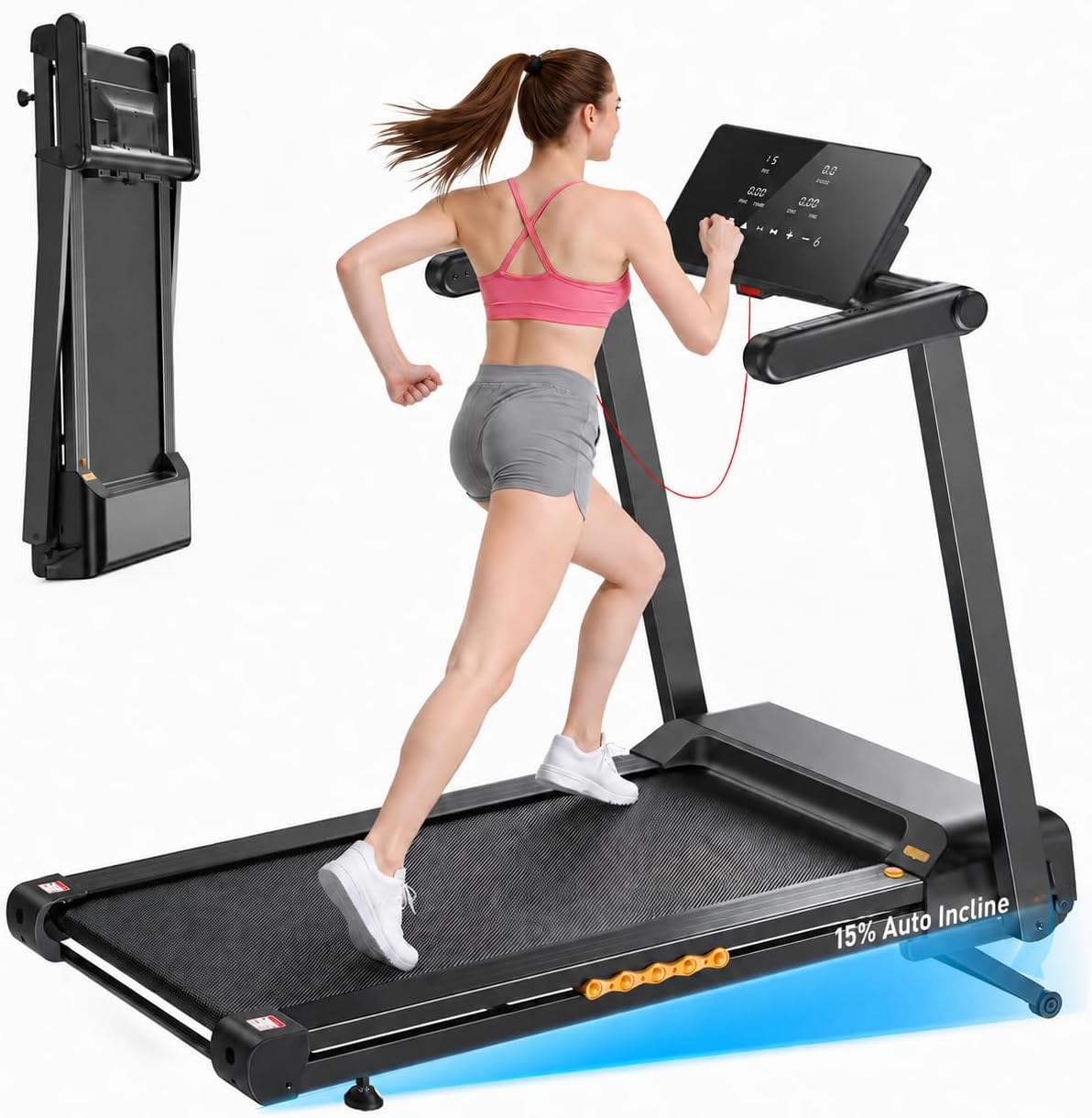
Apartment pick: JAGJOG Foldable Treadmill, 15% Auto Incline, 300 lb, 8.8MPH, Heart Rate
 Visit on Amazon →
This is my pick for most apartments, and it is the machine I recommend to someone coming out of beginner-hood. Check current Amazon price.
The fold is vertical, the frame has built-in rollers, and it is quiet enough that I can hold a conference call while walking on it. It ships with a tube of lubricant, which sounds like a small thing until you price the maintenance kit separately. The deck is rated to 300 pounds, the top speed is 8.8 MPH, and the incline runs automatically to 15 percent, which is more hill than most people will ever use indoors.
What I like most is what it does not do. It does not pretend to be a gym treadmill. The belt is shorter than a full-size deck, so if your running stride is long, measure before you buy, because this is a machine that fits a lot of people and not all of them. The heart rate grips are a nice-to-have, not a training tool. If you want heart rate you can actually train on, use a chest strap.
Flaws but not dealbreakers: deck length is the compromise you accept at this footprint. It handles easy runs and long walks without complaint, and it will not feel like a gym deck under a hard interval session.
Apartment dwellers, second-floor renters, and anyone returning to running after a few years off will get the most out of this one.
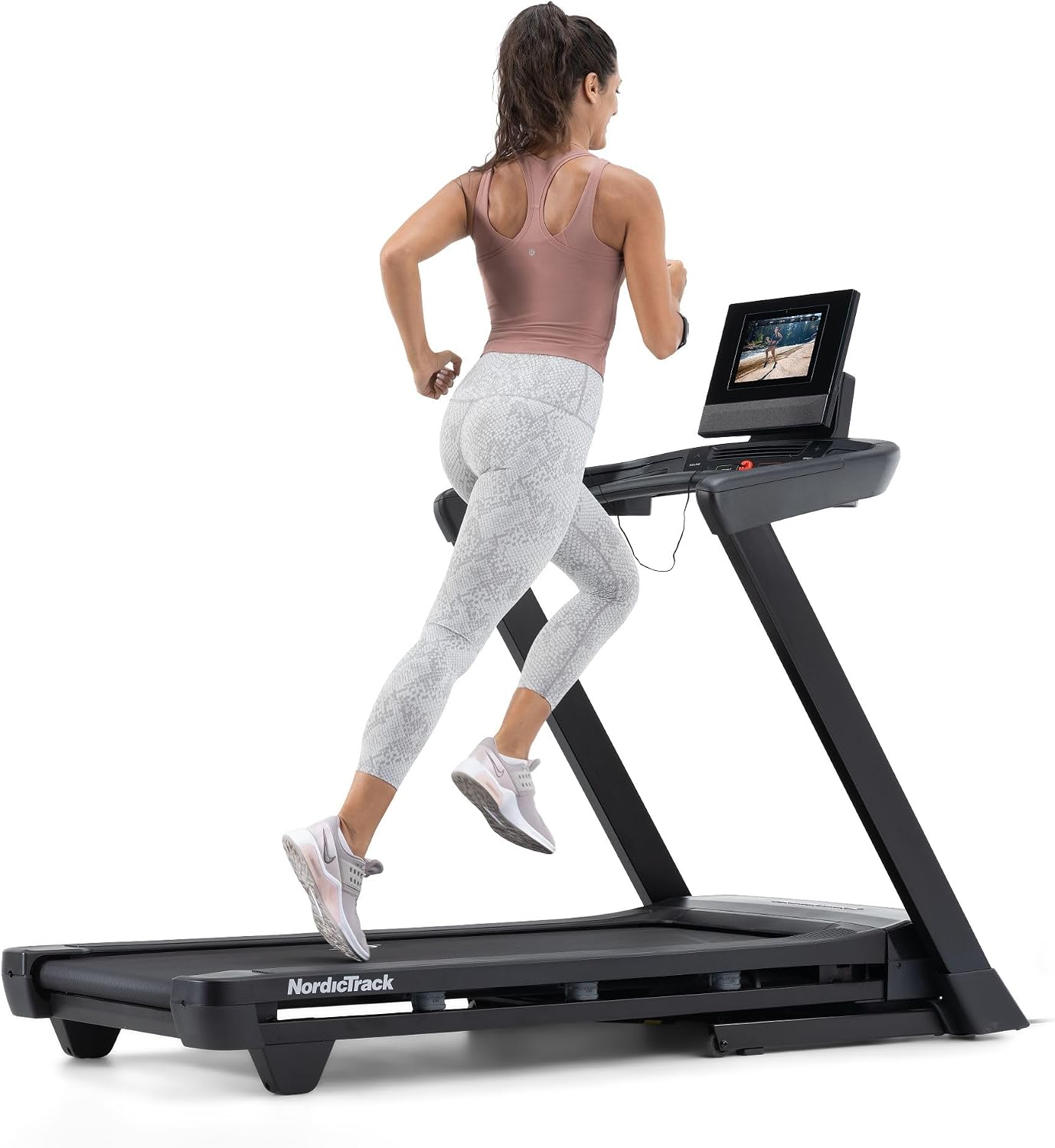
Step-up pick: NordicTrack T Series Treadmills: T5, T6.5s, T7, T10, T16
 Visit on Amazon →
This is the machine everyone asks about, and it is not one machine. It is a series, and the number in the name generally tracks the size and feature tier, from the T5 at one end of the lineup to the T16 at the other. That matters, because the model you click on is the model you get. Check current Amazon price.
The T Series is the full-size answer. If your stride needs room, or you want a deck that feels closer to the gym floor, this is the lineup to shop in. What you are paying for over the JAGJOG is size, and size is the one thing you cannot upgrade later.
What you need to budget for beyond the machine: floor space in both the running position and the folded position, a mat, and the subscription question. Connected treadmills lean on an app for the content worth using, and that is a monthly line item people forget until the free trial ends. Decide up front whether you are paying for it.
Flaws but not dealbreakers: the bigger models in the series are heavy, and heavy changes the fold and move test. Folded is not the same as movable. Before you order, check the model page for the deck length and the folded footprint of the specific tier you are considering, then measure the hallway, the doorway, and the spot where it will live.
Runners with a long stride, and anyone with a dedicated corner for a machine, should start here.
The actual setup workflow
Now the part you came for. This works whether you bought the folding machine or the full-size series.
Step one: measure your stride before you measure anything else. Stand on the floor, take one normal running step, and mark the distance from the back foot's toe to the front foot's heel. That number is the minimum deck you can run on without shortening up. Walking needs less, running needs more, and sprinting needs a deck most home machines do not have. Do this before you open a product page, because it turns the spec sheet into a yes or a no.
Step two: measure the room in both states. A folding treadmill has two footprints, the running footprint and the folded footprint. Add clearance at the back for the deck to tip up, because folding is a motion, not a shape. If the machine needs a foot of swing room and your wall is six inches away, the fold feature is decorative.
Step three: walk the delivery path. The box is bigger than the machine and heavier than you think. Stand in your hallway and trace the route from the front door to the room, including every corner and every doorway. If the box will not make the turn, you will be unboxing it in the entryway, and that is a worse afternoon than it sounds.
Step four: check the floor and the neighbors. Second floor or above, put a mat under the machine and check your lease for quiet hours. Vibration travels through a wood floor differently than noise travels through a wall. The motor noise test I run is a conference call test, because a machine you have to apologize for is a machine you will stop using.
Step five: inventory the parts against the photos before you throw the box away. Keep the carton and the packing until you have confirmed that everything pictured is in the box, handle bar included. Product photos and product pages have a habit of showing a part the carton does not contain. If something is missing, you want to be returning a complete box, not a pile of foam.
Step six: break the belt in before you judge the machine. Give it a few easy miles at a walk and a slow jog, then check the belt tracking. A belt that drifts to one side needs the rear roller adjusted, and a belt that feels tight underfoot on day one is normal. Lubricate the belt on the schedule the manual gives you, and use the tube that came with the machine before you buy anything else. A dry belt is the most common reason a budget treadmill dies early.
Step seven: run the incline all the way up and all the way down, twice. Listen to the motor and watch the deck for wobble. This is the test that separates a machine that will last from one that will rattle in a year. If the incline mechanism feels like plastic blocks under the deck that shift when you push on them, the machine is cutting corners somewhere you cannot see.
Step eight: fold it and move it ten times. Not once, ten. Fold it, wheel it to the wall, wheel it back, unfold it. If the process takes more than a minute or hurts your back, the machine is going to live unfolded, and if it lives unfolded you bought the wrong machine for your square footage.
Step nine: set up the console last. Get the free content and the manual programs working first. Do not start a subscription during the honeymoon week, when every app looks worth it. Run the machine for two weeks, then decide whether the paid content is something you actually use.
What I would skip, and why
Walking pads are fine machines. I like them for desk setups, and they are the cheapest way to add steps to a day. But a walking pad is a walking pad. If you want to actually run, you need a deck that fits your stride, and most pads do not have one.
Full-size gym treadmills belong in gyms. In a small living room they become an expensive place to hang laundry, and the footprint is the same whether you use them or not.
The middle of the market is where the two machines above live, and that is not an accident. They are the honest answers for the two kinds of buyers I meet: the one with a small apartment and a short stride, and the one with a long stride and a corner to spare.
What this all costs
I am not going to print prices, because they move, and the number you see today is not the number you will see next month. Check current Amazon price on the product page for either machine and you will have the real figure.
Here is how to do the math instead. Take the price of the machine and divide by 1,825. That is the cost per day over five years, which is the shortest life I would accept from a treadmill I recommend. Add a mat, one tube of lubricant, and a pair of shoes you only run indoors in. Add the monthly subscription if you decide you want the connected content, or leave it out if you do not.
The number that matters is not the sticker. It is the cost per day against the days you actually use it. A machine you fold and forget costs more per mile than a machine you use four times a week, and no sale price fixes that. The JAGJOG is the one I point most apartment clients toward, because it is the machine that gets used in a small space. The NordicTrack T Series is the one I point runners toward when the stride needs room and the room can spare it.
Buy the deck that fits your stride, put it where you can actually reach it, and run on the days the weather wins. That is the whole job.