Related: Walking Pad vs Treadmill: Which One Actually Belongs in a Small Apartment
I have coached runners for twelve years and logged more than 40,000 miles myself, almost all of it outdoors. Then Austin summers got worse, my knees got louder, and my coaching clients kept asking a question I could not answer honestly: what treadmill should I buy for my apartment? So I bought one, put it in my 680-square-foot living room, and started testing machines the way I coach, one rep at a time. I have since unboxed, folded, wheeled, and run on more than 30 of them.
A treadmill for a small apartment is a different animal from the one at your gym. It has to fit the floor you actually have. It has to be quiet enough that you are not turning up the TV. You have to be able to move it by yourself when you are done with it. And if your stride does not fit the belt, nothing else on the machine matters.
Here are the four I would tell a friend to look at, in the order I would rank them for apartment life.
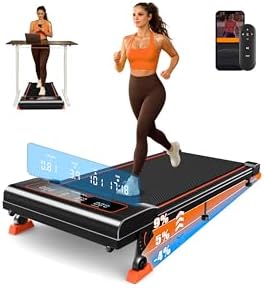
Best Overall: Walking Pad with Incline 9% & Decline -4% 5 Level
This is the one I would pick if I were walking rather than running and I wanted the machine to do more than one thing. The incline goes up to 9% and it also declines to -4%, across five levels. That is the widest range in this group. Downhill walking is the part most pads cannot do at all, and it is the part your quads and shins actually notice after a week of it.
The format is under-desk, so it slides under a standing desk and disappears when you are finished. That is the whole appeal. No handlebar to fold, no console to dust, no argument with your living room about who gets the floor.
Two things I would check before buying. First, belt width against your own stance, because a narrow belt changes how you walk whether you notice it or not. Second, whether the incline mechanism feels solid or like plastic blocks under the deck. The incline blocks are the tell on any budget machine. If the incline system feels like plastic blocks under the deck that wobble slightly, the whole machine is cutting corners somewhere. Confirm the magnetic safety lanyard is included too. That clip is non-negotiable for me on every machine.
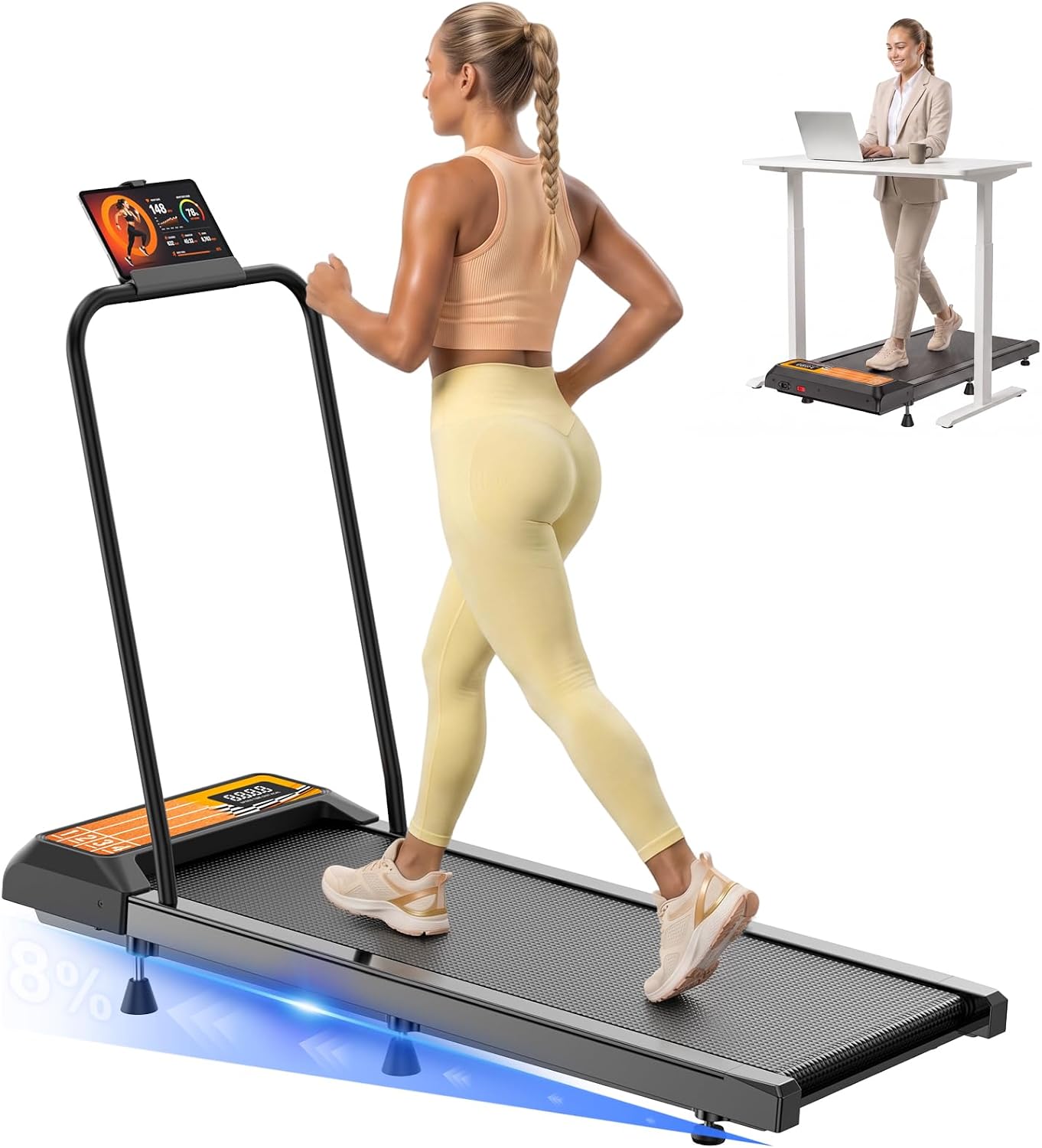
Best Value: Under Desk Treadmill with Incline, Portable Walking Pad with Handlebar
This is the budget pick, and it is honest about it. It is a walking pad with an incline and a handlebar, which is a combination you do not see often at this end of the market. The handlebar matters more than people expect. It gives you something to grab the first few times you step on, and it gives you a place to hang a towel.
I want to be clear about what this is. A walking pad is a walking pad. If you want to actually run, you need a deck that fits your stride, and most pads do not have one. What this machine gives you is steps during the workday, on a machine light enough to move without help, at a price that makes the decision easy.
The trade-offs at this price are the usual ones. Incline on a budget machine is often a fixed tilt rather than a motorized slope, so you set it and live with it. The motor will be fine at walking speed and loud enough that you will not want to run on it anyway. And the fold is really a lean, not a fold.
Before you order, study the photos twice. What is pictured and described on a product page is not always what is in the box. I have watched buyers post photos of a missing handle bar on a listing that clearly showed one. Measure your space, check the belt width, and confirm the safety lanyard.
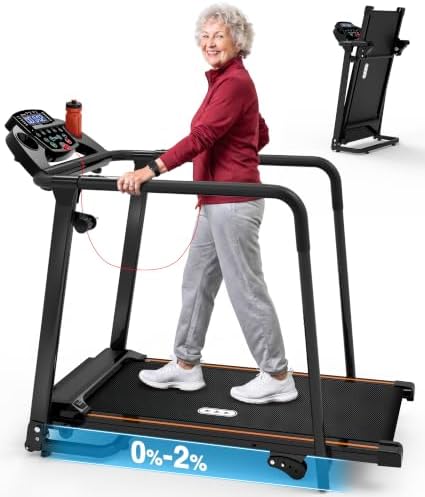
Redliro Treadmill for Seniors with Long Handrails-0-2% Incline
This is the machine I would hand to a parent, or to anyone getting back to walking after a long stretch off. The long handrails are the entire point. You have a handhold in front of you for the whole walk, not just a console to touch, and that changes how confident you feel stepping on alone.
The incline runs from 0 to 2%, which is modest by design. Nobody is buying this to chase a grade. It is for steady daily walking, the kind that adds up, and the low incline keeps the effort honest without making the deck feel like a climb.
The one thing I would verify is the walking surface against your shoe size and stride. Long handrails help with balance, but they do not fix a belt that is too short for the way you walk. If the machine is for someone who uses a cane or a walker around the house, measure the entry height too. Getting on and off safely matters more than any spec on the page.
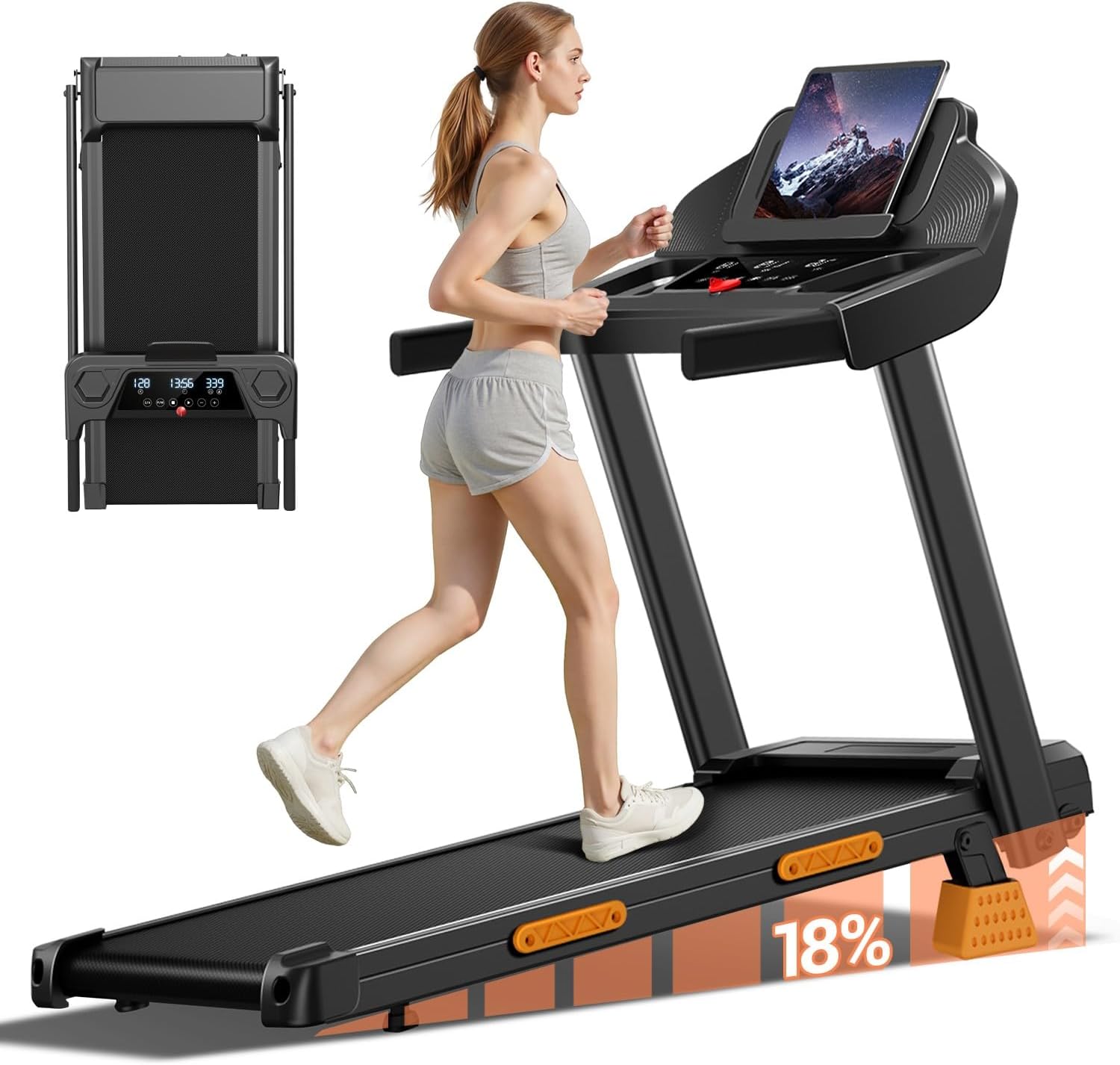
18% Treadmills for Home, Foldable Incline Treadmill with Handle
If incline work is the reason you are buying, this is the one that goes there. An 18% grade is steep enough to feel like a real hill, and it folds with a handle, which is more than you can say for most machines in this price neighborhood.
Steep grade plus a short deck is where running form falls apart, so check the deck length before anything else. If your stride does not fit the belt, you will be taking smaller than normal steps before you know it, and that is how hips and hamstrings end up angry.
Then ask the folding question honestly. Folding only counts if you can actually move the thing when it is folded. Wheels and weight are the real spec, not the word "foldable" on the box. I fold and wheel every machine I test at least ten times before I trust that claim, and some of them I would not want to move alone.
How I test a treadmill in a 680-square-foot apartment
Every machine gets at least two weeks of real use in a real living room, not a showroom. That is the floor, not the finish line.
Deck length gets tested at a full running stride, not a walk. A deck can feel fine at three miles per hour and feel like a shoebox at seven. If I am not willing to run on it, I say so, and I do not call it a running treadmill.
Quiet gets tested with a decibel reading taken during an actual conference call, at walking speed. "Whisper quiet" is a phrase printed on motors you can hear through a wall. The test is whether the person on the other end of the call asks what that noise is.
Folding gets tested by folding and moving the machine at least ten times, in the space I actually have, including around a coffee table and through a doorway. Incline gets tested underfoot, because a slope that wobbles is worse than no slope at all. And budget picks get a belt wear and wobble check after 200 miles, because that is where cheap machines either hold up or show you what you paid for.
Analysis and test results
Stride and deck decide more purchases than motors do. Most people buy way more machine than they need, and almost nobody buys enough deck. Measure your natural stride once, on a sidewalk, then compare it to the belt. If the numbers are close, walk away from that machine.
Noise is the second filter. At home, a motor that makes you turn up the TV is a failed purchase no matter how fast it goes. Walking pads win here because there is less machine to rattle. Full-size gym treadmills lose, and in a small living room they mostly become a very expensive coat rack.
Incline is where the corner-cutting shows. A motorized incline that holds its position is fine. A set of risers that wobble slightly under the deck is a signal about everything else on the machine, including the parts you cannot see.
Folding is a storage claim, not a feature. Wheels, weight, and the folded footprint are what matter. If you cannot move it alone, it is not portable, it is just tall.
The magnetic safety lanyard is the one feature I check on every single machine. Clip it on, walk, and pull it once. It should kill the belt instantly. If it does not, nothing else on the review matters.
The small apartment treadmill comparison table
This is the table I keep in my notes when someone asks me which machine fits their apartment. Match the row to how you will actually use it, not to the spec you think sounds best.
| Machine | Incline | Handlebar or handrails | Best for | Price |
|---|---|---|---|---|
 Visit on Amazon → Visit on Amazon →Walking Pad with Incline 9% & Decline -4% 5 Level |
Up to 9% and down to -4%, five levels | Under-desk design, no handlebar listed | Walkers who want hills and downhill | $439.99 |
 Visit on Amazon → Visit on Amazon →Under Desk Treadmill with Incline, Portable Walking Pad with Handlebar |
Incline, level count not listed | Handlebar included | A first walking pad on a tight budget | $99.99 |
 Visit on Amazon → Visit on Amazon →Redliro Treadmill for Seniors with Long Handrails |
0 to 2% | Long handrails | Steady daily walking with a handhold | Check current Amazon price |
 Visit on Amazon → Visit on Amazon →18% Treadmills for Home, Foldable Incline Treadmill with Handle |
Up to 18% | Handle included | Steep incline work and folding storage | $159.99 |
Should you buy the Walking Pad with Incline 9% & Decline -4%?
Yes, if walking is your plan and you want one machine that covers flat, uphill, and downhill. The incline range is the widest here, the under-desk format keeps your floor clear, and the decline is something almost no pad offers. Check the belt width against your stance and confirm the incline does not wobble underfoot. If those two things pass, this is the machine I would buy first.
Should you buy the Under Desk Treadmill with Incline and Handlebar?
Yes, if your budget is the deciding factor and your goal is steps, not speed. The handlebar is a real convenience and the price is the point. Just be honest with yourself about the limits. It is a walking pad, it is not built for running, and the incline is likely a fixed tilt. Study the photos twice before ordering, and unplug it when you are done.
Should you buy the Redliro Treadmill for Seniors with Long Handrails?
Yes, for a parent or anyone who wants to walk daily with a handhold in front of them. The 0 to 2% incline keeps the effort steady and the long handrails do the job they were designed for. It is not a machine for pace or interval work, and it does not pretend to be. Buy it for safety and consistency, and it will earn its floor space.
Should you buy the 18% Foldable Incline Treadmill with Handle?
Yes, if incline training is why you are shopping and you have room for a real deck. An 18% grade is a serious hill, and the handle helps when you fold it. Check the deck length against your stride first, then fold it and wheel it yourself before you commit. If you can move it alone and your stride fits, it is the steepest option in this group.