A small apartment treadmill is a tool for the days you cannot get outside. It is not a substitute for running, and it is not a piece of furniture. The problem is that almost nobody shops for one that way. People shop for the biggest motor and the longest feature list, then discover in week three that the deck is too short for their stride, the motor is loud enough to hear through the floor, and the fold takes two people and a hallway.
I coach runners in Austin, and I have spent a lot of evenings in a 680-square-foot living room testing machines instead of guessing about them. Austin gives me about four months a year when running outside is a reasonable decision and eight months when it is not.
Here is the short version. Deck length decides whether you will actually use the machine. Motor noise decides whether you are allowed to use it. The fold decides whether it lives in your living room or becomes a very expensive coat rack. Get those three right, and every other spec is a detail.
Why you should trust this method
I have coached running for 12 years and logged more than 40,000 miles, almost all of it outdoors. I came to treadmills the way a lot of you will: I bought a cheap foldable one for my own living room, and I learned quickly which claims survive contact with a real apartment. Since then I have unboxed, folded, wheeled, and run on more than 30 machines in a space smaller than most people's garages.
What that experience buys you is a checklist, not a brand loyalty. I am not going to tell you a machine is quiet because the box says "whisper quiet." I am going to tell you to run it at walking speed while you are on a conference call and see whether the person on the other end asks what that noise is.
The method here is simple: fit the deck to your stride, fit the machine to your floor, fit the noise to your walls, then fit the price to your budget. In that order.
How I picked these two machines
The two machines below sit at opposite ends of the same decision. One is a full-size treadmill for someone whose stride needs a real deck. The other is a slim walking pad for someone whose binding constraint is floor space. They are not interchangeable, and I am not going to pretend they are.
What I can do is tell you what to check on each one before you buy, and what to verify in the first two weeks after it arrives. Pricing on both moves constantly, so check current Amazon price on the listing itself rather than trusting a number you saw in a screenshot last month.
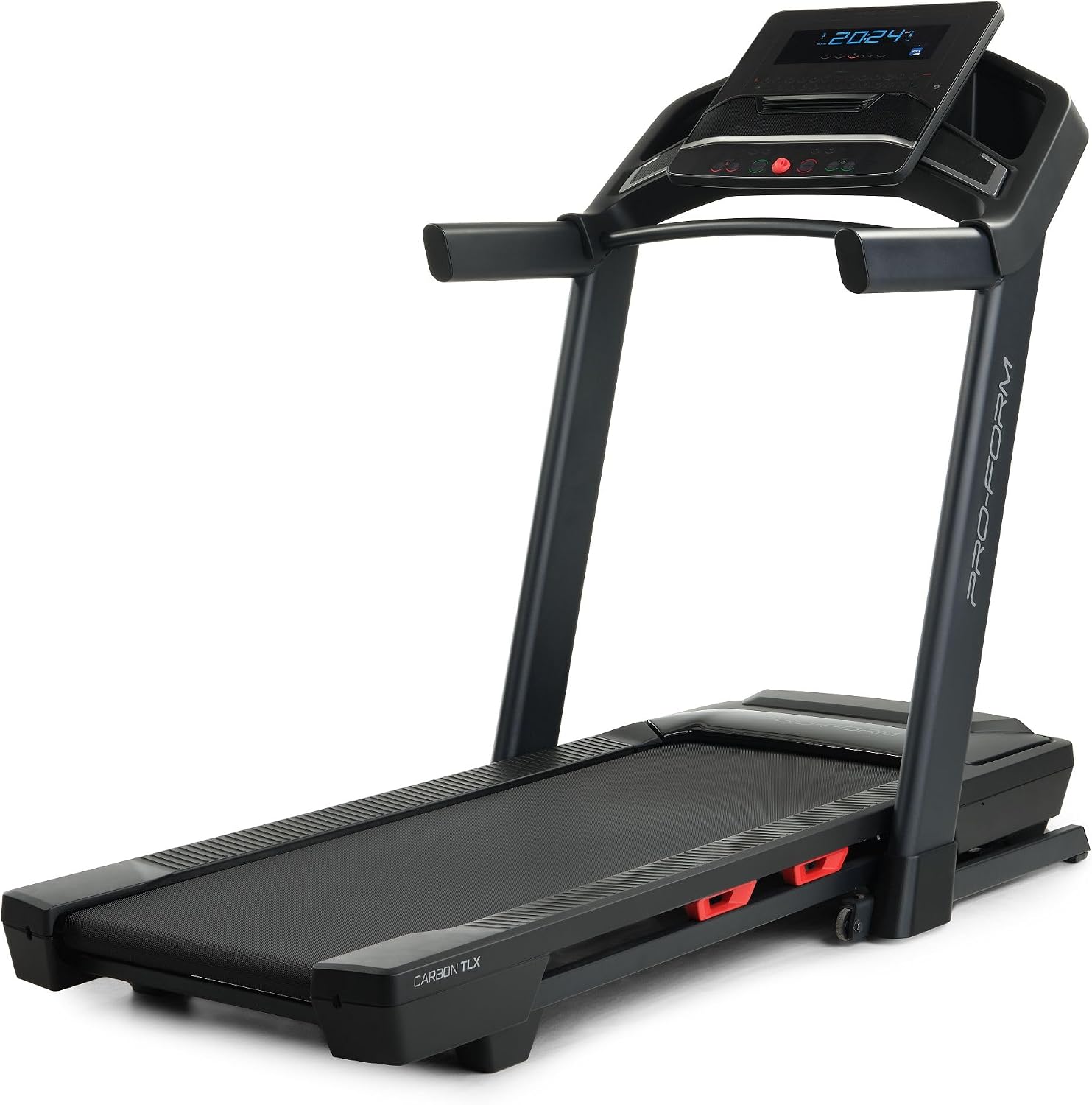
Best for runners who need a real deck: ProForm Carbon Treadmills
 Visit on Amazon →
This is the pick for the person who actually runs. ProForm's Carbon line sits at the full-size end of this comparison, which means it is the machine you look at when walking is not the goal and a short deck would wreck your stride.
Start on the product page with the belt. Find the deck length, write it down, and compare it to your stride length before you look at anything else. If your full stride does not fit, you will spend every run taking smaller than normal steps, and that shows up in your hips before it shows up in your times. Check current Amazon price and do the math on whether the gap between this and a pad is worth it for how you actually train.
The honest caveat is weight. A full-size treadmill is heavy, and folding only counts if you can move the thing while it is folded. If you cannot wheel it out of the way by yourself, in the space you actually have, then the fold is a feature on a spec sheet and nothing more.
Flaws but not dealbreakers: Do not buy this for a room where you also need the floor. Measure the footprint, add the room you need to get on and off safely, and be honest about whether the remaining floor is livable.
Anyone who runs three or more times a week and has a dedicated corner or a spare room should start here.
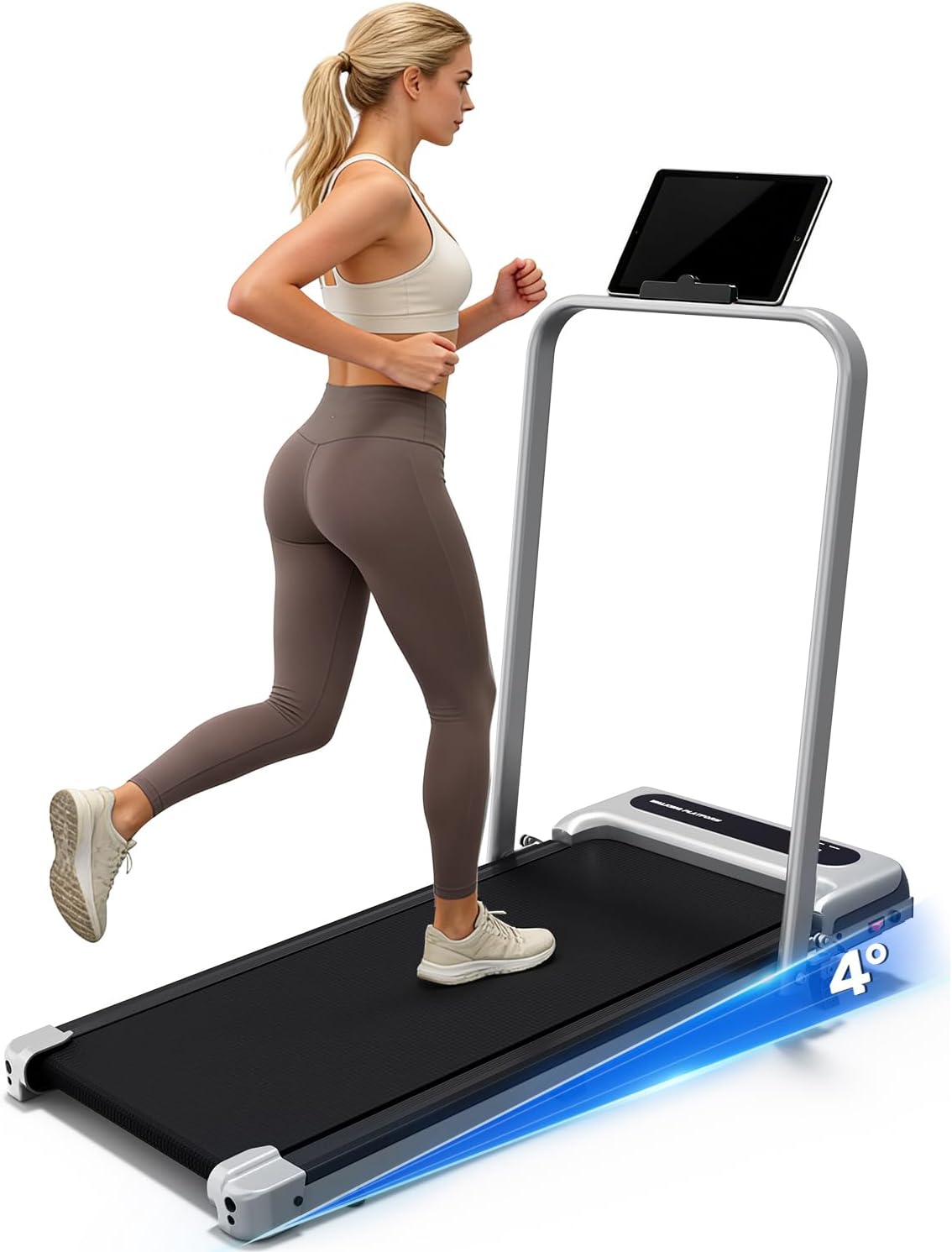
Best for walkers in tight spaces: Walking Pad Treadmill for Home, Incline Walking Pad with Handle Bar
 Visit on Amazon →
This is the pick for the person whose constraint is the apartment, not the training plan. It is a walking pad, and the two features worth paying attention to are right in the name: the incline and the handle bar.
The handle bar matters more than people expect. On a pad with no console and no rails, balance is the thing that ends your session early, especially once you add incline. A bar gives you something to hold when you are walking through a workday or when your focus drifts. The incline changes the demand on your legs and glutes without asking you to go faster, which is exactly what you want if you are using the pad for steps rather than training.
Be clear about what it is not. A walking pad is a walking pad. If you want to actually run, you need a deck that fits your stride, and most pads do not have one. Buy this to walk, to hit a step count, to keep moving between meetings, or to rebuild mileage at a pace your legs tolerate. Check current Amazon price, and read the listing twice.
Flaws but not dealbreakers: Study the photos carefully. What is pictured and described on a product page is not always what is in the box, so confirm the handle bar is part of what ships before you order. If the incline system looks like plastic blocks under the deck that wobble slightly when you press on them, treat that as the tell for the rest of the build. It works, but it does not inspire a ton of confidence, and it usually means a corner got cut somewhere.
Anyone in a studio or a shared apartment who wants to walk while they work, or walk while the weather is bad, will get the most out of this.
The setup: six steps from box to first run
Step one: stage it where it will live. Do not unbox a treadmill in the hallway and then try to move it. Open the box in the room, on the floor, with the cardboard underneath to protect the surface while you assemble.
Step two: check the safety lanyard before anything else. The magnetic safety lanyard is the clip that kills the belt if you fall. Clip it on, start the belt at the slowest speed, and pull the clip. If the belt does not stop, stop and sort that out before you take a single step. It is the one safety feature I check on every machine, and it is not negotiable.
Step three: level the deck. Put the machine where it is going to stay, then check that the deck is level front to back and side to side. Adjustable feet are there for a reason. An unlevel deck pulls you to one side for the entire session, and you will feel it in your ankles before you figure out why.
Step four: learn the belt. Read the manual for belt tension and lubrication. Every treadmill needs belt lubrication on a schedule, and the schedule depends on how much you use it. Do this once, put a reminder in your phone, and the belt lasts years longer.
Step five: walk before you run. Ten minutes of walking, no incline, hands off the rails. Get used to the belt speed and the length of the deck before you add anything. If you find yourself shortening your steps to stay on the belt, the deck is too short for you, and no amount of practice fixes that.
Step six: fold it and move it ten times. This is the test most people skip and then regret. Fold the machine, wheel it to where it will live when it is not in use, and bring it back. Do that ten times in a row. If it is a two-person job or it scuffs your wall, you have your answer about whether you will actually put it away.
The first two weeks: what to check before you commit
Two weeks of real use is the minimum before you decide a machine works in your home. Here is what to log.
Noise at walking speed. Take your next conference call standing on the machine at a walking pace and ask the person on the other end whether they can hear it. That is the test that matters, not the number printed on the box.
Wobble under incline. Press down on the front of the deck at each incline setting. If the incline blocks flex or shift, note it. It is not a dealbreaker on a budget pad, but it tells you what the rest of the build is like.
Deck feel at your full stride. Once, and only once you are comfortable, take the machine up to a running pace and see whether your normal stride fits. If you cannot take a full step without thinking about it, the deck is too short.
Belt condition. After a couple of weeks, look at the belt surface and the edges. Early fraying or uneven wear is either a maintenance issue or a return.
The fold. You already did it ten times at setup. Do it ten more at the end of two weeks. If it has become a chore, the machine is going to stay unfolded, and you should plan your floor space around that reality.
What this actually costs
I am not going to quote you a price, because treadmill pricing moves and a stale number is worse than no number. Check current Amazon price on both listings and do the math yourself.
The math that matters is cost per day. Divide the price by 1,825 days, which is five years of ownership. A machine you use four times a week for five years costs a fraction per session of a gym membership you use twice a month. A machine you use for three weeks and then fold into a corner costs more than either, because you paid full price for a coat rack.
The other cost people forget is the belt. Lubrication is cheap. A replacement belt is not. That is why the maintenance step in the setup matters more than any feature comparison you will read this month.
The short version
Measure your stride before you measure your room. Buy the deck that fits your stride, the machine that fits your floor, and the motor that fits your walls. Test the safety lanyard on day one, walk before you run, and fold the thing ten times before you decide it is easy to store.
Do that, and a treadmill stops being a purchase you second-guess. It becomes the tool you reach for on the days Austin will not let you outside.